

Sleep inertia is the reason you can sleep a full eight hours and still feel like you got hit by a truck the moment your alarm goes off. It’s common, it’s well-studied, and according to sleep experts, a few specific habits make it noticeably worse — including the exact alarm clock sitting on your nightstand right now.
It’s also one of the more misunderstood parts of sleep science. Most people assume grogginess is simply about how much sleep you got, but sleep inertia has its own separate causes, and its own separate fixes, that have little to do with total sleep duration. Two people who slept exactly the same number of hours can wake up feeling completely different, depending on what stage of sleep they were in and how abruptly the alarm interrupted it.
Table of Contents
Key Takeaways
- Sleep inertia is the grogginess and impaired thinking that follows waking, and it can last anywhere from 15 minutes to a few hours.
- Harsh, sudden alarms tend to make sleep inertia worse; melodic or gradual wake-up methods tend to ease it, according to published research.
- The snooze button’s reputation may be a bit overblown — research on it is more mixed than commonly assumed.
- Consistent wake times, light exposure, and gentler alarm technology are the interventions sleep experts actually recommend, rather than simply sleeping more.
What Is Sleep Inertia?
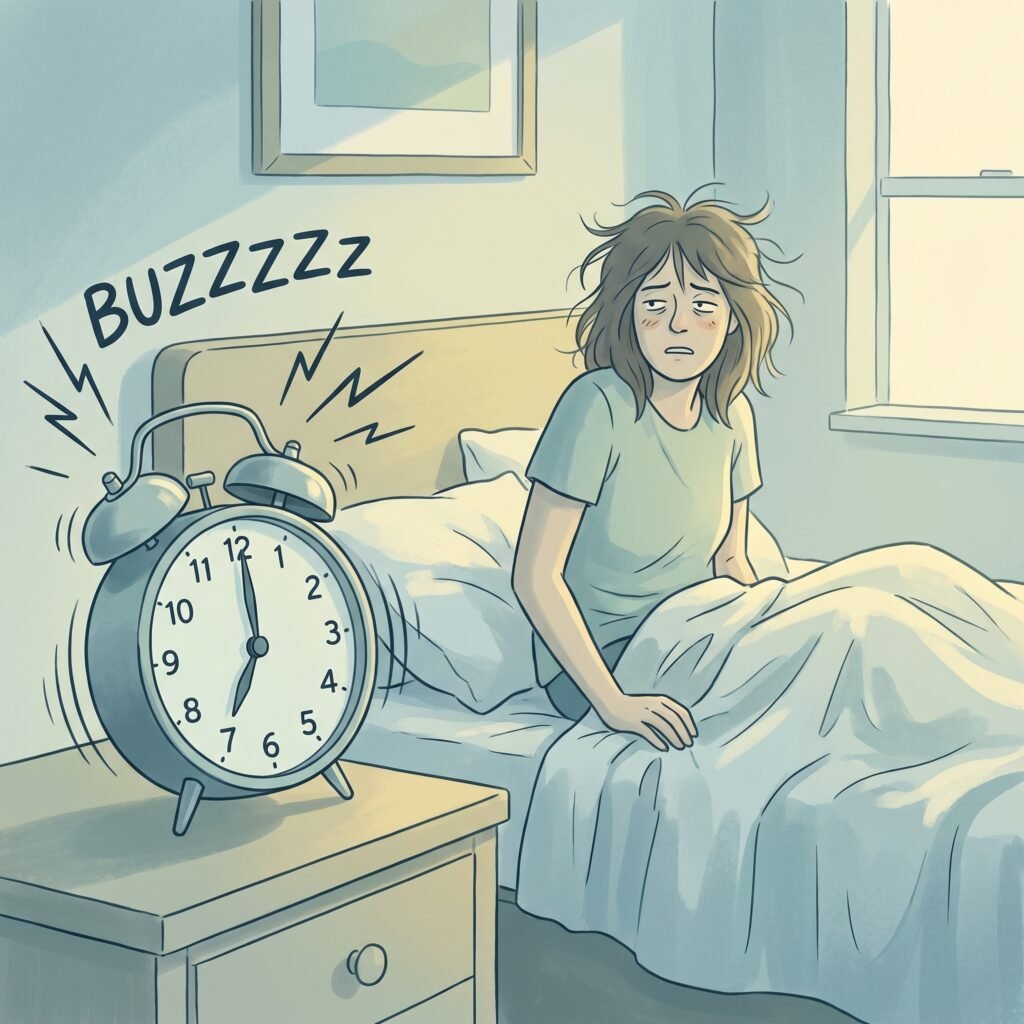
Sleep inertia is the grogginess, disorientation, and slowed thinking that follows waking up, according to Sleep Foundation. It’s not a sleep disorder on its own — it’s a normal transitional state — but it can meaningfully affect reaction time, decision-making, and mood for a stretch after you get out of bed.
For most people, sleep inertia fades within 15 to 60 minutes. For others, particularly people waking from deep sleep or dealing with sleep deprivation, it can stretch on for a few hours.
Sleep inertia shows up most in people with irregular schedules. Shift workers, medical residents, and anyone who naps for longer than 30 minutes are especially prone to it, since waking from deeper stages of sleep tends to intensify the effect. This is part of why sleep inertia has been studied fairly seriously in occupational health research — it’s not just an inconvenience for people whose jobs require alertness immediately after waking, like emergency responders or on-call physicians.
Why Sleep Inertia Happens
The exact biological cause of sleep inertia isn’t fully settled, but researchers point to a few overlapping explanations. One theory centers on delta waves — the slow brain waves typical of deep sleep — lingering into the waking period before the brain has fully transitioned. Another points to elevated adenosine, a compound tied to sleep drive, still being high right at the moment of waking.
A third theory involves blood flow to the brain, which naturally shifts across sleep stages and may not immediately normalize the instant you open your eyes. Some researchers have also drawn a loose connection between this reduced blood flow and the kind of grogginess seen in chronic fatigue syndrome, though the link is still considered preliminary.
None of these fully explain why some mornings feel worse than others, but one factor comes up consistently in the research: how you’re actually woken up. The manner of waking — abrupt versus gradual, harsh versus gentle — appears to matter almost as much as anything happening inside the brain during sleep itself, which is a more actionable finding than most sleep advice tends to offer.
Does Your Alarm Sound Make Sleep Inertia Worse?
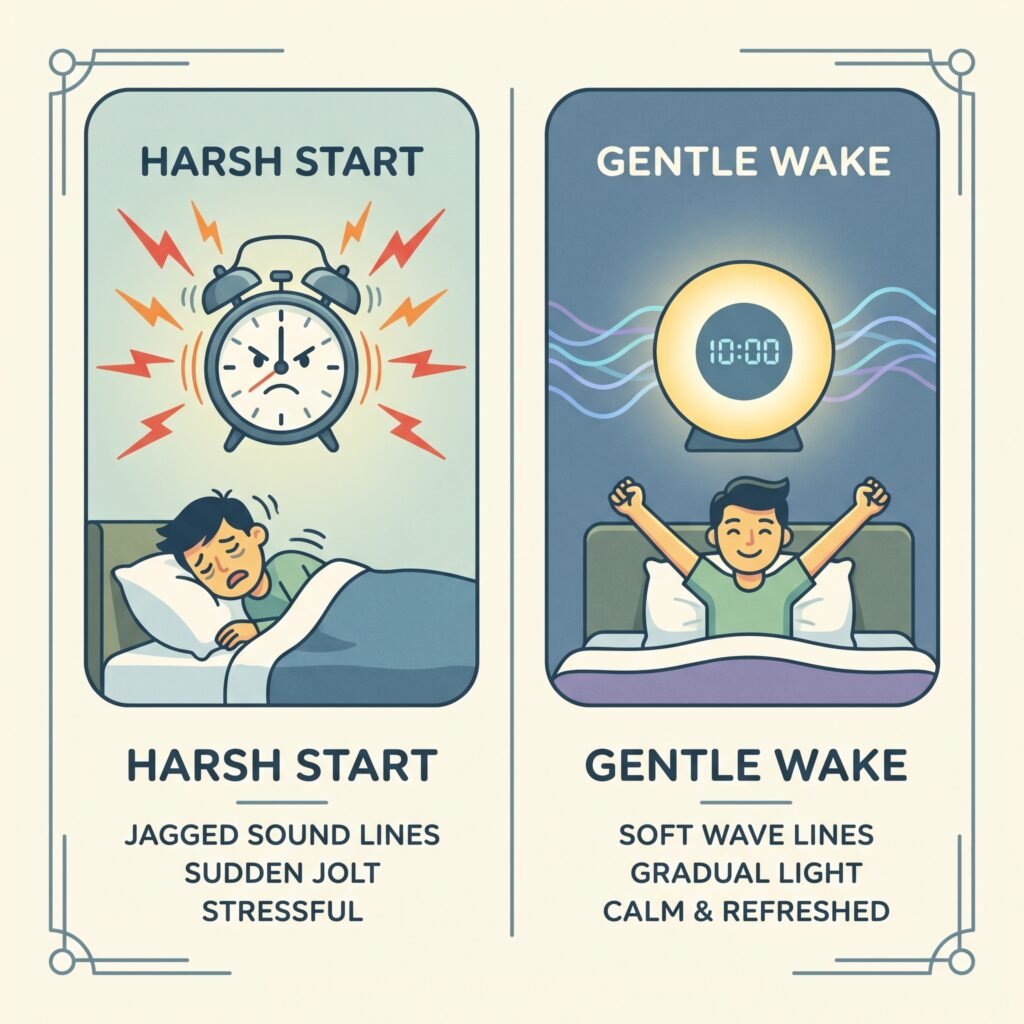
This is where it gets actionable. A study published in PLOS ONE found that people who used melodic alarm sounds reported noticeably less sleep inertia than people using harsh, traditional beeping alarms. Researchers involved in the study suggested that abrupt, jarring sounds may disrupt brain activity during the wake transition, while melodic sounds ease the shift into alertness more smoothly.
That’s a meaningful finding, because most default phone and clock alarms are built around exactly the kind of harsh, repetitive beep the research suggests is counterproductive. Swapping a default beep for an actual song or a gentler chime is a low-effort change that’s directly backed by the same body of research, rather than just general wellness advice.
The Snooze Button Myth
The snooze button gets blamed for a lot of morning grogginess, but the research here is more nuanced than the common wisdom suggests. One study comparing habitual snooze use found no meaningful difference in sleep quality or quantity between people who used snooze and those who didn’t — except in the final 20 minutes before waking.
That doesn’t mean snoozing indefinitely is a great strategy. But it does mean the popular idea that snoozing “shreds” your sleep architecture is more myth than established fact, based on the available research. The bigger issue tends to be the abruptness of the alarm itself, not specifically whether you hit snooze once or twice.
Interestingly, the same research found that a large majority of people already use snooze regularly, mainly out of anxiety about oversleeping rather than any strategy for feeling more rested. That suggests the habit is less about grogginess management and more about a general lack of trust in a single alarm going off on time.
What Sleep Experts Actually Recommend
Sleep Foundation’s own guidance lists several concrete strategies for reducing sleep inertia, and they’re notably more specific than “just get more sleep.” None of these require drastic lifestyle changes — most are small adjustments to an existing routine.
Keep a Consistent Wake Time
Waking up at roughly the same time every day, weekends included, helps your body anticipate the transition out of sleep rather than being caught mid-cycle by an alarm. Wildly different wake times on weekdays versus weekends — sometimes called social jet lag — can make Monday morning grogginess noticeably worse.
Get Light Exposure Early
Natural or bright light exposure shortly after waking helps suppress the sleep hormone melatonin and supports the shift into alertness. This is part of why gradually brightening light, not just sound, is part of most gentle wake-up strategies. Even opening curtains immediately after waking, rather than lying in a dark room scrolling a phone, can make a measurable difference — and it costs nothing beyond a change in habit.
Avoid Long Naps
Naps longer than 30 minutes increase the odds of waking from a deeper sleep stage, which tends to intensify sleep inertia rather than reduce overall tiredness. A short nap capped around 20 minutes is generally considered the safer window for avoiding this effect.
Choose a Gentler Alarm
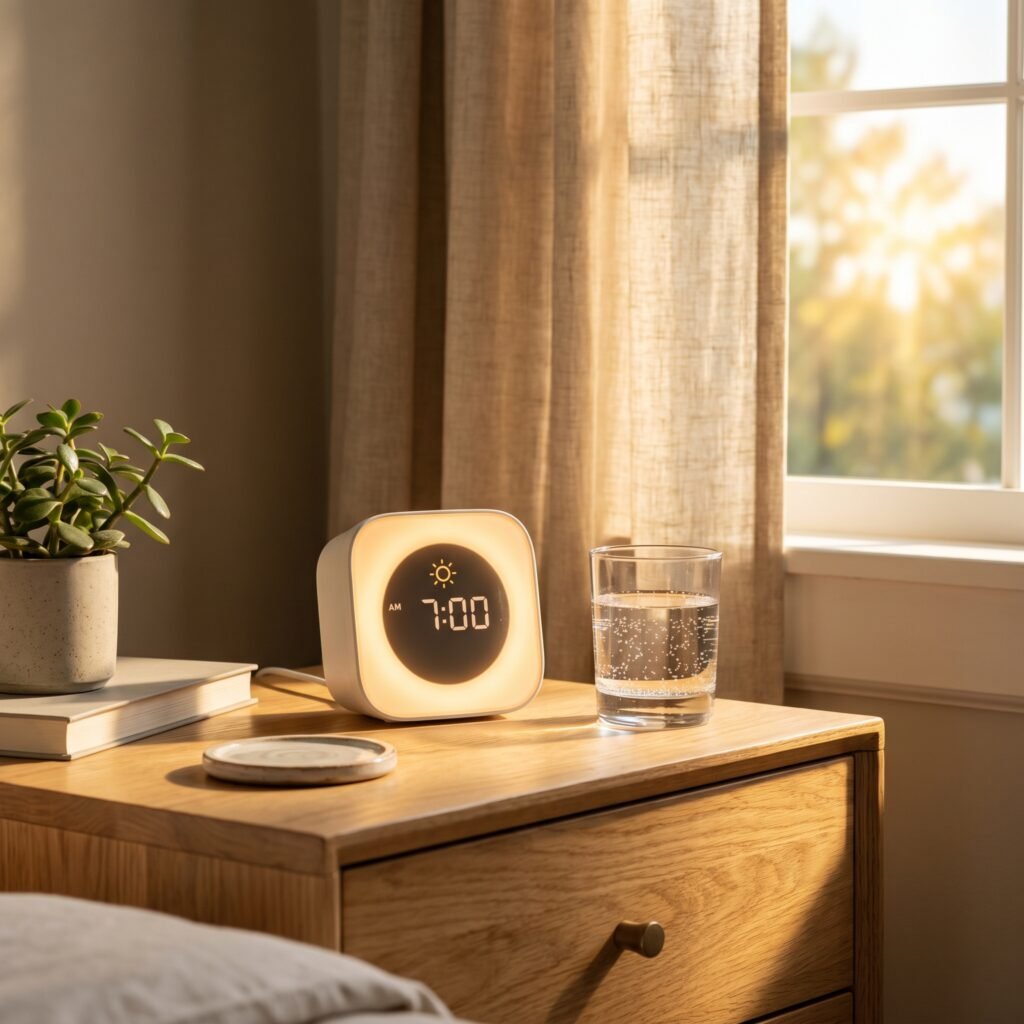
Sleep Foundation specifically recommends trying a smart alarm clock that can register lighter sleep stages, or a sunrise-style alarm that combines gradually increasing light with gentler sound, rather than a single harsh tone. This is consistently the most actionable of the recommendations, since it’s a one-time purchase rather than an ongoing behavior change.
This is where the alarm clock itself starts to matter as much as your sleep schedule. Rather than treating your morning routine and your alarm clock as separate problems, sleep experts increasingly frame the alarm itself as one of the more controllable variables in how rough a given morning feels. We covered one option built around exactly this kind of customizable wake-up routine — light, sound, and gradual timing — in our smart alarm clock review, if you’re looking at upgrading from a basic beeping clock.
What to Look for in a Gentler Alarm Clock
If you’re shopping for something to replace a jarring alarm, a few features consistently show up in what sleep experts recommend:
- Adjustable, non-harsh alarm sounds — melodic tones or music rather than a single repetitive beep.
- Gradual light or sound buildup — a ramp-up period before the full alarm, rather than an instant jolt.
- Consistent scheduling features — weekday/weekend presets so wake time doesn’t swing wildly day to day.
- A snooze option you actually control — not to rely on indefinitely, but to avoid an abrupt second wake-up if you do need a few extra minutes.
- Volume that ramps up gradually — rather than jumping straight to full volume, which recreates the same abrupt-wake problem the research flags.
None of these require an expensive, single-purpose device. Several general smart alarm clocks now build gradual light and customizable sound directly into a routine, which covers most of what the research points to without needing a dedicated light-therapy lamp. The main trade-off is that a general-purpose smart alarm clock won’t match a dedicated sunrise lamp’s light output exactly, but for most people chasing a gentler wake-up rather than clinical light therapy, that difference matters less than it might seem.
When Sleep Inertia Might Be Something More
Occasional grogginess is normal. But if sleep inertia routinely lasts multiple hours, or you feel excessively sleepy throughout the day despite adequate sleep time, that’s worth mentioning to a doctor rather than solving with a better alarm clock alone.
Sleep Foundation notes that people with certain sleep disorders experience more severe or longer-lasting sleep inertia, and a sleep study — formally called polysomnography — can help determine whether an underlying condition is contributing to it. Keeping a simple sleep journal for a week or two, noting when you woke up and how groggy you felt, can also give a doctor useful context before that conversation even starts.
This distinction matters because no alarm clock, however gentle, can fully compensate for an underlying sleep disorder. Gentler wake-up methods address the mechanics of waking itself, not conditions like sleep apnea that disrupt sleep quality throughout the entire night, which is a separate issue that needs separate treatment.
Frequently Asked Questions
How long does sleep inertia usually last? Most commonly 15 to 60 minutes, though it can last up to a few hours in some people, particularly after waking from deep sleep or a long nap.
Is hitting snooze actually bad for you? The research is more mixed than commonly assumed — one study found no meaningful sleep quality difference from snoozing, aside from the final 20 minutes before waking.
Can coffee help with sleep inertia? Caffeine works by blocking adenosine receptors in the brain, which research suggests can help counteract some of the psychomotor effects of sleep inertia, though it’s not a substitute for consistent sleep habits and doesn’t address the underlying transition itself.
Do sunrise or smart alarm clocks actually help? Sleep Foundation specifically recommends gentler, gradual wake-up methods like smart alarms or sunrise-style alarms as one practical way to reduce sleep inertia, alongside consistent wake times and light exposure.
Why do I feel worse waking up from a nap than from a full night’s sleep? Short naps under 20 minutes typically avoid deep sleep stages entirely, but longer naps often reach deeper sleep, and waking abruptly from that stage tends to produce more pronounced sleep inertia than waking from lighter sleep.
Is sleep inertia the same thing as sleep deprivation? No — they’re related but distinct. Sleep deprivation is a lack of adequate total sleep, while sleep inertia can happen even after a full night’s sleep; it’s specifically about the abruptness of the wake transition rather than how much sleep you got overall.
The Bottom Line
Sleep inertia is a real, well-documented phenomenon — not just a personal willpower problem. The research points less toward “try harder to wake up” and more toward specific, fixable habits: consistent wake times, early light exposure, and swapping a harsh alarm sound for something gentler.
If your current alarm is a jarring beep that hasn’t changed since you bought your first clock radio, that’s one of the more evidence-backed places to start. It’s a small change, backed by actual research rather than general wellness advice, and it doesn’t require overhauling your entire sleep schedule to see whether it helps — most people notice a difference within the first week of switching to a gentler wake-up sound.
This article is for general informational purposes and is not medical advice. Talk to a healthcare provider if you experience persistent excessive grogginess or daytime sleepiness despite adequate sleep.