

Collagen loss gets marketed like a single problem with a single fix: apply a cream, a serum, or a sheet mask, and the collagen comes back. The reality is messier. Collagen loss has at least five distinct, well-documented causes, and a hydrating sheet mask realistically addresses one small piece of what shows up on your skin — not the underlying causes driving the loss in the first place.
Table of Contents
That’s not a knock on hydrating masks specifically. It’s a mismatch between how collagen loss actually works and how most collagen products are marketed. Understanding the difference matters, because it changes what you should actually expect to spend money on if the goal is genuinely slowing collagen loss rather than just improving how skin looks for a night.
What Collagen Loss Actually Looks Like
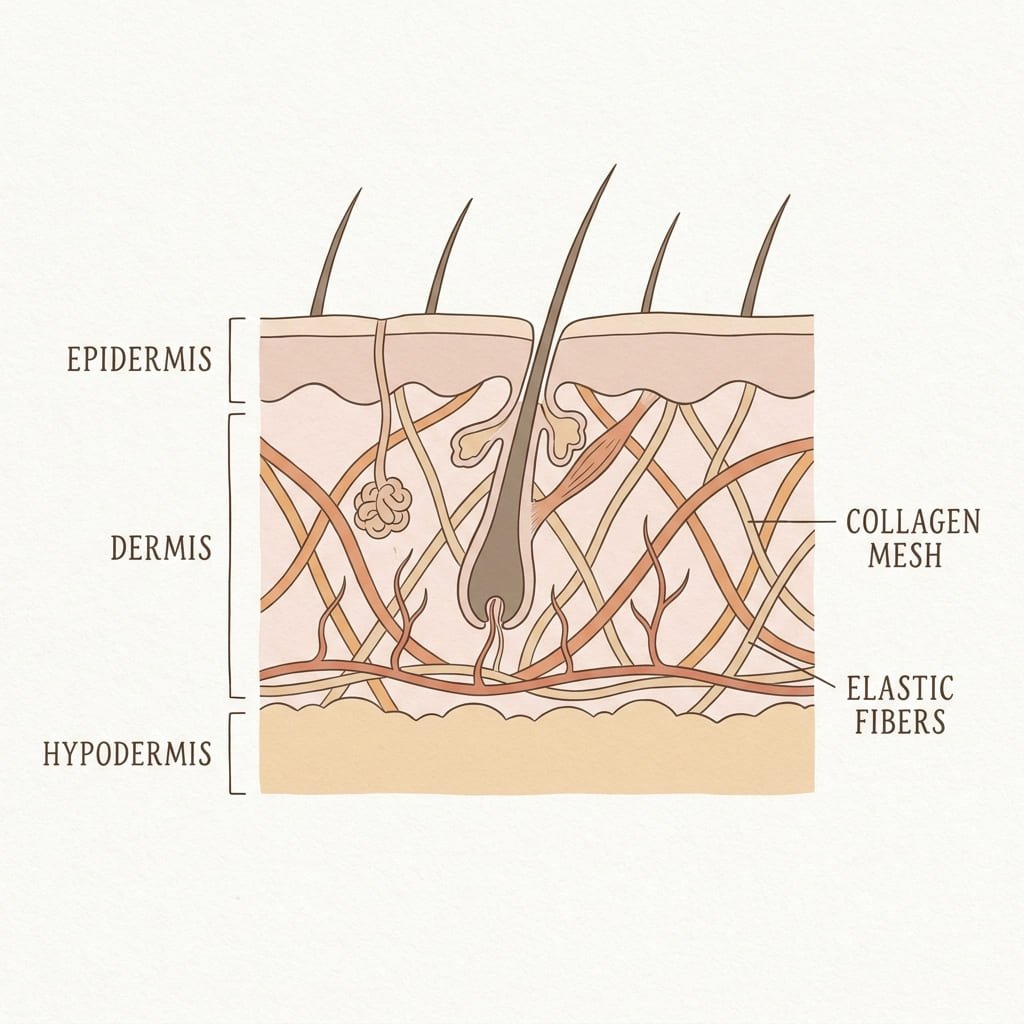
Collagen makes up roughly 30% of your body’s total protein, according to Cleveland Clinic, and it provides the structural support behind firm, elastic-looking skin. As collagen breaks down faster than your body replaces it, skin becomes thinner, drier, and more prone to visible wrinkling and sagging.
That process isn’t caused by one thing. It’s the sum of several separate factors, some avoidable and some not, and they don’t all operate on the same timeline or through the same mechanism. Some causes act gradually over decades; others, like sun exposure on a given afternoon, contribute damage in a single sitting. Understanding which category a given cause falls into matters, because it changes what kind of intervention — if any — actually makes sense.
Cause 1: Natural Aging
Collagen production starts declining gradually in your 20s. The decline accelerates further as you get older, and Cleveland Clinic notes that everyone experiences a noticeable drop after age 60. Women in particular see a significant reduction in collagen production after menopause, driven by hormonal changes rather than skincare habits. This is the one cause on the list that no product, topical or otherwise, can fully prevent — it’s a matter of managing the rate of decline, not stopping it.
Cause 2: UV Exposure
Sun exposure is one of the most significant, and most preventable, drivers of collagen breakdown. Ultraviolet light doesn’t just fail to help collagen — it actively accelerates its breakdown and slows new collagen production, which is part of why sun-exposed skin ages faster than skin that’s been consistently protected. Dermatologists consistently point to cumulative, everyday sun exposure — not just obvious sunburns — as the bigger long-term contributor.
Cause 3: Smoking
Smoking decreases collagen production directly and damages both collagen and elastin, the two proteins responsible for skin’s firmness and bounce. Nicotine also constricts blood vessels near the skin’s surface, which reduces the oxygen and nutrients that reach skin cells. Even secondhand smoke exposure has been linked to some of these same effects, which is part of why avoiding it entirely, not just cutting back, is the standard recommendation.
Cause 4: Sugar and Refined Carbohydrates
This one surprises people. Excess sugar attaches to proteins in the body through a process called glycation, forming compounds that damage nearby proteins, including collagen. Over time, this makes collagen weaker, drier, and more brittle — a slower, less visible process than sun damage, but a real one. Unlike sunburn, there’s no single moment where the damage becomes obvious, which is part of why this cause tends to get less attention than it probably deserves.
Cause 5: Underlying Health Conditions
Certain autoimmune diseases, including rheumatoid arthritis, lupus, and scleroderma, are known to damage collagen directly. Genetic conditions like Ehlers-Danlos syndrome affect how collagen is structurally built in the first place. These causes are less common, but they’re a reminder that collagen loss isn’t always a lifestyle issue, and in these cases, addressing the underlying condition with a doctor matters far more than any skincare routine, mask or otherwise.

The Coverage Gap, Laid Out Plainly
It helps to see the mismatch side by side rather than just described in prose:
- Natural aging / menopause — not addressed by topical masks
- UV exposure — not addressed by topical masks (sunscreen is the actual fix)
- Smoking — not addressed by topical masks
- Sugar and glycation — not addressed by topical masks
- Underlying health conditions — not addressed by topical masks; requires medical care
- Surface dryness and dullness — this is the one a hydrating mask actually helps with
Laid out this way, the gap is hard to miss: one out of six items on this list is genuinely within a hydrating mask’s reach when it comes to collagen loss. That’s not an argument against using one — it’s an argument for knowing exactly what you’re buying it for.
What a Hydrating Sheet Mask Actually Addresses
Here’s where the honest mismatch shows up. None of the five causes above are things a topical sheet mask — collagen-branded or otherwise — can meaningfully touch. A mask isn’t reversing hormonal aging, undoing sun damage, repairing smoking-related damage, correcting glycation, or treating an autoimmune condition.
What a hydrating mask, including collagen-branded ones, can do is address the visible surface symptom: temporary dryness, dullness, and a lack of plumpness. Ingredients like hyaluronic acid genuinely hydrate the skin’s surface, and that hydration does make fine lines look less pronounced and skin look more radiant, at least for a while.
This is a real, legitimate benefit. It’s just a different problem than the one collagen loss describes. A sheet mask addresses how your skin looks and feels in the moment; it doesn’t touch why collagen is declining in the first place. Put another way: it treats the reflection in the mirror tonight, not the five processes that will still be happening tomorrow regardless of what mask you used.
We reviewed one specific hydrating mask in detail, including what’s actually in the formula and what it can realistically deliver, in our collagen mask review, if you want a closer look at where this particular category of product actually earns its marketing and where it overstates.
What Actually Moves the Needle on Collagen Loss
According to dermatologist Dr. Shilpi Khetarpal, cited by Cleveland Clinic, there are a handful of interventions with more evidence behind them than a topical mask alone. None of these are as immediately gratifying as an overnight hydrogel mask, which is part of why they’re less heavily marketed, even though they target the actual mechanisms behind collagen loss rather than its appearance.
Daily Sunscreen
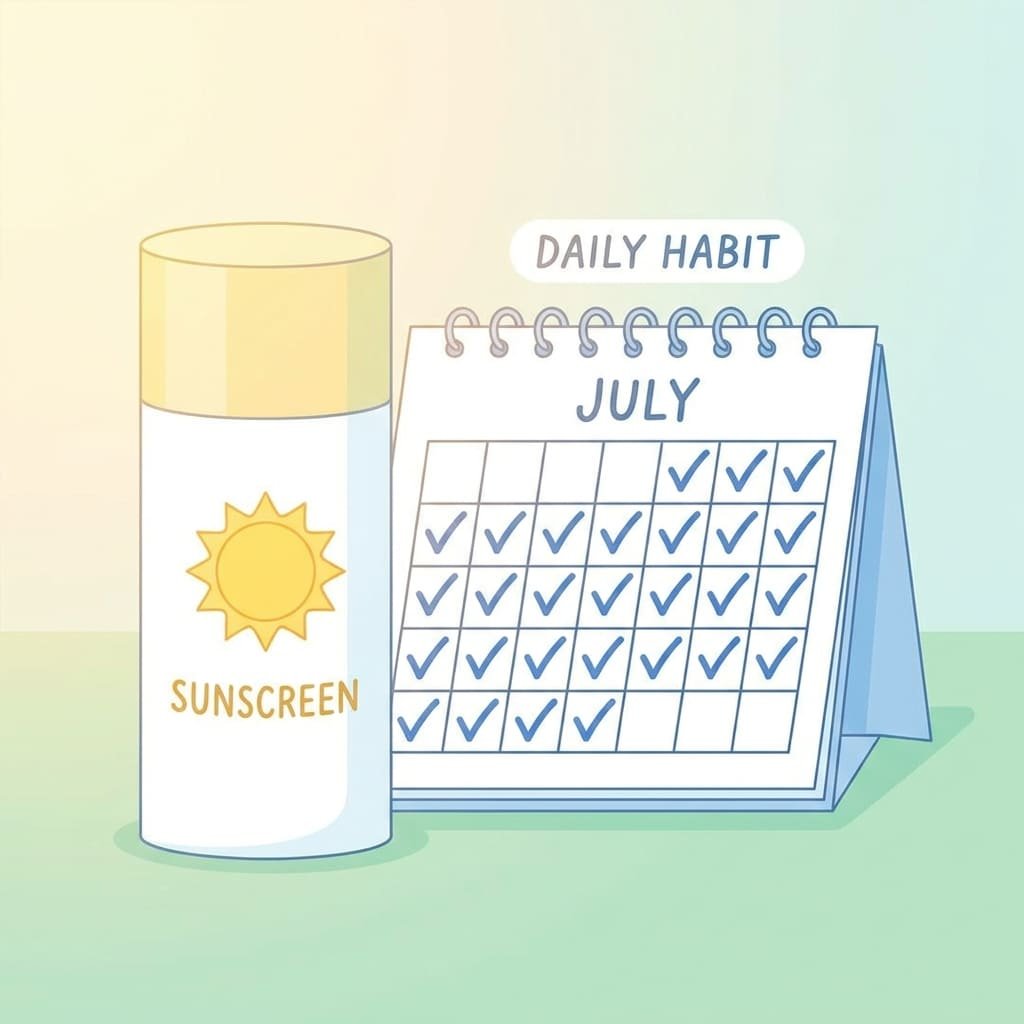
This is the single most consistently recommended step across dermatology sources. Since UV exposure is one of the most significant drivers of collagen breakdown, daily sunscreen use directly addresses one of the five root causes rather than just the surface symptom. Broad-spectrum SPF 30 or higher, applied daily rather than only on obviously sunny days, is the standard recommendation.
Avoiding Cigarettes and Secondhand Smoke
Since smoking directly damages collagen and elastin, avoiding it is one of the few interventions that removes an active cause of collagen loss rather than compensating for it afterward. This is also one of the few causes on this list where the benefit of stopping shows up relatively quickly compared to reversing years of existing damage.
Topical Antioxidants
Vitamin C and vitamin E, used topically, help protect against environmental stressors like smoke and UV rays. Unlike collagen itself, some antioxidant molecules are small enough to have a meaningful effect at the skin’s surface, and they’re often paired with sunscreen for a more complete daily defense against the causes described above.
Vitamin A-Based Topicals
Prescription-strength tretinoin, along with over-the-counter retinoids, has shown effectiveness in both scientific studies and long-term clinical use for stimulating collagen production, according to Cleveland Clinic. This is a meaningfully different mechanism than a hydrating mask — it’s aimed at production, not just surface appearance, though it typically requires weeks to months of consistent use before changes become visible.
In-Office Procedures
Treatments like microneedling are performed specifically to stimulate the skin’s own collagen production, a different goal than temporarily hydrating existing skin. These require a dermatologist and carry more cost and downtime than a sheet mask, which is part of why over-the-counter products remain the more common first step for most people, even when they’re not addressing the underlying causes as directly.
What to Look for If You Want Real Results
If your actual goal is addressing collagen loss rather than just improving how skin looks for a day or two, a few distinctions are worth keeping in mind while shopping:
- Sunscreen with broad-spectrum SPF 30+ — the single highest-evidence daily habit for slowing collagen breakdown.
- Retinoid or tretinoin-based products — look for ingredients that target collagen production, not just surface hydration.
- Realistic marketing language — a product that promises to “restore” or “replenish” collagen through topical application alone is describing something the current science doesn’t support.
- Hydrating masks as a complement, not a solution — genuinely useful for texture and appearance, but not a substitute for the interventions above.
- A dermatologist consultation for procedures — treatments like microneedling should be performed by a qualified professional, not attempted at home.
- Consistency over intensity — most evidence-backed interventions, from sunscreen to retinoids, work through daily repetition over months, not a single high-intensity treatment.
Thinking of a skincare routine as layers aimed at different causes, rather than one product meant to solve collagen loss entirely, tends to produce more realistic expectations and, generally, better long-term results.
Frequently Asked Questions
Can any skincare product actually rebuild collagen? Topical vitamin A derivatives like retinoids and tretinoin have evidence for stimulating collagen production; most other topical ingredients, including collagen itself, cannot meaningfully rebuild it.
Does diet affect collagen loss? A well-balanced diet with vitamin C, zinc, copper, and amino acids from foods like citrus, leafy greens, and lean protein provides the raw materials your body uses to produce collagen naturally, according to Cleveland Clinic, though diet alone won’t offset major contributors like sun damage or smoking.
How long does it take to see results from collagen-focused skincare? Interventions that actually stimulate collagen production, like retinoids, typically take several months of consistent use before visible changes appear — there’s no fast fix for structural collagen loss.
Is a hydrating collagen mask a waste of money if it doesn’t rebuild collagen? Not necessarily — it depends on what you’re using it for. As a hydration and appearance treatment, it can genuinely work well; as a long-term collagen-rebuilding strategy on its own, it isn’t going to deliver that.
At what age should I start worrying about collagen loss? Collagen production begins declining gradually in your 20s, so preventive habits like sunscreen and avoiding smoking are worth starting well before visible signs of aging appear, rather than waiting to react to them.
Can collagen supplements help where masks fall short? Cleveland Clinic notes that evidence for oral collagen supplements is limited and mostly funded by the supplement industry itself, so they shouldn’t be assumed to be a stronger fix for collagen loss than topical products just because they’re ingested rather than applied.
The Bottom Line
Collagen loss is a real, multi-causal problem — natural aging, sun exposure, smoking, sugar, and in some cases underlying health conditions all play a role. A hydrating sheet mask, collagen-branded or not, realistically addresses one small piece of what shows up on the surface: temporary dryness and dullness.
That’s a legitimate use for a product like this. It’s just not the same thing as solving collagen loss itself, and the honest answer is that no single product — mask, cream, or serum — currently can. The interventions with real evidence behind them (sunscreen, avoiding smoking, retinoids, and in some cases in-office procedures) work on the actual causes; a hydrating mask works on how skin looks today.
If there’s one practical takeaway, it’s this: budget for sunscreen and consistency before budgeting for the next viral mask. The mask can still earn a place in the routine — just not as a stand-in for the things that actually address why collagen loss happens in the first place.
This article is for general informational purposes and is not medical advice. Talk to a dermatologist before starting any new skincare regimen, especially prescription-strength retinoids or in-office procedures.