

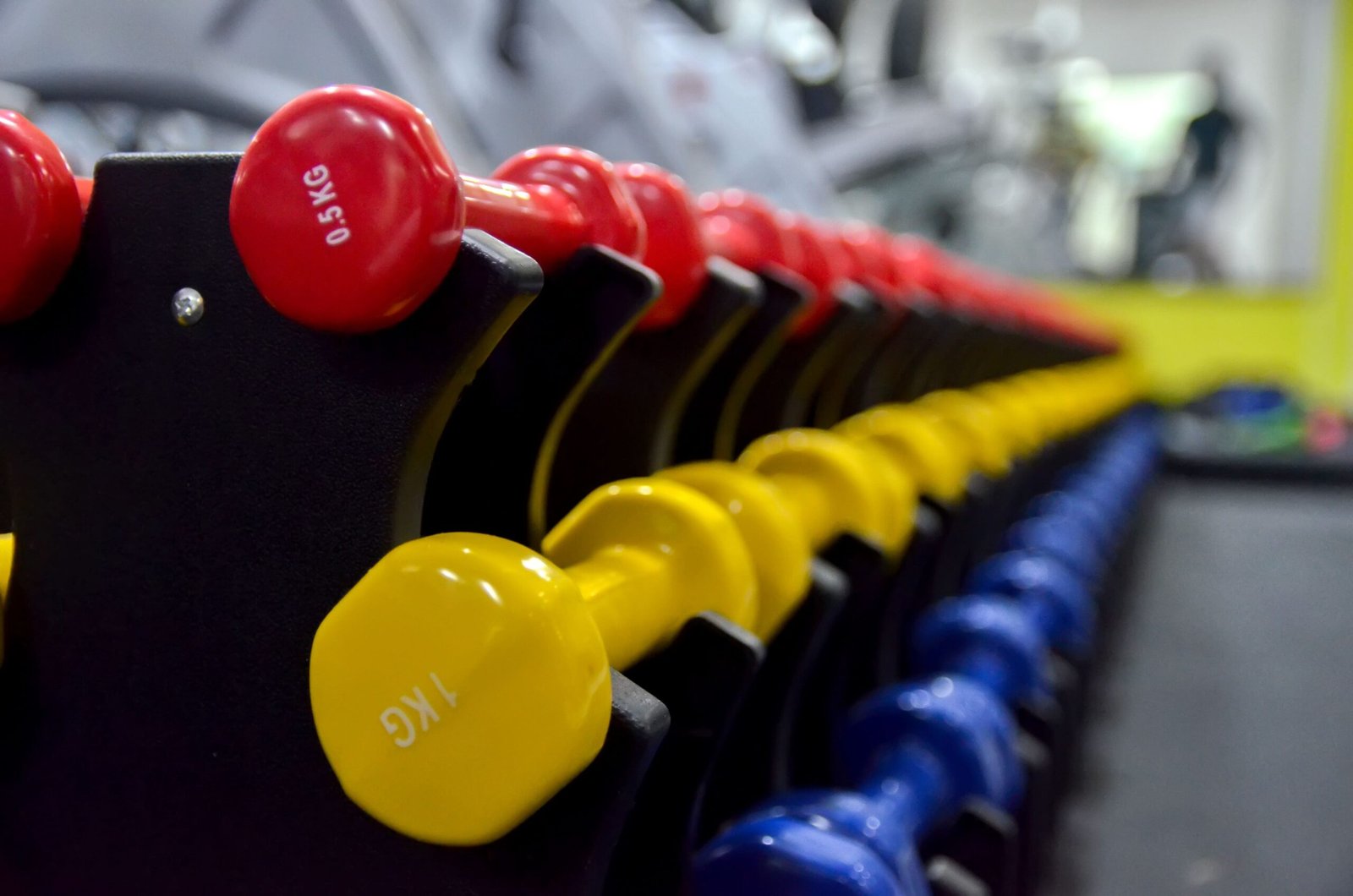
Light dumbbells have a reputation problem. Walk into most gyms and the unspoken hierarchy is obvious: heavier is better, and anything under 10 pounds gets treated as a warm-up weight at best. Recent research tells a more complicated story, and a simple 7-pound pair of dumbbells turns out to be a genuinely useful tool for a lot of goals, not a compromise or a starting point to abandon as soon as possible.
This matters beyond gym culture, too. For anyone working out at home with limited space or a modest equipment budget, knowing that light dumbbells can genuinely do real work — not just serve as a stepping stone to “real” weights — changes what’s actually worth buying.
Table of Contents
The “Light Weights Don’t Work” Myth, Debunked
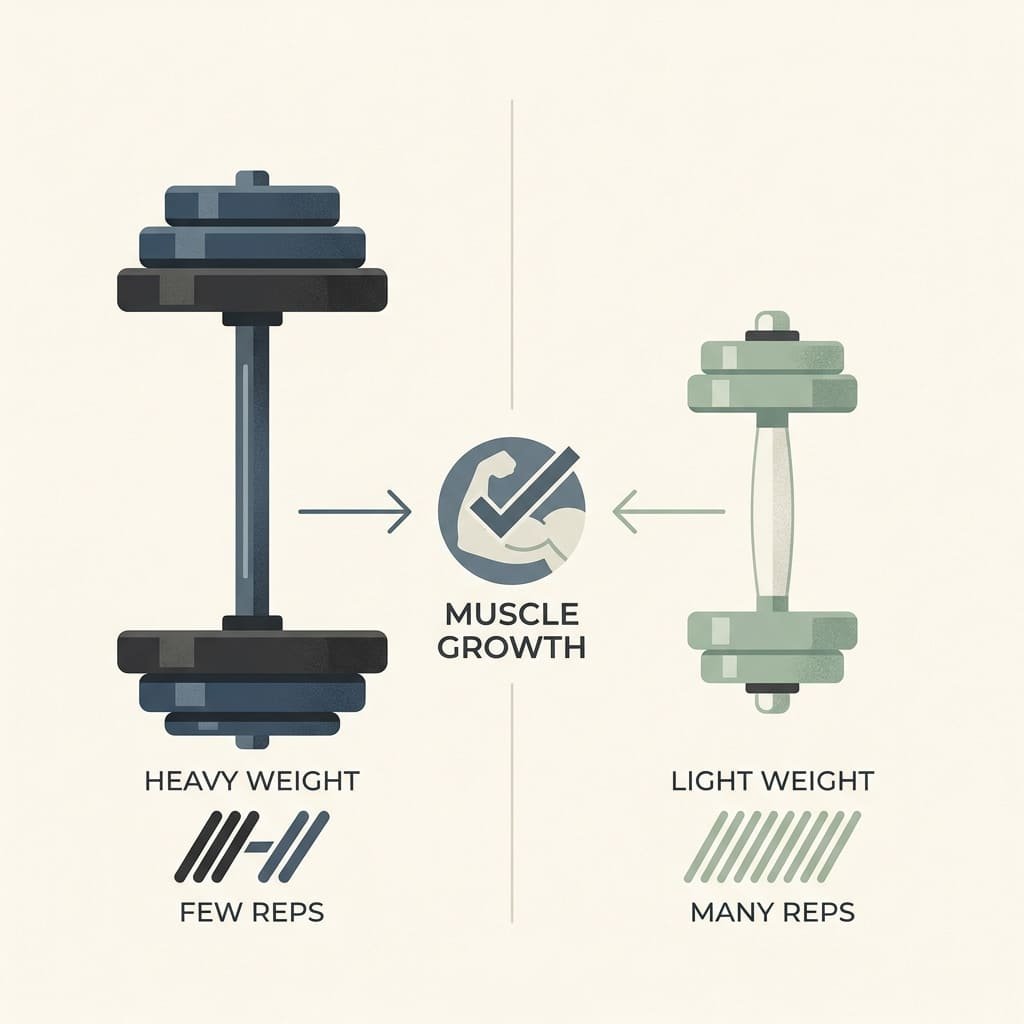
This is one of the more persistent myths in fitness, and it doesn’t hold up against the actual research. A systematic review and meta-analysis by researcher Brad Schoenfeld and colleagues found that muscle growth was essentially similar between people training with heavy loads (roughly 6 to 12 reps) and people training with light loads (15 to 30-plus reps), as long as the sets were taken to or near muscular failure.
That finding directly challenges decades of conventional gym wisdom, which treated the 6-to-12 rep range as the only real “hypertrophy zone” worth training in. The controlled research simply didn’t hold that assumption up when tested properly.
A separate study cited by a certified personal trainer writing for TODAY found that after 8 weeks of strength training, people lifting heavier weights for fewer reps gained more strength, but people lifting lighter weights for more reps showed more muscle-building activity. The trainer’s own personal approach is worth noting directly: she specifically avoids weights heavier than 7 pounds, since heavier loads bulk up her shoulders, back, and chest in a way she doesn’t want, sticking instead to 3- and 5-pound dumbbells for a leaner, more toned look.
That’s a genuinely useful real-world data point, since it shows a light-weight approach isn’t just theoretically valid in a research paper — it’s a deliberate strategy actual trainers use with real clients, applied consistently over years of coaching rather than as a one-off recommendation.
What “Close to Failure” Actually Means
The catch in all of this research is the phrase “close to failure,” and it’s the part that actually determines whether light dumbbells work or don’t. It doesn’t mean lifting until you physically can’t move the weight anymore — it means pushing a set until good form starts to break down and another full rep feels genuinely difficult, not just uncomfortable.
This is where light dumbbells specifically earn their reputation as a legitimate training tool rather than a beginner’s compromise. A 7-pound weight taken through 20 or more reps to that point of near-failure creates real muscular fatigue, which is the actual driver of growth — not the number printed on the dumbbell itself. Metabolic stress from that sustained, higher-rep effort appears to trigger similar muscle-building signaling to the mechanical tension created by heavier, lower-rep lifting, even though the two feel completely different in the moment.
This is genuinely counterintuitive for anyone who grew up on the “lift heavy or don’t bother” school of thought, but it’s exactly the kind of finding that separates outdated gym folklore from what controlled research actually shows, and it’s a useful reminder that fitness advice ages just as unevenly as advice in any other field.
The Exact Tool for This: A 7-Pound Neoprene Dumbbell Pair
For anyone actually trying to apply this research at home, the equipment question is refreshingly simple: a basic pair of 7-pound neoprene dumbbells covers most of what this style of training requires. We reviewed one specific option in detail — including grip comfort, no-roll hexagon design, and exactly which exercises this weight suits — in our neoprene dumbbells review, which breaks down the weight-matching question exercise by exercise.
That review’s central finding lines up directly with the research described above: a fixed 7-pound weight isn’t a compromise for people who “can’t lift heavier” — it’s a legitimately well-matched tool for isolation movements and close-to-failure training specifically, which is exactly the style of training this research supports. The two things line up almost perfectly, which isn’t a coincidence so much as a reflection of what this particular weight range is actually good for.
What makes this particular weight class useful isn’t a special feature — it’s that 7 pounds sits in a genuinely versatile spot for isolation-style, close-to-failure training: heavy enough to create real fatigue within a 15-to-25 rep range for most people, light enough to maintain good form through that many repetitions without the movement breaking down halfway through the set.
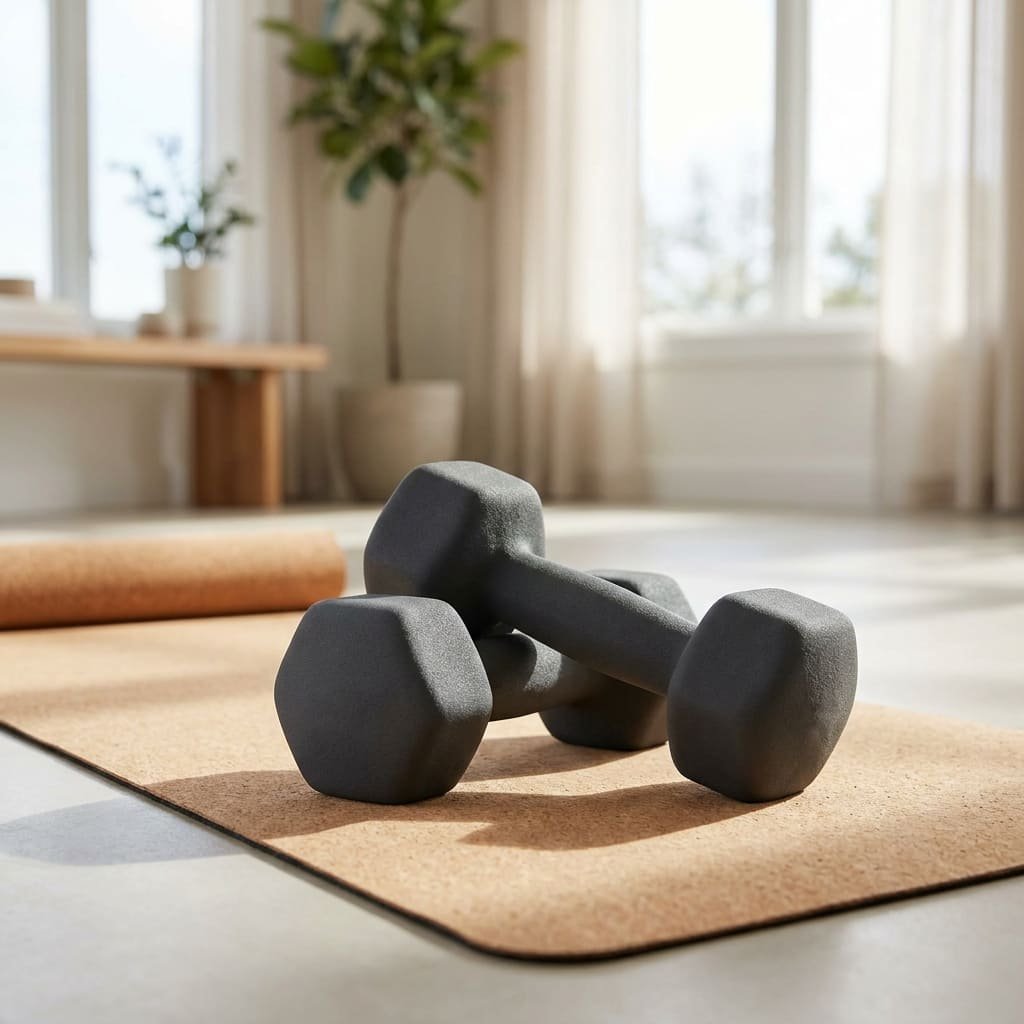
The soft neoprene coating and no-roll hexagon shape also matter more for this style of training than they might for heavy, low-rep lifting, since higher-rep sets mean more total time with the weight in your hand — grip comfort adds up over 20 reps in a way it doesn’t over 5. A hard-edged or slippery dumbbell that’s tolerable for a five-rep heavy set becomes a genuine distraction by rep 18 of a lighter set, which is part of why the material and shape of a light dumbbell pair matters more than it might initially seem.
A Real 7-Pound Routine You Can Do Today
Here’s a straightforward way to put a pair of 7-pound dumbbells to work, built around the close-to-failure principle rather than an arbitrary rep count.
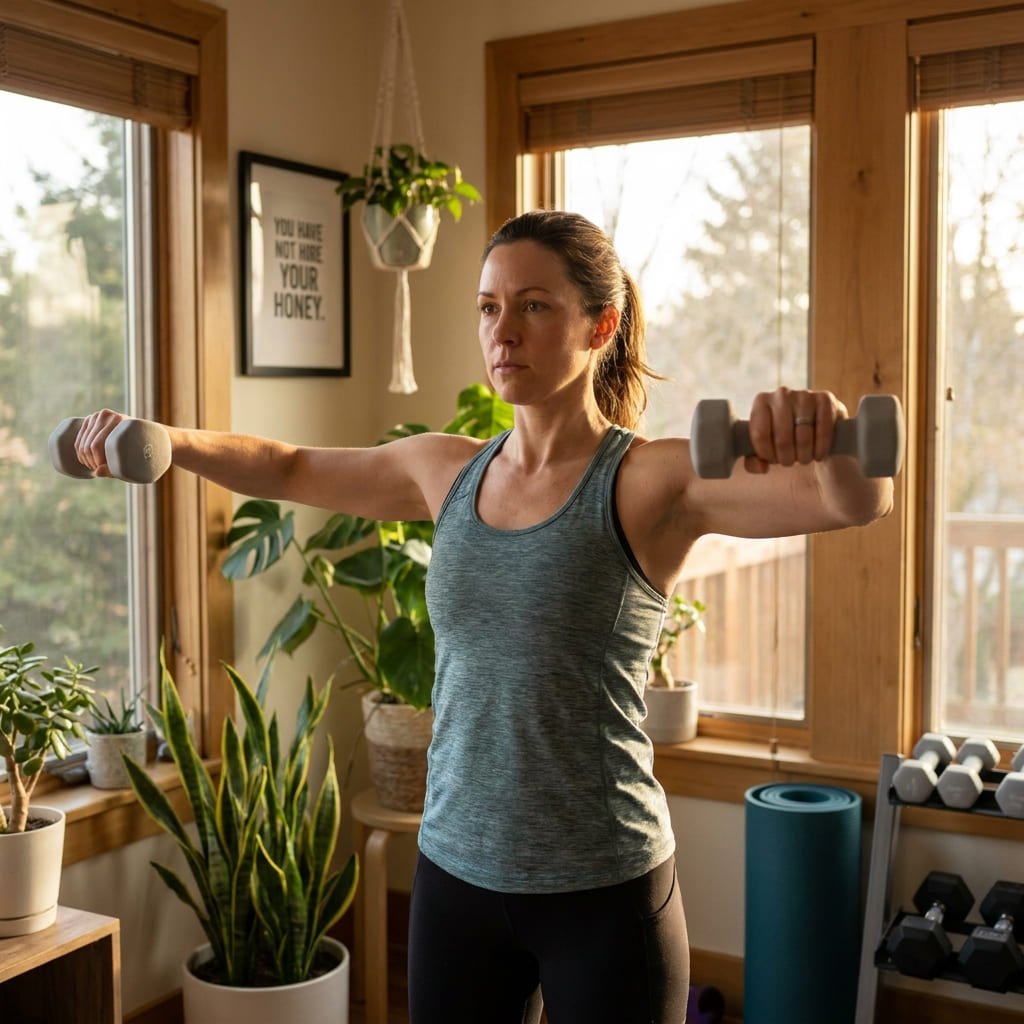
Bicep curls — 3 sets, aiming for 15 to 20 reps, stopping when the last few reps feel genuinely hard to complete with good form using a light dumbbells pair. Lateral raises — 3 sets of 12 to 15 reps, since this smaller stabilizer-heavy movement typically fatigues faster than curls. Tricep kickbacks — 3 sets of 15 reps, focusing on a controlled movement rather than momentum. Overhead presses — 3 sets of 12 to 15 reps, which will likely feel more challenging than the other movements given how many muscle groups are involved.
For each exercise, the goal isn’t hitting an exact number — it’s reaching that near-failure point within roughly that rep range using your light dumbbells. If 20 reps feels easy with room to spare, the fatigue-to-growth relationship the research describes isn’t really being triggered yet, and it’s worth either slowing the tempo, adding a pause at the hardest point of the movement, or reconsidering whether a heavier light dumbbell pair might be a better match for that specific exercise.
A full circuit through all four movements, with roughly 30 to 45 seconds of rest between sets, takes most people around 20 to 25 minutes — genuinely achievable as a standalone home workout two or three times a week, without needing a gym or a rack of different weights, a home barbell setup, or a subscription to a fitness app to follow along.
When Heavier Weights Still Matter
It’s worth being honest about where this research doesn’t apply evenly: maximal strength gains still favor heavier loads. If the specific goal is lifting the most weight possible — not muscle size, not toning, but raw strength — lower-rep training with heavier resistance has a real, measurable advantage that light dumbbells can’t fully replicate.
This is also where the practical limits of a fixed-weight pair like a 7-pound set become relevant. Isolation exercises, light cardio work, and close-to-failure training in the 15-to-25 rep range are squarely in this weight’s wheelhouse; heavy compound lifts like squats or deadlifts were never going to be, regardless of what the research on light-weight hypertrophy shows. Anyone specifically training for a strength milestone — a heavier deadlift, a bodyweight pull-up progression — will eventually need resistance beyond what a single pair of light dumbbells can offer.
That’s not a knock against light dumbbells as a category. It’s simply a reminder that “works for muscle growth” and “works for every fitness goal” aren’t the same claim, and conflating them is its own small myth worth avoiding — one that’s easy to fall into once you’ve absorbed the genuinely good news about lighter-load training.
What to Look for If You’re Starting With Light Dumbbells
If this approach sounds like a fit, a few practical details make the difference between a set of light dumbbells that gets used regularly and one that ends up in a closet:
- A weight that reaches near-failure within 15 to 25 reps for your specific exercises — too light, and you’ll never trigger the fatigue response; too heavy, and you’re back to low-rep territory.
- A comfortable, grippy coating — neoprene or rubber both work well, and comfort matters more here given the higher rep ranges involved.
- A no-roll shape — hexagon heads stay put between sets, which matters when you’re doing multiple exercises back to back.
- Consistency over intensity — this style of training rewards showing up regularly more than it rewards any single brutal session.
- A realistic sense of what light dumbbells can and can’t do — genuinely effective for isolation and hypertrophy-style goals, genuinely limited for maximal strength work.
None of these criteria require a large budget or a home gym setup. A single pair of well-matched light dumbbells, used consistently, covers a meaningful amount of ground on its own.
Frequently Asked Questions
Can you really build muscle with just 7-pound dumbbells? Yes, according to research on light-load training taken close to failure, muscle growth can be comparable to heavier-load training, though maximal strength gains still favor heavier weights.
How many reps should I do with light dumbbells to see results? Research generally points to 15 to 30-plus reps per set, taken to or near muscular failure, as the range where light-load training becomes effective for muscle growth.
Is 7 pounds too light for someone with some lifting experience? It depends on the exercise — isolation movements like curls and raises can still be genuinely challenging at 7 pounds if taken to near failure, while compound lifts will likely need more resistance regardless of experience level.
Do I need to lift to complete failure every set? No — “close to” failure is the actual research finding, meaning the last couple of reps feel genuinely difficult, not that you need to lift until the weight physically stops moving.
Why do some trainers specifically avoid heavier dumbbells? Some prefer the leaner, more toned look associated with higher-rep, lighter-load training, since heavier low-rep training tends to build muscle size more noticeably in certain areas like the shoulders and back.
Can I combine light dumbbells with occasional heavier training? Yes — many people use light dumbbells for isolation and toning work while incorporating heavier compound lifts separately for strength, rather than treating the two approaches as mutually exclusive.
The Bottom Line
The idea that light dumbbells are a lesser form of training doesn’t hold up against the actual research. A basic 7-pound pair, used consistently and taken close to failure through higher rep ranges, is a legitimate tool for building muscle and improving tone — not a fallback for people who can’t lift heavier.
The honest caveat is that maximal strength still favors heavier loads, so light dumbbells aren’t the right tool for every goal. But for the isolation-focused, close-to-failure training most people are actually trying to do at home, a simple pair of 7-pound weights covers more ground than their modest size suggests.
The bigger takeaway extends past this one weight class, too: the gym hierarchy that treats light dumbbells as a lesser option is based on outdated assumptions the research has since walked back. What actually matters is how hard a set is pushed, not how heavy the weight looks sitting in the rack.
This article is for general informational purposes and is not medical advice. Consult a healthcare provider or certified trainer before starting a new exercise routine, especially if recovering from injury or managing an existing health condition.