


A study of over 25,000 people who don’t exercise found something that sounds almost too simple to be true: three to four short bursts of vigorous activity a day, each lasting a minute or two, was associated with a 38-40% lower risk of dying from any cause and a 48-49% lower risk of dying from cardiovascular disease. No gym, no structured workout, no leisure time required. Researchers call this “exercise snacks,” and the research behind these exercise snacks is a lot more specific than the catchy name suggests.
Table of Contents
What Exercise Snacks Actually Are
The research comes from a study published in Nature Medicine, led by researchers at the University of Sydney’s Charles Perkins Centre, examining what they call vigorous intermittent lifestyle physical activity, or VILPA. The study tracked 25,241 adults in the UK Biobank who reported no structured exercise or leisure-time activity, using wrist-worn accelerometers to measure brief, sporadic bursts of vigorous movement embedded in ordinary daily life — things like fast walking to catch a bus, carrying groceries up stairs, or brief bursts of intense effort during routine tasks.
Over an average follow-up of 6.9 years, 852 deaths occurred among the study group. The researchers found a near-linear relationship between how much VILPA someone accumulated and their mortality risk: more consistently lower risk, with no evidence of the benefit leveling off at the amounts most people would realistically achieve.
The Research Findings in Detail
The numbers are specific enough to be genuinely useful rather than just a motivational headline. At the median amount recorded in the study — about 3 bouts per day, each standardized to 1 or 2 minutes — participants showed a 38-40% lower all-cause and cancer mortality risk and a 48-49% lower cardiovascular mortality risk compared to people who recorded no exercise snacks at all. Looked at by total daily duration instead of bout count, a median of 4.4 minutes of exercise snacks per day was associated with a 26-30% lower all-cause and cancer mortality risk and a 32-34% lower cardiovascular mortality risk.
Even smaller amounts showed a real effect. The researchers calculated a “minimum dose” — the amount associated with about half of the maximum benefit — at roughly 1.5 bouts per day, or about 3.4 minutes of total daily duration. That’s a genuinely low bar, and it’s part of why this research has gotten attention: it doesn’t require reaching some high threshold before benefits start showing up.
The relationship also held up under scrutiny the researchers specifically tested for. They excluded participants with poor baseline health and separately adjusted for body mass index, and the pattern didn’t meaningfully change either time — a reasonable safeguard against the possibility that people who were already healthier simply happened to move more, rather than the movement itself driving the association. The researchers also calculated what’s known as an E-value, a statistical measure of how strong an unmeasured confounding factor would need to be to fully explain away the results; the values reported were high enough that the researchers considered simple confounding an unlikely full explanation.
Perhaps the most striking part of the study is the comparison group. The same research team repeated the analysis on 62,344 UK Biobank participants who did report regular exercise, looking at their brief vigorous activity bursts specifically. The dose-response pattern was nearly identical to the non-exercisers’ exercise snacks results. In other words, brief vigorous bursts appeared to carry similar benefits whether they came from someone’s only physical activity or were layered on top of an already-active lifestyle.
Why This Works Differently Than Continuous Movement
It’s worth being precise about what exercise snacks are and aren’t, especially since it’s easy to conflate this research with a different, related body of evidence. Our under desk elliptical review covers research on continuous, low-intensity movement — the kind that addresses the specific health risks of sitting still for long stretches. Exercise snacks are a different mechanism entirely: brief, vigorous bursts rather than sustained gentle movement.
These two strategies aren’t competing with each other; they’re addressing two separate problems. Continuous low-intensity movement, like using a device such as an under desk elliptical, targets the risks specifically associated with prolonged stillness. Exercise snacks target something closer to overall cardiorespiratory fitness and the broader mortality benefits associated with reaching vigorous intensity, even briefly. Someone could reasonably use both: continuous gentle movement throughout a sedentary workday, plus a few genuinely vigorous exercise snacks layered on top.

What Actually Counts as an Exercise Snack
The research is specific about intensity, which matters more than most people expect. To count as VILPA in the study, an activity had to reach vigorous intensity — roughly 64% of maximal oxygen capacity or 77% of maximal heart rate — for the bout to register, not just moderate effort. Stair climbing was one of the most commonly cited examples in the underlying research, along with very fast walking and other short bursts of real exertion.
This intensity threshold is worth taking seriously rather than treating as a technicality. A gentle stroll, however pleasant, doesn’t reach the level of exertion the research is describing — the whole point of exercise snacks is that they’re short precisely because they’re hard, not because they’re an easy activity done for a brief time. A useful gut check: an exercise snack should genuinely raise your breathing rate and make conversation difficult for that short window, similar to how the last minute of a hard interval workout feels.
For anyone building this into an existing routine, a few brief sets with a pair of dumbbells can reach that same vigorous-intensity threshold in a short window. Our neoprene dumbbells review covers which exercise categories a lighter weight is actually suited for — useful context for anyone trying to hit genuine vigorous intensity in a one- or two-minute burst rather than a longer, more moderate session.
A walking pad can serve a similar purpose if the pace is pushed into genuinely brisk, effortful territory rather than a leisurely stroll. Our walking pad review covers what to expect from that kind of device during a workday, though it’s worth noting that the continuous, moderate pace most people use a walking pad for during desk work is a different category from the short, vigorous bursts this research is specifically about. A one-minute stretch at maximum incline and speed, rather than the steady background pace typical of desk-based walking pad use, is closer to what the research actually measured.
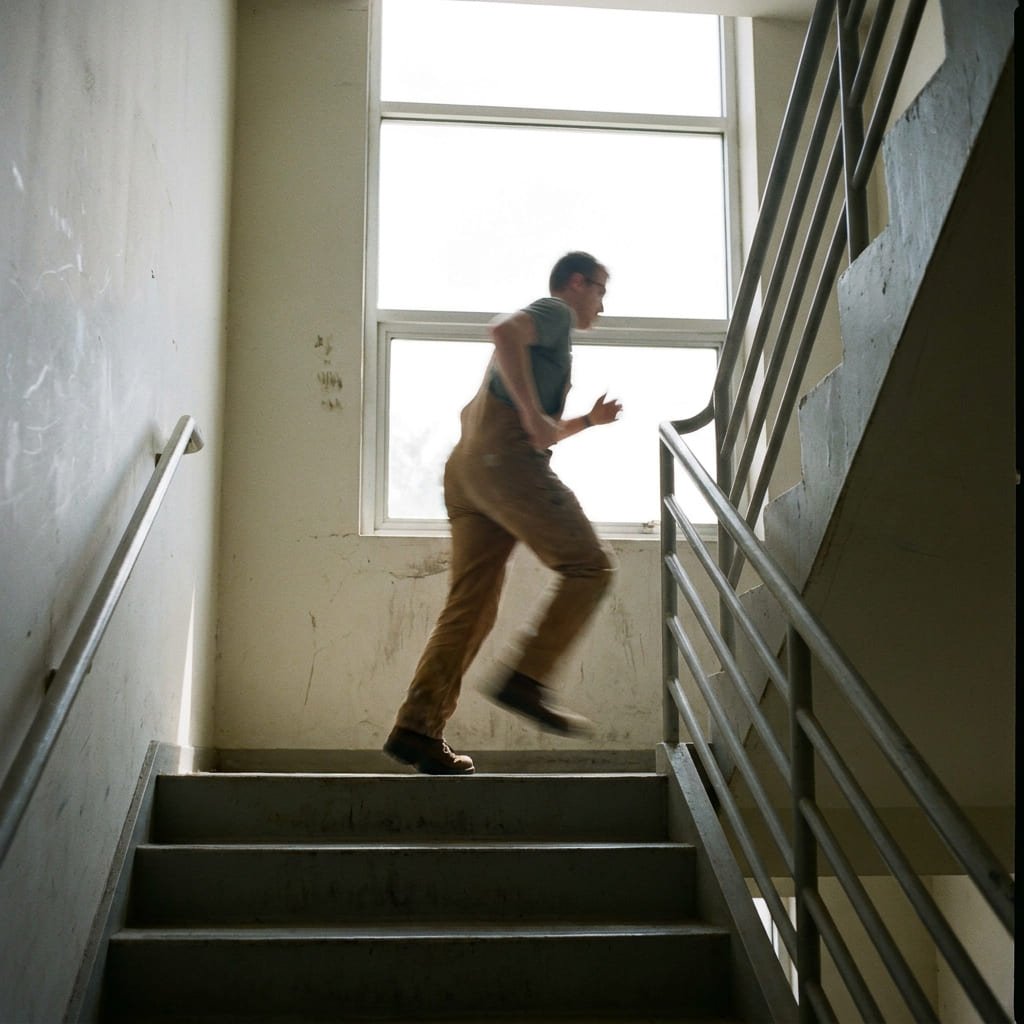
Stair climbing deserves specific mention, since it shows up repeatedly across the broader body of exercise snacks research as one of the most accessible ways to reach genuine vigorous intensity without any equipment at all. For anyone with stairs available at home or at work, a single fast climb — arriving noticeably out of breath at the top — may be one of the simplest ways to accumulate a daily exercise snack without needing to buy anything.
Building Exercise Snacks Into a Day That Already Feels Full
The appeal of exercise snacks, according to the researchers themselves, is largely about feasibility — most adults don’t do structured vigorous exercise, and requiring one more scheduled commitment tends to fail. Our habit stacking guide covers a research-backed way to attach a new habit to something already automatic in a routine, which applies directly here: a one-minute vigorous burst is much easier to attach to an existing moment — right before a meeting starts, immediately after finishing a coffee — than it is to schedule as a separate block of time.
That’s arguably the real takeaway from this research: the amount of time required is genuinely small enough that the usual barriers to exercise — no time, no motivation, no equipment — mostly stop applying. The remaining barrier is just remembering to do it, which is exactly the problem habit stacking is designed to solve.

Who This Research Matters Most For
The strongest version of this finding applies specifically to people who don’t currently do any structured exercise, since that’s who the core analysis followed. If reaching for a formal workout routine has never felt realistic or sustainable, this research suggests brief vigorous bursts woven into an already-existing day may offer a meaningful alternative rather than requiring a full lifestyle overhaul first.
That said, the comparison analysis on regular exercisers suggests this isn’t just a consolation prize for people who don’t work out. Brief vigorous bursts appeared to carry real additional value even for people already exercising regularly, which is a reasonable argument for treating exercise snacks as a genuine complement to structured activity, not just a fallback for people who skip it entirely.
Age is also worth mentioning, since the study population had a mean age of 61.8 years, meaningfully older than the general working-age population. This actually strengthens the practical case for exercise snacks for older adults specifically — a demographic often advised to avoid high-impact structured exercise, for whom brief, self-paced bursts of vigorous effort woven into daily tasks may be a genuinely accessible option that traditional gym-based recommendations aren’t.
Frequently Asked Questions
How much exercise snack activity do I actually need to see a benefit? The research found meaningful associations starting at roughly 1.5 bouts per day, or about 3.4 minutes of total daily duration — a genuinely small amount compared to structured exercise guidelines.
Do exercise snacks need to be vigorous, or does moderate effort count? The research specifically measured vigorous-intensity activity, defined by reaching about 64% of maximal oxygen capacity or 77% of maximal heart rate during the bout. Moderate-effort activity wasn’t the focus of this particular study.
Can exercise snacks replace a structured workout routine entirely? The research doesn’t establish that exercise snacks are equivalent to a full structured exercise program in every respect — it establishes that brief vigorous bursts, done consistently, are associated with substantial mortality risk reductions on their own, particularly for people who don’t do structured exercise at all.
Is this the same thing as using a continuous movement device like an under desk elliptical? No. Exercise snacks are brief, vigorous bursts, while a device like an under desk elliptical provides continuous, low-intensity movement. They address different specific health risks and can reasonably be used together rather than as substitutes for each other.
What are some realistic examples of an exercise snack? The underlying research points to things like brisk stair climbing, very fast walking for a short stretch, or brief bursts of vigorous effort during routine daily tasks — activities most people already have opportunities for without needing dedicated exercise time.
The Bottom Line
The exercise snacks research is one of the more genuinely encouraging findings in recent physical activity science, precisely because the bar it sets is so low: a few minutes a day, done vigorously and consistently, associated with mortality risk reductions that rival much larger time commitments. It isn’t a replacement for every other health strategy covered on this site, but it’s a legitimate, evidence-backed option for anyone whose actual barrier to exercise has always been time, not willpower.
It’s also worth remembering what this research doesn’t claim. It’s an observational study, not a randomized controlled trial, which means it demonstrates a strong association rather than definitive proof that exercise snacks directly cause the mortality reduction observed. The researchers accounted for this limitation carefully — through the sensitivity analyses, E-value calculations, and consistency checks described above — but the honest framing is that this is very strong observational evidence, not the same standard of proof a randomized trial would provide. That distinction doesn’t make the finding less worth acting on; it’s simply the accurate way to describe what the research actually shows.
This article reflects published research from Nature Medicine and the University of Sydney’s Charles Perkins Centre. It is not personalized medical advice — consult a healthcare provider before beginning any new vigorous exercise routine, particularly if you have a cardiovascular condition or other health concerns.