


Most health resolutions fail for a boring reason: they ask you to remember something new, at a random time, with nothing prompting you to actually do it. Habit stacking works differently. Instead of relying on willpower to remember a new behavior, you attach it to something you already do automatically — brushing your teeth, making coffee, getting into bed — so the existing habit becomes the cue for the new one.
This isn’t a wellness trend with no backing. It’s a habit stacking technique explained by a Cleveland Clinic psychologist, built on a real behavioral principle, and it maps unusually well onto four separate areas of a daily routine: what you eat, how you move, how you track your health, and how you take care of your skin. Here’s what habit stacking actually involves, and where it fits into each of those four areas specifically.
Table of Contents
What Habit Stacking Actually Is (and Why It Works)
According to Cleveland Clinic psychologist Dr. Lauren Alexander, habit stacking works by taking advantage of behaviors that are already automatic and reliable, then attaching a new habit directly to one of them. The existing habit — already wired into your routine — becomes the trigger for the new one, without requiring you to remember it on your own.
Dr. Alexander notes that building a new habit can take anywhere from 18 to 200 days, and success depends heavily on two things: how difficult the new behavior actually is, and whether you enjoy doing it in the first place. That’s a wide range, and it lines up with a broader pattern documented in NIH-published clinical research: adherence to healthy behaviors remains low across the general population, even when people genuinely intend to follow through.
The process itself is simple in principle, even if the execution takes patience. First, list the habits already automatic enough that you do them without thinking — making coffee, brushing your teeth, getting into bed. Then list the new behaviors worth building. The key step in habit stacking is matching a new behavior to an existing one that actually makes sense together, rather than forcing a pairing just because both slots are open in your day. A habit stack that fights your natural energy or mood at that time of day is far less likely to survive past the first week.
That’s exactly the gap habit stacking is designed to close. Rather than adding four or five unrelated new behaviors to a day that has no room for them, the idea is to attach each one to something that already happens reliably — which is where these four specific areas of a routine come in.
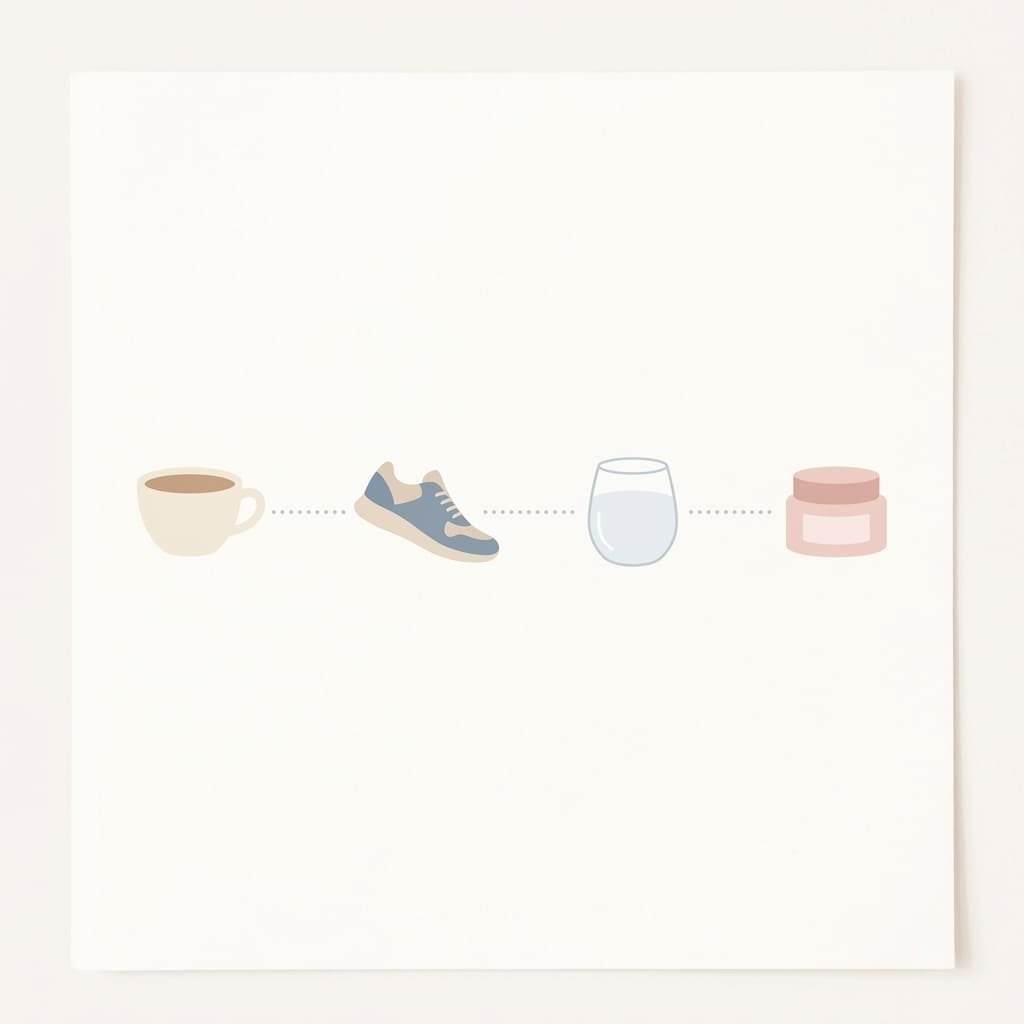
Pillar One: The Morning Nutrition Stack
Supplements are one of the easiest habits to forget, mostly because there’s no natural cue reminding you to take them. Stacking them onto something you already do every morning — making coffee, pouring cereal, brushing your teeth — removes that problem almost entirely. The habit stacking principle works especially well here because the physical act of taking a supplement takes only a few seconds; the entire barrier is remembering to do it, not the difficulty of the behavior itself.
Magnesium is a common example, since it’s frequently taken in the evening for sleep support but works just as well stacked onto an existing morning routine if evening consistency is harder to maintain. Our magnesium glycinate review covers the specific form worth looking for on a label, since not all magnesium supplements use the same compound.
Creatine follows the same logic, but the habit that matters most is timing consistency rather than time of day specifically. Our Nutricost creatine monohydrate review grades six common marketing claims against the actual research, and one of the few claims that holds up consistently is that daily consistency matters more than precise timing — which makes it a genuinely easy habit to stack onto an existing morning routine, like a stack right next to the coffee maker.
Placement matters as much as the supplement itself in this kind of habit stacking. A bottle left in a kitchen cabinet gets forgotten; a bottle placed directly next to the coffee maker or the toothbrush becomes part of the visual routine, which does most of the reminding work automatically.
Pillar Two: The Movement Stack
Movement habits tend to fail for a different reason than supplement habits: they require a bigger behavioral shift, not just a memory cue. Cleveland Clinic’s own habit-stacking guidance addresses this directly, recommending a technique called shaping for behaviors that feel too big to attach directly — starting small and building up, rather than expecting a full workout habit to form overnight.
A walking pad fits this shaping approach well, since it can be used in short five- or ten-minute stacks throughout a workday rather than requiring a dedicated workout block. Our walking pad review covers what to actually expect from using one during desk work, including the parts of the marketing that oversell the experience.
Light dumbbells work as a stack in the opposite direction — instead of spreading movement throughout the day, they attach to something that already happens once, like right after a shower or right before bed. Our neoprene dumbbells review breaks down which exercise categories a lighter weight is actually appropriate for, since the right stack depends on matching the weight to the movement.
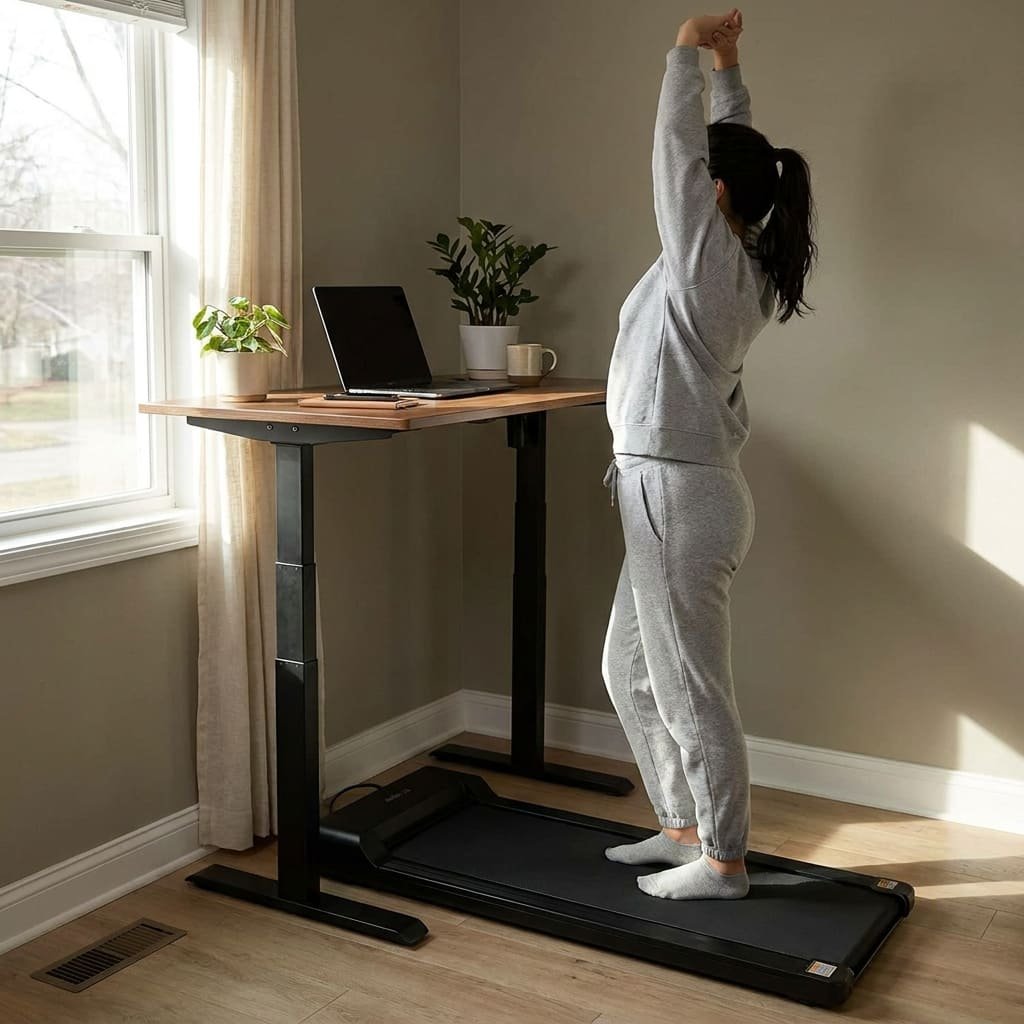
The shaping principle is worth applying literally here rather than treating it as an abstract idea. Someone attempting a full walking-pad session on day one, right after months of sitting, is setting up the same failure pattern habit stacking is meant to avoid — a single hard behavior with no existing cue behind it. Five minutes stacked onto an existing meeting or call is a far more realistic starting point for building this kind of habit stacking routine than an hour-long session attempted cold.
Pillar Three: The Sleep and Tracking Stack
Hydration and sleep are two of the most commonly abandoned health habits, largely because both depend on remembering something at a time of day when you’re not thinking about your health at all. This is where an externally cued device tends to outperform a habit you’re relying on memory alone to maintain — a genuine exception to the pure habit-stacking model, since there isn’t always a single reliable anchor point to stack onto.
A hydration reminder is a direct example of habit stacking built into a product rather than something you have to construct yourself — the device provides the cue instead of you having to remember it. Our smart water bottle review fact-checks the specific marketing claim used to sell this category of product, separating the part that’s genuinely useful (the reminder mechanism) from the part that isn’t well supported by the research.
A sunrise alarm clock works on the same stacking principle at the other end of the day: it attaches a wake-up cue to something that already has to happen — waking up — rather than asking you to build an entirely new evening habit from scratch. Our smart alarm clock review covers what the Echo Spot actually does differently from a standard alarm, and where the “sunrise lamp” framing oversells the effect.
Both of these products essentially outsource the cueing function that habit stacking normally asks a person to build manually. That’s a reasonable trade-off specifically for behaviors, like hydration, that don’t have one obvious existing habit to attach to throughout an unpredictable day.
Pillar Four: The Evening Skin Stack
This is the pillar Cleveland Clinic’s own habit-stacking guidance uses as its central example: once an evening skin care routine becomes automatic, it becomes a foundation you can stack additional habits onto, precisely because it already happens every night without much thought. This is arguably the clearest real-world habit stacking example of all four pillars, since it’s the exact one used in the original clinical guidance.
A hydrating sheet mask is a natural fit for this kind of habit stacking, since it slots into a routine that’s already happening rather than requiring a new time slot. Our BIODANCE collagen mask review covers what the ingredient list actually supports versus what the marketing implies about collagen specifically.
A jelly cream works the same way, typically stacked directly after cleansing as part of an existing sequence rather than as a separate standalone step. Our collagen jelly cream review fact-checks the specific hydration statistic used to market this product, and covers what the actual collagen concentration in the ingredient list suggests about the branding.

Building the Full Stack
None of these four pillars require adding four separate new habits to a day that has no room for them. The entire logic of habit stacking is that each new behavior rides on top of something already automatic — coffee, a shower, waking up, an evening skincare routine — which means the four pillars above aren’t four new commitments so much as four small additions to things already happening.
That matters more than it might seem, given how low general adherence to health behaviors actually is. NIH-published research puts sustained adherence to healthy behaviors at a level low enough that intention alone clearly isn’t the deciding factor — which is exactly why an external cue, whether that’s an existing habit you’re stacking onto or a device that prompts you directly, tends to outperform relying on memory and motivation. Habit stacking doesn’t fix every category of behavior equally well, but across all four pillars covered here, it addresses the specific failure point — forgetting, not lack of desire — that derails most attempts at once.
Starting with a single pillar, rather than all four at once, also lines up with what Dr. Alexander recommends: pick one stack, get it consistent, and only then consider adding the next one. Four pillars built one at a time over several months is a more realistic version of this than four pillars attempted simultaneously starting tomorrow.
Frequently Asked Questions
What exactly is habit stacking? Habit stacking is a technique where a new habit is deliberately attached to an existing, already-automatic behavior, so the existing habit acts as the cue for the new one — removing the need to consciously remember it.
How long does it actually take for a stacked habit to become automatic? According to Cleveland Clinic, building a habit through habit stacking can take anywhere from 18 to 200 days, depending on how difficult the behavior is and whether it’s something you actually enjoy doing.
Should I try to build all four pillars at once? No — both the Cleveland Clinic guidance and general habit-formation research point toward starting with one habit stacking pillar, getting it consistent, and only then adding another, rather than attempting several new habits simultaneously.
Why do some habits work better as a device-based cue instead of a stack? Habits tied to unpredictable times of day, like hydration, tend to benefit from an external prompt (a reminder built into a product) rather than being stacked onto a single fixed daily behavior, since there isn’t always one obvious anchor point.
What if a stacked habit isn’t sticking? Cleveland Clinic recommends trying “shaping” instead — starting with a smaller version of the behavior and gradually building up — or adding a small reward immediately after the habit to reinforce it.
The Bottom Line
Habit stacking isn’t a shortcut, but it is a genuinely evidence-informed way to make new health behaviors easier to sustain, specifically because it removes the burden of remembering them on your own. Whether that means a supplement stacked next to the coffee maker, a short walk stacked onto a work break, a hydration reminder replacing memory entirely, or a mask stacked into an evening routine that already exists, the pattern behind all four pillars of habit stacking is the same: attach the new behavior to something reliable, and let that existing habit do the remembering for you.
This article references guidance from a Cleveland Clinic psychologist and general adherence research published through the National Institutes of Health. It is not personalized medical advice — consult a healthcare provider about supplements, exercise changes, or skincare products relevant to your individual health situation.
[…] food scale is most effective when it’s not competing against willpower every single day. Our habit stacking guide covers the research-backed approach of attaching a new habit to something already automatic in a […]
[…] do structured vigorous exercise, and requiring one more scheduled commitment tends to fail. Our habit stacking guide covers a research-backed way to attach a new habit to something already automatic in a routine, […]
[…] a broader sleep routine around addressing noise, disruption, or waking habits generally, our habit stacking guide covers how to attach a new nighttime habit to something already automatic, and our smart alarm […]
[…] anchor. To explore comprehensive behavioral habit models, consult our educational guide on Habit Stacking: Four Pillars. Applying systematic habit architecture ensures that exercise snacks for sedentary workers remain […]