

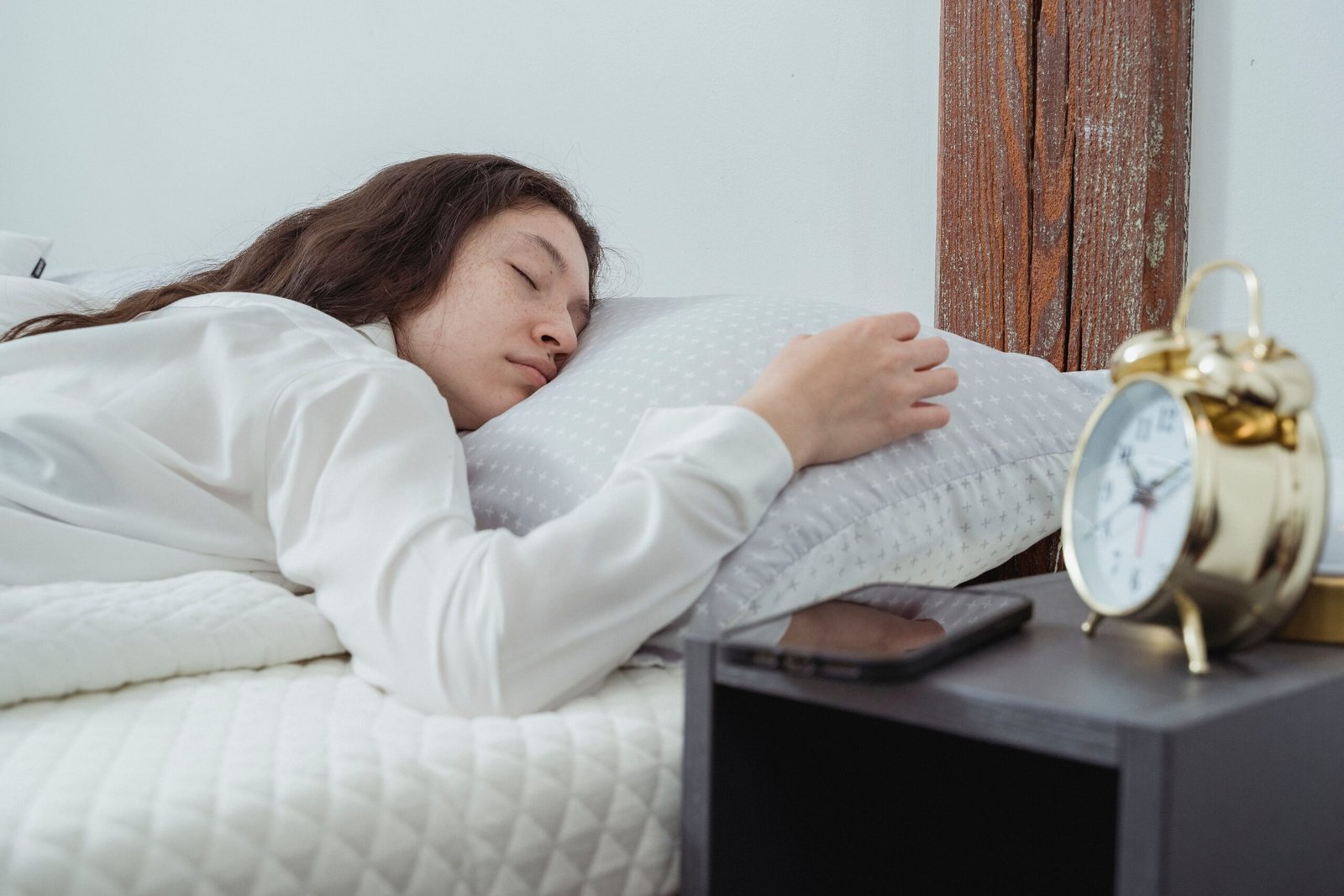
For years, small studies suggested white noise and pink noise genuinely help people sleep better, especially in noisy environments. A new, far more rigorous study just complicated that picture significantly — finding that continuous noise, rather than helping, may cost some sleepers 18 minutes of REM sleep in a single night. The white noise sleep myth isn’t fully busted, but it’s not the simple, harmless sleep aid it’s often presented as either.
This matters more than it might initially seem, given how widely white noise devices and apps have been adopted. Searches for “white noise” routinely return apps and videos with hundreds of millions of views, many specifically marketed toward soothing infants or masking city noise for light sleepers. That level of adoption has happened largely on the strength of pilot studies and marketing claims, not the kind of rigorous, controlled research that typically underlies confident health recommendations — which is exactly what makes examining the white noise sleep myth worthwhile rather than accepting it at face value.
Table of Contents
The Earlier Evidence Behind the White Noise Sleep Myth
The case for white noise has real research behind it, not just anecdote. A 2021 study out of Weill Cornell Medicine and NewYork-Presbyterian Hospital tested white noise on 10 adults in New York City who complained of poor sleep due to environmental noise. Using a within-subject design with both a sleep diary and objective actigraphy measurement, researchers found white noise significantly reduced wake-after-sleep-onset and sleep latency — real, measurable improvements, not just self-reported ones.
That study, and others like it, built a reasonable case that continuous background noise could help mask disruptive environmental sounds and improve sleep for people specifically bothered by a noisy environment. It’s part of why white noise machines have become such a common recommendation for both infants and adults struggling with noisy bedrooms.

The theoretical explanation behind this made intuitive sense too. Researchers proposed that continuous noise reduces the difference in loudness between a quiet room and a sudden disruptive sound — a car horn, a neighbor’s footsteps, a partner’s snoring. Reduce that contrast, the theory goes, and the brain is less likely to register the disruption as something worth waking up for. A second theory suggested continuous noise might work more like a conditioned cue, training the brain to associate a specific sound with the onset of sleep over repeated use, similar to how some people find rain sounds calming specifically because of prior positive association rather than any inherent acoustic property.
Why the Evidence Behind the White Noise Sleep Myth Wasn’t Actually Enough
Here’s where the white noise sleep myth starts to get more complicated. A systematic review of 38 studies on continuous noise as a sleep aid, published in Sleep Medicine Reviews, reached an uncomfortable conclusion: even though continuous noise looked helpful across the existing research, the individual studies were low quality and too different from one another to compare reliably. Some earlier research had actually found continuous noise harmed sleep, but the overall body of evidence leaned positive — a conclusion the reviewers themselves weren’t fully confident in.
This is a familiar pattern in health and wellness research more broadly: small, poorly controlled pilot studies accumulate into a seemingly reassuring consensus, until someone actually runs a properly controlled trial. That’s exactly what happened next with the white noise sleep myth.
The New Rigorous Study That Changes the White Noise Sleep Myth Picture
Some of the same researchers behind that systematic review decided to test pink noise properly, using gold-standard methodology rather than another small pilot study. As McGill University’s Office for Science and Society reported, they brought 25 healthy young adults into a sleep laboratory for seven nights, monitored continuously with polysomnography — the same equipment used to measure brain waves, oxygen levels, breathing, and limb movement in clinical sleep studies.
Each participant experienced a different combination of conditions across the week: a silent night, a night with disruptive sounds (helicopters, cars, a crying baby, a fire alarm) played over accurate speakers, the same disruptive sounds with earplugs, a night of pink noise alone with no disruptive sounds, and nights combining disruptive sounds with pink noise at two different volumes. The order was randomized across participants to control for any night-to-night learning effects.
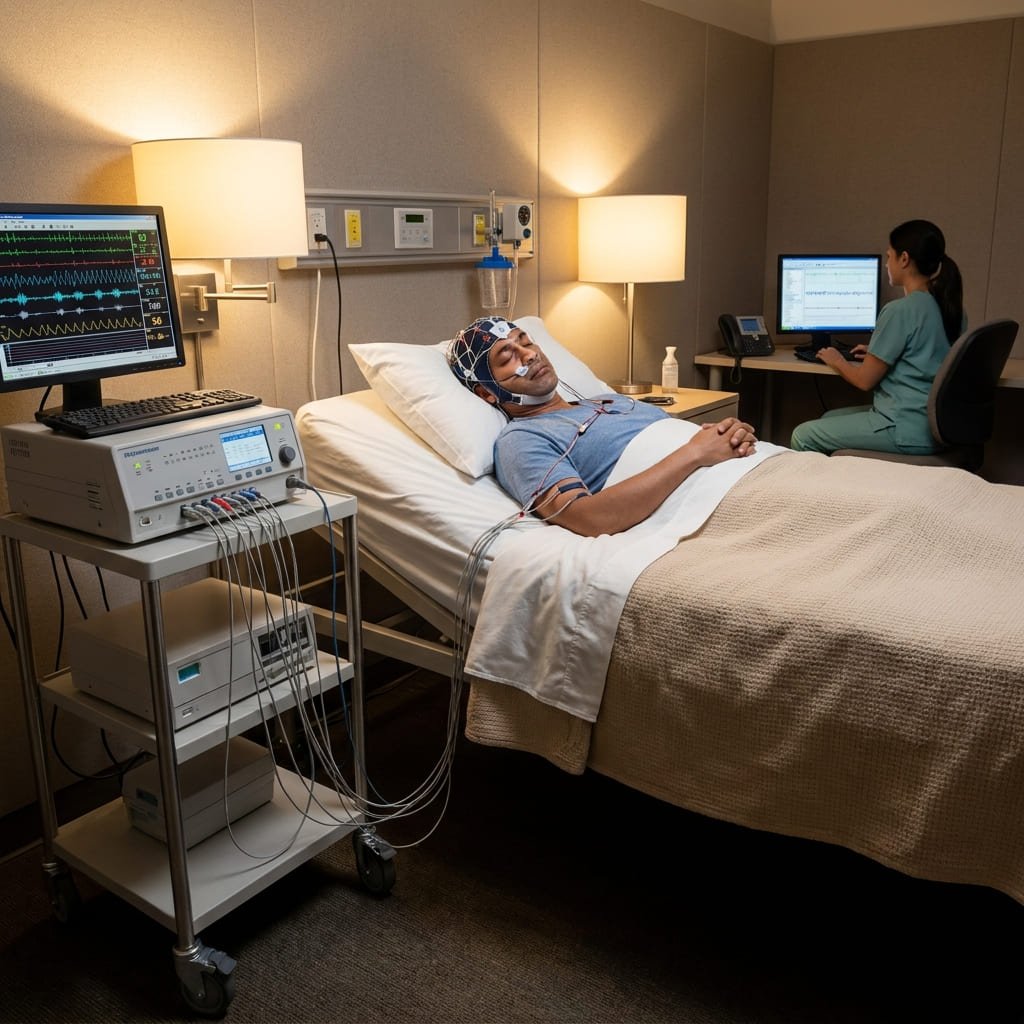
The methodology here is worth appreciating for how much more rigorous it is than the earlier pilot studies. Rather than measuring subjective sleep quality alone or relying on a wearable actigraphy device, this study used full polysomnography every single night, giving researchers an objective, clinical-grade picture of sleep architecture — how much time was spent in each sleep stage, not just whether participants felt like they slept well. A noise-free first night was also included specifically to let participants adjust to the unfamiliar sleep lab environment before any real data collection began, a standard precaution against the “first night effect” that can otherwise distort sleep study results.
The results directly challenge the white noise sleep myth in its simplest form, and this specific pink noise finding is the clearest data point against it so far. When pink noise was used specifically to mask the disruptive sounds, sleep came out worse than when the disruptive sounds played with no masking noise at all. And when pink noise played on its own, with no disruptive sounds to mask, participants lost more than 18 minutes of REM sleep on average compared to nights without it — time that shifted into lighter, less restorative sleep stages instead.
What Actually Worked Better Than the White Noise Sleep Myth Solution: Earplugs
The most striking part of this research isn’t just that pink noise underperformed — it’s that a much simpler intervention outperformed it in the same study. When disruptive noises played, participants lost about 23 minutes of deep sleep. Wearing simple foam earplugs during those same disruptive nights recovered 17 of those 23 lost minutes, and roughly two-thirds of participants rated the earplugs as comfortable.
That’s a meaningful contrast worth sitting with: a low-tech, inexpensive intervention outperformed the higher-tech, more popular white noise sleep myth solution in this specific controlled comparison. It doesn’t mean earplugs are always the better choice for everyone — they carry their own known downsides, including a risk of pushing earwax deeper into the ear canal with repeated use — but it’s a genuine data point worth knowing before assuming a white noise machine is automatically the superior option.
It’s also worth being honest about this study’s own limitations, since no single study — however well-designed — settles a question this broad on its own. The sample was small (25 people), everyone was young and healthy, and each participant experienced each condition only once rather than repeatedly over time. It’s entirely possible that regular, long-term use of pink noise produces different results than a single night’s exposure in an unfamiliar sleep lab — the brain may habituate to the sound in ways this short study design couldn’t capture. The researchers themselves acknowledged this limitation directly rather than overselling their findings as a definitive final answer.
Where This Leaves This Portable White Noise Machine
It’s worth being precise about what this research does and doesn’t say about any specific device. Our portable white noise machine review covers a different question entirely: whether a specific device’s volume output is safe, particularly for infants, based on established pediatric decibel research. This white noise sleep myth research addresses a separate question — whether continuous noise actually improves adult sleep quality in the first place, independent of whether the volume is safe.
Those are genuinely two different questions, and a device can be used safely (appropriate volume, appropriate distance) while the underlying premise that it’s actively improving sleep quality remains scientifically uncertain. It’s entirely possible for a portable white noise machine to be safe to use and not clearly beneficial for adult sleep quality at the same time — those two findings don’t contradict each other.
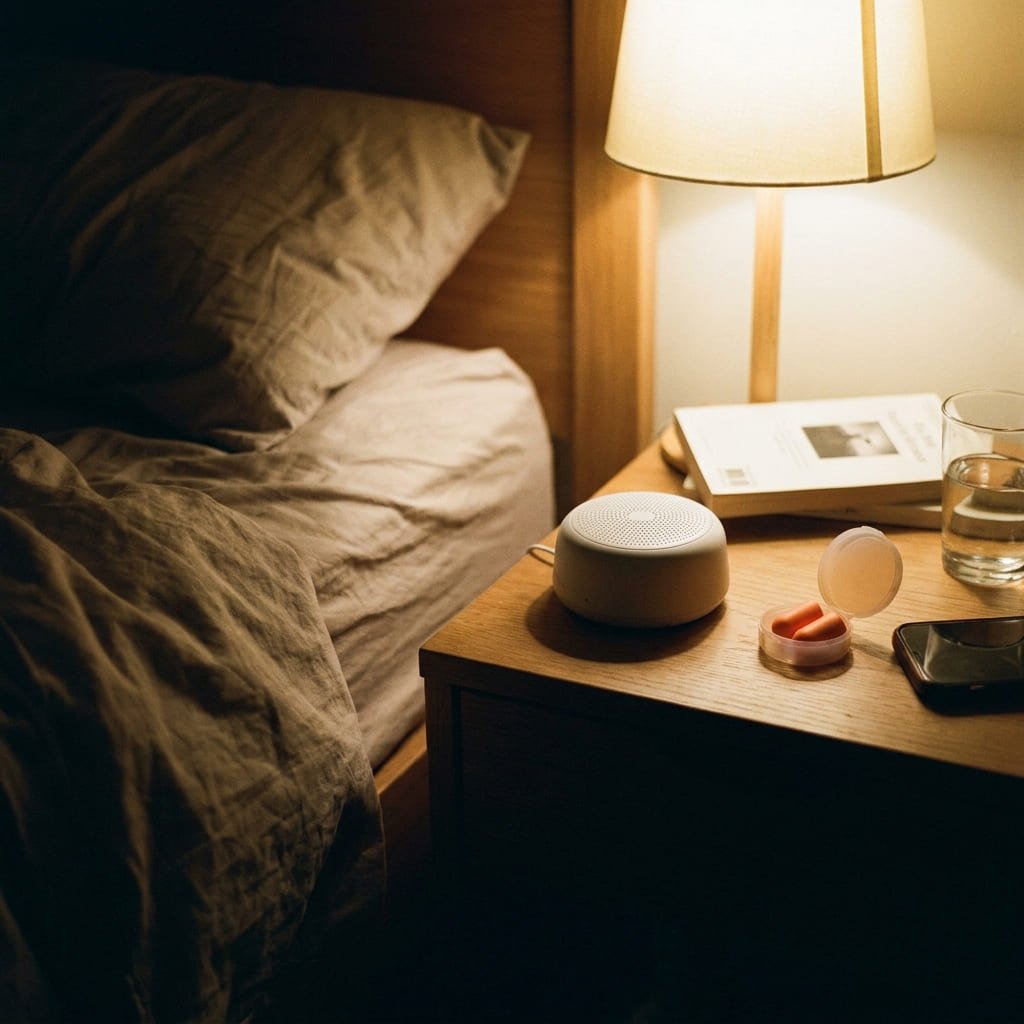
This distinction matters for anyone deciding whether to keep using a device they already own, versus deciding whether to buy one in the first place. Someone who already finds a white noise machine subjectively helpful, and uses it at a safe volume and distance, has little reason to stop based on this research alone — subjective sleep satisfaction wasn’t fully captured by the objective polysomnography measures in the newer study, and individual response to sound during sleep genuinely varies. But someone deciding whether to purchase one specifically because they’ve heard it’s a proven, evidence-backed sleep improvement now has a more accurate, more cautious picture to weigh that decision against.
What This Means for Building a Sleep Routine
None of this new research suggests continuous noise is dangerous for typical adult use, only that its actual sleep-quality benefit is far less settled than the earlier pilot studies suggested. For anyone building a broader sleep routine around addressing noise, disruption, or waking habits generally, our habit stacking guide covers how to attach a new nighttime habit to something already automatic, and our smart alarm clock review covers the wake-up side of a sleep routine specifically.
There’s also a broader lesson here about how health and wellness claims accumulate over time, independent of the specific white noise sleep myth question itself. A behavior or product can go from “commonly recommended” to “actively researched” without ever passing through a genuinely rigorous test in between — and by the time a properly controlled study finally gets run, the earlier, weaker evidence has often already hardened into conventional wisdom. That pattern isn’t unique to sleep sound machines; it shows up across nutrition, supplements, and fitness recommendations covered elsewhere on this site, which is part of why checking the underlying research quality, not just whether research exists at all, matters as much as it does.
The honest takeaway from this research isn’t “never use white noise” — it’s that the confident claims made about it were built on weaker evidence than most people realized, and a single small but rigorous study, while not the final word either, has genuinely shifted what a careful evaluation of the white noise sleep myth should conclude.
Frequently Asked Questions
Does this mean white noise machines don’t work at all, or is the white noise sleep myth fully debunked? Not exactly. This research complicates the white noise sleep myth rather than fully disproving it — the newest, most rigorous study found pink noise underperformed compared to no masking noise at all in a specific controlled lab setting, but it’s one study with 25 young, healthy participants, not a final verdict for everyone in every situation.
Why did earlier studies find positive results if the white noise sleep myth effect isn’t reliable? Earlier research tended to be smaller and less tightly controlled, which the 2021 systematic review specifically flagged as a limitation. Small, lower-quality studies can produce an optimistic-looking body of evidence that doesn’t hold up once a properly controlled trial is run.
Should I switch to earplugs instead of a white noise machine, given the white noise sleep myth findings? The specific study discussed here found earplugs recovered more lost deep sleep than pink noise did when masking disruptive environmental sounds, but earplugs carry their own downsides, including earwax impaction risk with frequent use. Neither option is risk-free or universally superior.
Does this white noise sleep myth research apply to infants too? This specific research on the white noise sleep myth was conducted on healthy young adults, not infants, and it addresses sleep-quality effectiveness rather than volume safety. Our portable white noise machine review covers the separate, well-established research on safe decibel levels for infant use specifically.
Is pink noise the same as white noise for these purposes, and does that change the white noise sleep myth conclusion? They’re related but distinct — white noise has equal intensity across all frequencies, while pink noise is more intense at lower frequencies and considered a more natural-sounding option. The rigorous new study specifically tested pink noise, not classic white noise, though the two are often used interchangeably in casual conversation about sleep sound machines.
The Bottom Line on the White Noise Sleep Myth
The white noise sleep myth isn’t a clear-cut case of a popular sleep aid being definitively debunked — it’s a more honest, more uncertain picture than the confident marketing around white noise machines usually suggests. A rigorous new polysomnography study found pink noise underperformed both earplugs and no intervention at all in specific controlled conditions, while earlier, less rigorous research had suggested the opposite. Until more research settles the white noise sleep myth question, the safest conclusion is a genuinely modest one: continuous noise might help some people in some situations, it might not, and the confident claims made about it deserve more scrutiny than they’ve generally received.
This article reflects published research from Weill Cornell Medicine, Sleep Medicine Reviews, the journal Sleep, and reporting from McGill University’s Office for Science and Society. It is not personalized medical advice — consult a healthcare provider about persistent sleep difficulties.