


A sedentary lifestyle is easy to dismiss as a minor inconvenience — something a morning jog or a weekend hike can cancel out. Research on sitting and health suggests otherwise, and the details matter more than the general warning most people have already heard.
Americans spend an average of roughly 9.5 hours a day sitting, whether at a desk, in a car, or on the couch, according to research cited by Cleveland Clinic. That’s more waking hours than most people spend on anything else, including sleep — and a stark reminder of how much of daily life happens while seated.
Below, we’re breaking down five of the most common myths about a sedentary lifestyle, and what the actual research says instead.
Table of Contents
Myth #1: “If I Exercise in the Morning, Sitting All Day Doesn’t Matter”
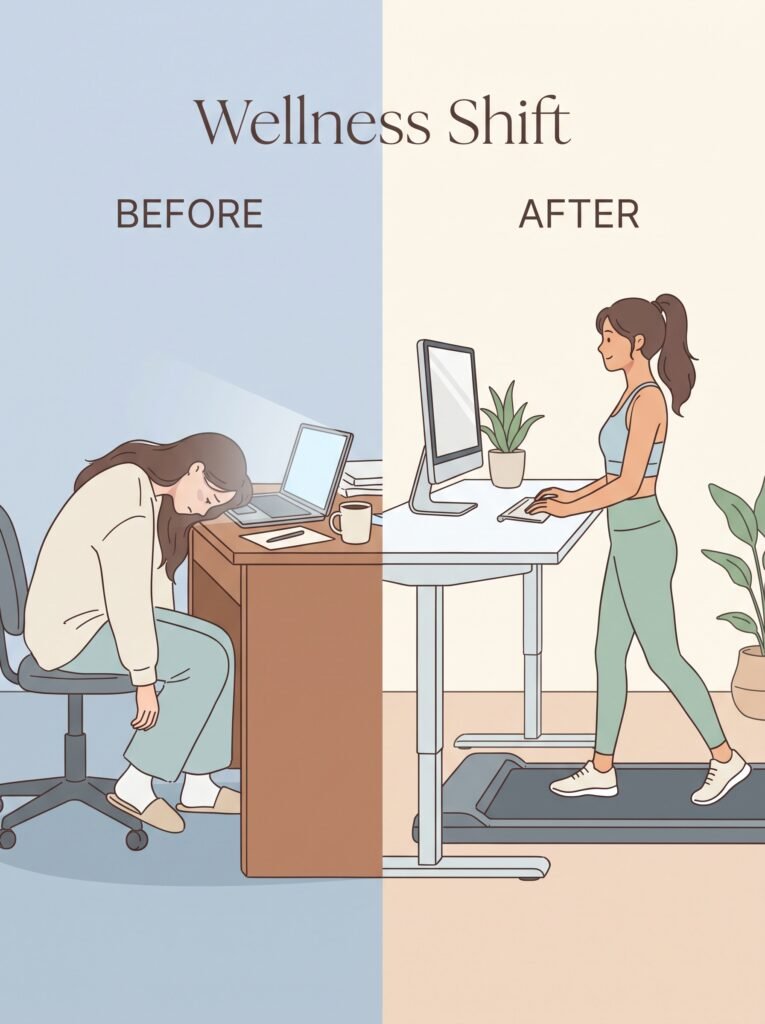
This is probably the most common myth about a sedentary lifestyle, and it’s an understandable one. If you’ve already hit the gym or gone for a run, it feels like the rest of the day should be a wash — a kind of credit earned against however many hours you spend at a desk afterward.
The research doesn’t back that up. According to Cleveland Clinic, people who sit for 10 or more hours a day show an increased risk of cardiovascular disease, even when they meet standard exercise guidelines elsewhere in the day.
A separate analysis published in Frontiers in Public Health found something similar: people who sat for 10 hours a day had a 34% higher risk of death from any cause, compared to those who sat less — and that risk showed up independent of how much leisure-time exercise they got.
The takeaway isn’t that exercise doesn’t matter. It clearly does, and skipping it entirely would be worse. But a sedentary lifestyle appears to carry its own separate risk, layered on top of whatever benefit a workout provides, rather than being erased by it.
Think of it less like a single scale that exercise tips one way and sitting tips the other, and more like two separate dials that both need attention. Turning up one doesn’t automatically turn down the other.
Myth #2: “Sitting Is Only a Problem If You’re Overweight”
This myth assumes a sedentary lifestyle is really just a weight problem in disguise — that if your weight and BMI look fine, the hours of sitting don’t matter much. It’s a tidy explanation, but it doesn’t hold up against the research.
Cleveland Clinic’s Dr. Erik Van Iterson, a clinical physiologist, pushes back on that idea directly. Research he points to shows that people at a healthy weight and BMI still face increased cardiovascular risk from a sedentary lifestyle, independent of what the scale says.
In other words, a sedentary lifestyle isn’t just a proxy for body weight. It appears to affect the cardiovascular system on its own, through mechanisms like reduced circulation and slower metabolic activity during long inactive stretches.
There’s also a mental health angle that has nothing to do with weight at all. Research reviewed by Cleveland Clinic has found a connection between sedentary behavior — particularly time spent on screens — and depression, a link that shows up regardless of body size or measured BMI.
Myth #3: “A Few Stretches Undo the Damage”
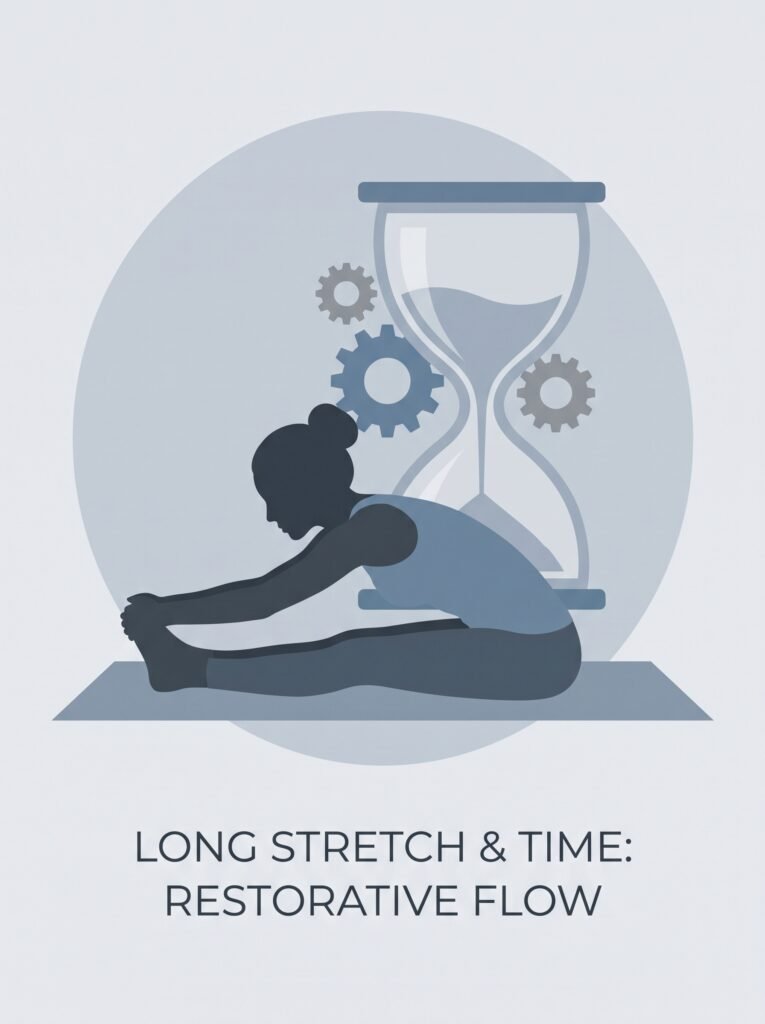
Stretching feels productive, and it does help with stiffness and flexibility. But a quick stretch break isn’t the same thing as breaking up a sedentary lifestyle in any meaningful way.
What the research actually points to is cumulative sitting time — the total hours logged sitting or lying down across a day — rather than any single interruption. A two-minute stretch doesn’t change how many total hours you spent sedentary, even if it makes your hips feel better in the moment.
That doesn’t mean stretching is pointless. It just means it’s solving a different problem — muscle tightness and mobility — rather than the cardiovascular and metabolic effects tied to a sedentary lifestyle itself.
If anything, the research suggests the opposite of a single stretch break matters more: frequency. Standing up and moving briefly once an hour appears to do more for cumulative sitting time than one longer stretch session squeezed in at lunch, simply because it interrupts more of the day’s total sedentary stretch.
Myth #4: “You Need a Gym Membership to Fix This”
This is probably the myth that stops the most people from doing anything at all. If fixing a sedentary lifestyle sounds like it requires a gym membership and an hour of free time, it’s easy to put off indefinitely — often permanently.
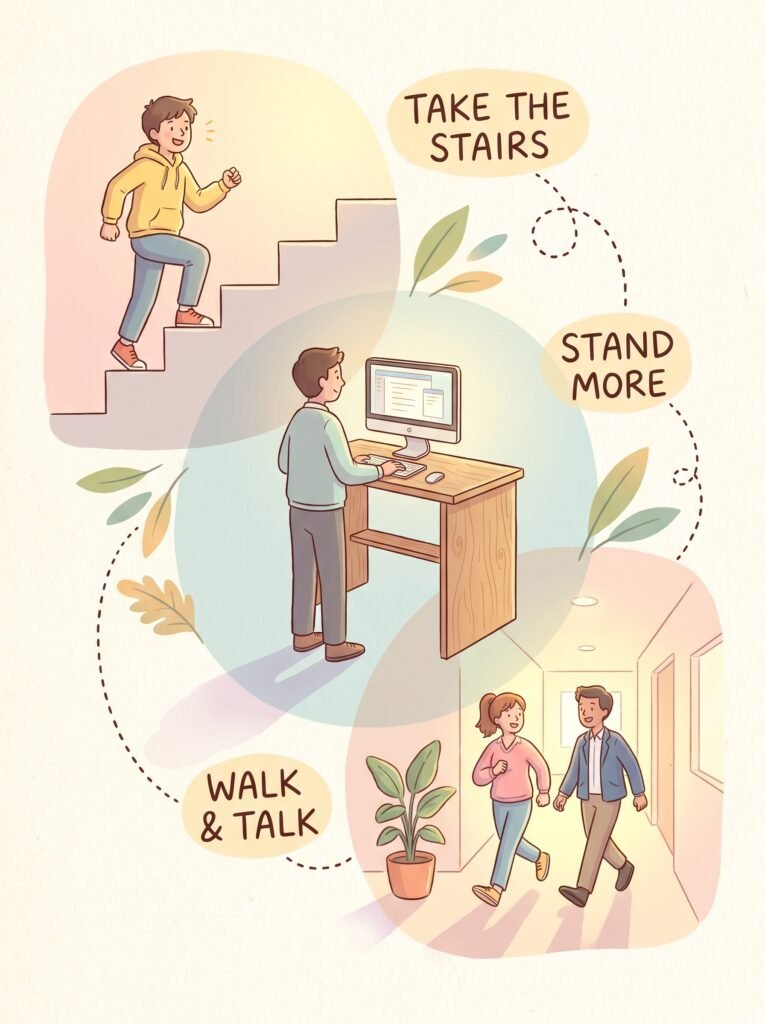
Cleveland Clinic’s own advice leans the opposite direction: small “exercise snacks” spread across the day. Walking to a coworker’s desk instead of emailing, taking the stairs, parking farther from the entrance, or standing during a phone call all count toward reducing a sedentary lifestyle’s overall impact.
Dr. Van Iterson offers a simple example: walking around for five minutes every hour during an eight-hour workday adds up to roughly 40 minutes of movement, without ever blocking out dedicated workout time. None of it requires equipment, a class schedule, or leaving the building.
The bar for “doing something” about a sedentary lifestyle is lower than most people assume. It’s less about intensity and more about interrupting long, unbroken stretches of sitting on a regular basis, which is a much easier habit to actually stick with over months and years.
Myth #5: “Sitting Is Literally the New Smoking”
This one deserves its own section, since it’s less a myth than an exaggerated metaphor that’s become accepted as fact. The phrase traces back to Dr. James Levine, an obesity researcher formerly at Mayo Clinic, who used it to grab attention for a genuinely underappreciated problem.
The comparison isn’t meant to be taken literally, and most researchers agree it shouldn’t be. A 2018 meta-analysis in the American Journal of Public Health pushed back directly on the smoking comparison, arguing it overstates the actual risk difference between the two behaviors.
Smoking exposes the body to toxic chemicals directly; a sedentary lifestyle doesn’t. The health effects of sitting come from what you’re not doing — moving, engaging muscles, keeping circulation active — rather than from any substance entering your body.
That distinction matters for how seriously to take the underlying advice. A sedentary lifestyle is a real, well-documented health risk worth addressing. It’s just not a one-to-one substitute for smoking, and treating it as an equally severe risk can make the actual research feel exaggerated or easy to dismiss.
The honest version of the myth is simpler and less dramatic: a sedentary lifestyle is bad for you, on its own, regardless of what else you do in a day — but comparing it directly to smoking oversells the point rather than strengthening it.
What the Research Actually Says About a Sedentary Lifestyle
Beyond the five myths above, a few patterns show up consistently in sedentary lifestyle research. Some researchers define a sedentary lifestyle as roughly four to six or more cumulative hours of sitting or lying down per day — and those hours don’t need to be consecutive to count.
That definition matters because modern work has made a sedentary lifestyle the default rather than the exception. Sedentary jobs now make up more than 80% of the workforce in some estimates, which means the “problem” isn’t a personal failing so much as a structural feature of how most jobs are designed — one that’s worth naming honestly rather than treating as a matter of individual willpower.
A sedentary lifestyle has been linked to more than just heart disease. Cleveland Clinic points to connections with obesity, depression, and a higher risk of certain cancers, including colon, lung, and uterine cancer.
There are also earlier warning signs worth noticing before any of that develops. Low energy that doesn’t improve with sleep, gradual weight gain, muscle weakness, poor posture, and nagging back or joint pain are all patterns Cleveland Clinic associates with an overly sedentary lifestyle.
None of these signs are dramatic on their own, which is part of why a sedentary lifestyle is so easy to overlook. They tend to build slowly, over months rather than days, which is exactly why the “I’ll fix it later” instinct is so common — there’s rarely a single bad day that makes the cost obvious.
Small Changes That Actually Move the Needle
None of this means you need to overhaul your entire day. The research on a sedentary lifestyle points toward frequent small interruptions to sitting, rather than one dramatic fix.
Standing during phone calls, parking farther from the entrance, or taking a short walk every hour are all low-effort ways to chip away at total sedentary time. Cleveland Clinic frames these as “exercise snacks” — small enough to not feel like a workout, but frequent enough to add up over a full day.
For people whose sedentary lifestyle is mostly tied to a desk job, tools like a walking pad can make this easier to sustain, since they let you move during calls and emails rather than requiring a separate block of time. We reviewed one specific option, including speed, noise level, and real-world use, in our walking pad review, if you’re looking for a low-effort way to add movement to a desk-bound day.
A standing desk works well alongside a walking pad, since standing itself is a step up from sitting even before any walking starts. Alternating between sitting, standing, and short walking intervals tends to be more sustainable long-term than committing to one posture all day.
Pairing small movement breaks with regular aerobic exercise — walking, cycling, swimming, or anything that raises your heart rate for a sustained stretch — still matters. A sedentary lifestyle and a lack of exercise are related but separate problems, and addressing one doesn’t fully solve the other.
Who Should Be Extra Careful
Most of the advice above applies broadly, but it’s not one-size-fits-all. Anyone with a heart condition, joint problems, or balance issues should talk to a doctor before making significant changes to activity levels, even changes as modest as standing more often.
The same goes for anyone returning to movement after an injury, surgery, or a long period of inactivity for medical reasons. A gradual, doctor-approved approach is safer than jumping straight into hourly movement goals, even when the goals themselves are modest.
People managing chronic conditions like heart disease or diabetes may also need a more tailored plan than “stand up every hour,” since exertion guidelines can vary quite a bit by individual health status. What counts as a reasonable first step for one person might be too much, too soon, for someone managing a specific condition.
None of this is a reason to avoid addressing a sedentary lifestyle altogether — it’s simply a reason to loop in a healthcare provider on the specifics, rather than following generic advice blindly.
The Bottom Line on a Sedentary Lifestyle
A sedentary lifestyle isn’t fully canceled out by a morning workout, and it isn’t only a concern for people who are overweight. The research points to cumulative sitting time itself as an independent factor in cardiovascular risk and several other health outcomes.
It’s also not literally comparable to smoking, whatever the catchier headlines suggest — but that nuance doesn’t make it any less worth addressing. The two things can both be true: a sedentary lifestyle is a real, independent health risk, and the smoking comparison is an overstatement.
The good news is that the fix doesn’t require a gym membership or a dramatic schedule overhaul. Small, frequent interruptions to sitting — spread across the day — appear to make a real difference over time, according to the research reviewed above.
Start smaller than feels necessary. A single walk to a coworker’s desk or one extra flight of stairs won’t undo a sedentary lifestyle by itself, but repeated daily, those small interruptions are exactly what the research points to as the more realistic lever to pull.
This article is for general informational purposes and is not medical advice. Talk to a healthcare provider before making significant changes to your activity level, especially if you have an existing health condition.