

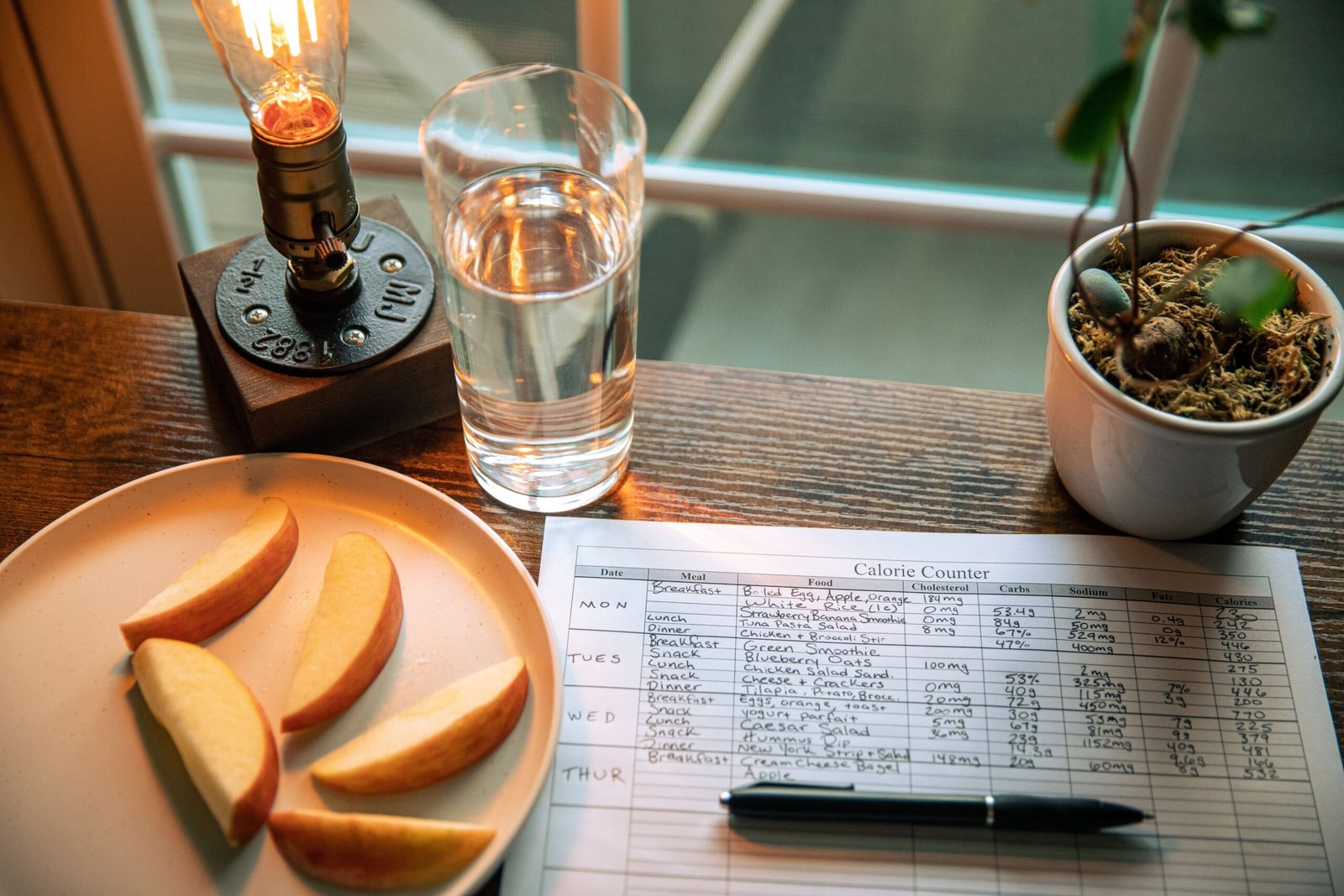
Here’s a finding that surprises most people: your accuracy at calorie estimation — how well you can judge how many calories you just ate — has almost nothing to do with your nutrition knowledge, your body size, or how disciplined you are. It comes down to one thing — how big the meal actually was. The bigger the meal, the worse everyone’s calorie estimation gets, and the research behind that finding changes how you should think about tracking food in the first place.
Table of Contents
The Research That Changed How We Think About Calorie Estimation
A study from Cornell’s Food and Brand Lab, published in the Annals of Internal Medicine, tested calorie estimation two different ways. In the first part, researchers asked 105 people eating at fast-food restaurants to estimate the calories in the meal they’d just finished. In the second, 40 undergraduate students estimated the calorie content of 15 different fast-food meals ranging from 445 to 1,780 calories.
Both parts of the study found the same pattern: the bigger the meal, the further off the calorie estimation was, regardless of the eater’s body size, sex, or weight. Lead researcher Brian Wansink put it plainly — a very thin person eating a 2,000-calorie meal underestimates it by roughly the same amount as a heavier person eating the same 2,000-calorie meal. The often-repeated idea that overweight individuals are specifically bad at judging their intake turned out to be a side effect of a more basic pattern: everyone’s calorie estimation gets worse as portions get larger, and heavier individuals simply tend to eat larger portions more often.
That reframing matters. Poor calorie estimation isn’t a personal failing or a sign of low willpower — it’s a consistent perceptual bias that shows up in essentially everyone once a meal crosses a certain size. Wansink drew a direct comparison to how humans misjudge other kinds of scale entirely: distance, height, and loudness all show the same tendency to compress as the actual quantity grows. Calorie estimation, in other words, isn’t a nutrition-specific failure of knowledge — it’s a general perceptual limitation that happens to show up at the dinner table.
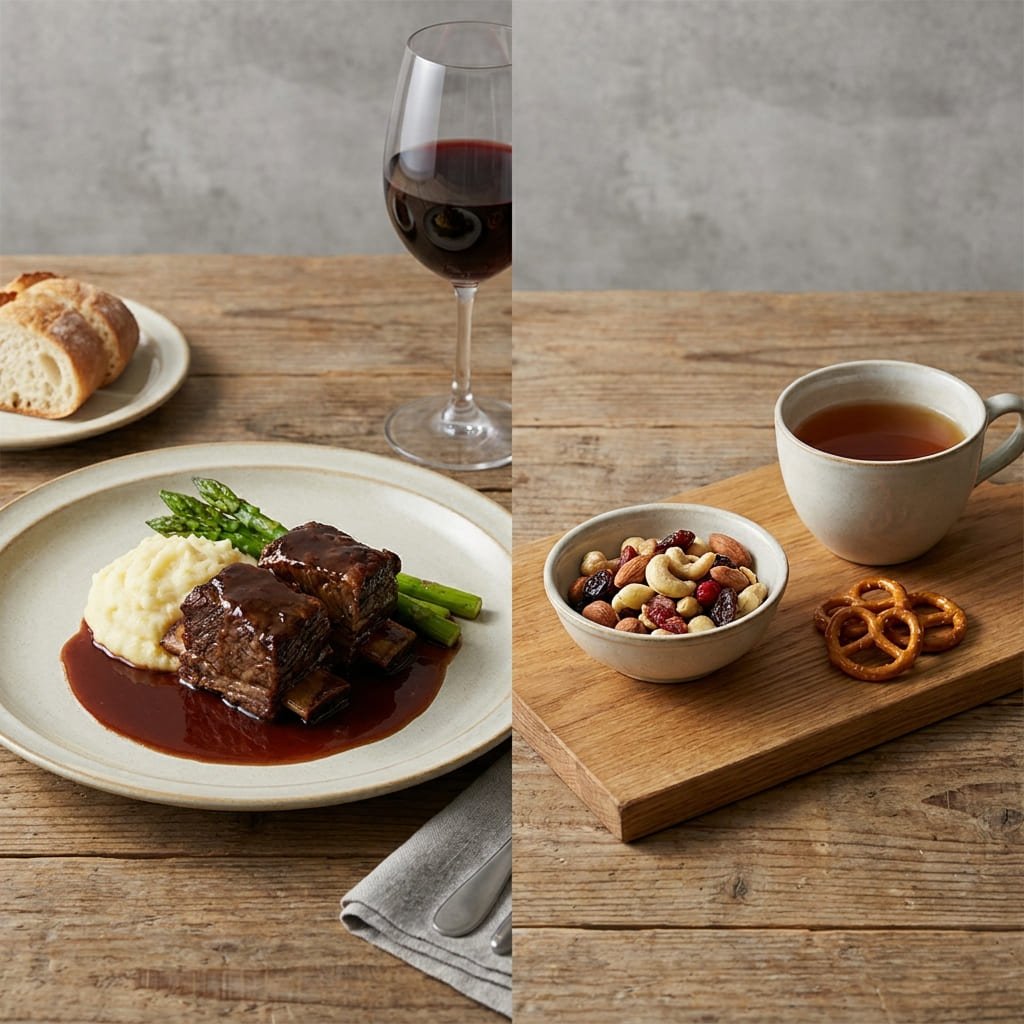
This has a practical implication that’s easy to miss: someone who feels confident they’re “pretty good” at estimating calories for a small snack has no real evidence that the same confidence should carry over to a large restaurant meal. The research suggests accuracy actively degrades as portions scale up, which means the situations where accurate calorie estimation matters most — big meals, holidays, restaurant dining — are exactly the situations where it’s least reliable.
It’s Not Just Real-Time Estimation — Memory Adds a Second Layer of Error
A separate line of research, published in the New England Journal of Medicine, found a second, independent source of error that compounds the first. Researchers gave participants a controlled test meal, then asked them to recall how much they’d eaten a day later. Portion-size estimation right after the meal was reasonably accurate — but 24 hours later, participants recalled having eaten roughly 20% less than they actually had.
That’s a distinct mechanism from the Cornell finding. One study shows real-time calorie estimation gets worse as meals get bigger. The other shows that even an accurate in-the-moment estimate degrades further once memory gets involved a day later. Stack both effects on top of each other — which is exactly what happens for anyone trying to recall an entire day of eating from memory at the end of the day — and the gap between what someone believes they ate and what they actually ate can become substantial.
It’s worth being precise about what this second study did and didn’t show. The researchers weren’t testing whether people are dishonest about their eating — they were testing whether an accurate initial judgment survives the passage of time. It didn’t, even though the same participants had judged the portion correctly in the moment. That distinction matters for anyone trying to improve their own calorie estimation: the fix isn’t “try harder to remember,” since the research suggests memory itself is the unreliable component, not effort or honesty.
Why Precise Weighing Fixes Both Problems at Once
This is where a smart food scale earns its place, and it’s worth being specific about why. A smart food scale doesn’t ask you to estimate anything — it removes the estimation step from the process entirely by producing an exact gram measurement at the moment of weighing, before memory has any chance to distort it.
That directly targets both error sources identified in the research. The Cornell finding shows visual estimation gets worse as portions grow — a smart food scale doesn’t estimate visually at all, so portion size stops being a variable that affects accuracy. The NEJM finding shows memory degrades the number by the next day — a smart food scale logs the number in real time, before a day’s worth of memory decay has the chance to happen.
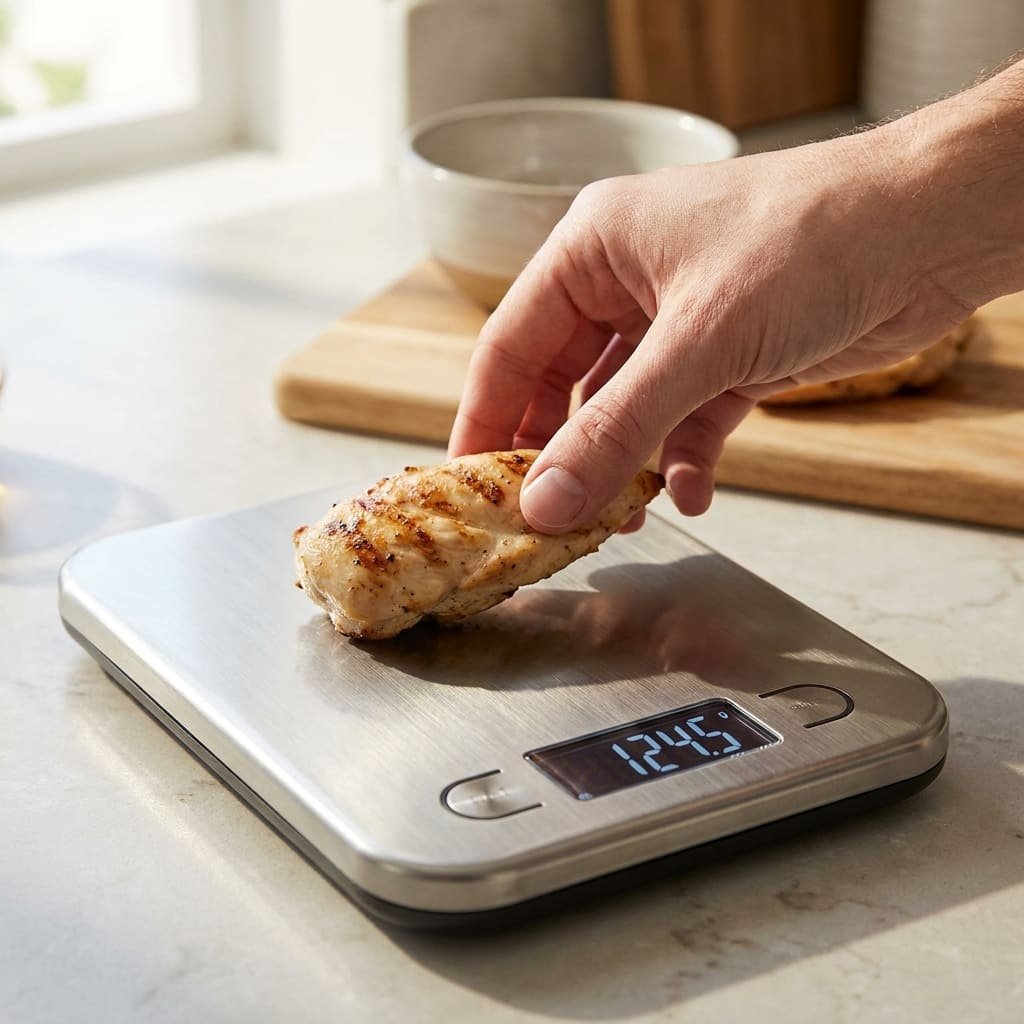
Neither of these mechanisms depends on the person using the scale becoming a more disciplined or attentive tracker. That’s arguably the most useful part of the research: the two error sources this section covers aren’t about motivation at all, which means the fix doesn’t require more willpower — it requires removing the two specific points in the process where an unreliable human estimate would otherwise be inserted.
Our smart food scale review covers the specific Etekcity model this applies to in detail, including the research on self-monitoring frequency and an honest look at where a smart food scale’s nutrition database still has real limitations. The calorie estimation research here explains the other half of the argument: even a perfectly consistent tracker is still fighting an uphill battle if the underlying numbers are based on eyeballing rather than weighing.
Where a Smart Food Scale Fits Into a Broader Tracking Habit
A smart food scale is most effective when it’s not competing against willpower every single day. Our habit stacking guide covers the research-backed approach of attaching a new habit to something already automatic in a daily routine — weighing breakfast right after making coffee, for instance — rather than relying on remembering to do it from scratch.
This connects to a broader pattern worth recognizing: the calorie estimation gap covered here isn’t the only place self-monitoring runs into trouble because of an unreliable internal signal. Our piece on why people forget to drink water covers a parallel issue in a completely different domain — hydration — where relying on an internal cue (thirst, or in this case, a rough mental calorie tally) turns out to be a less reliable strategy than an external, objective one.
Protein tracking specifically benefits from the same precision problem. Our Nutricost creatine review covers a supplement where consistent dosing matters, and the same logic extends to food: eyeballing a “palm-sized” portion of protein is exactly the kind of calorie estimation error the Cornell research shows people get wrong, especially as the portion gets larger.
What This Doesn’t Fix
It’s worth being honest about the limits here too. Solving the estimation-and-recall problem doesn’t automatically solve the separate issue of nutrition database accuracy — the two are independent sources of error. A smart food scale gives you a precise weight in grams, but the calorie and nutrient values attached to that weight still depend on whatever food database the device is using, and no barcode-based database is perfectly accurate across every product. The estimation-gap research explains why weighing beats eyeballing; it doesn’t claim that a barcode scan produces laboratory-grade nutrition data.
Other Ways to Reduce the Estimation Gap Without a Scale
Not everyone is ready to buy a dedicated device, and the research does point to a few lower-cost ways to narrow the gap. Portion-size estimation aids — reference photos or written descriptions of what a standard portion actually looks like — have been shown in controlled research to meaningfully improve accuracy compared to unaided guessing, even though they don’t close the gap entirely.
Logging food closer to the moment of eating, rather than trying to reconstruct a full day from memory at bedtime, directly addresses the recall-decay half of the problem identified in the NEJM research. Even without a scale, closing that 24-hour gap between eating and logging removes a meaningful source of error.

A simple household measuring cup, while less precise than a gram-based smart food scale, still outperforms pure visual estimation for foods that are difficult to judge by eye — rice, pasta, oils, and other dense or amorphous foods where the Cornell-style calorie estimation error tends to be largest. It’s a reasonable middle ground for anyone not ready to commit to a dedicated scale but who still wants to reduce the size of the gap.
None of these lower-cost approaches solve the problem as completely as removing estimation and memory from the process entirely, but each one addresses a specific piece of the mechanism the research identifies — visual portion aids target the Cornell-style estimation error, and same-day logging targets the NEJM-style recall decay. Combining both gets closer to what a smart food scale accomplishes automatically, just with more ongoing effort required to maintain it.
Frequently Asked Questions
Why do bigger meals lead to worse calorie estimation specifically? Research from Cornell’s Food and Brand Lab found that calorie estimation accuracy declines as meal size increases, regardless of the eater’s body size or sex. The effect appears to be a general perceptual bias — similar to how people underestimate distance or size as things get larger — rather than a personal or motivational failing.
Is calorie estimation error the same as lying about what you eat? No. The Cornell researchers were explicit about this: the calorie estimation error shows up consistently across body types and doesn’t appear to be intentional. A separate NEJM study similarly found that memory-based underreporting was not associated with intentional deception.
Does using a smart food scale eliminate calorie tracking errors entirely? It eliminates the specific errors caused by visual portion estimation and next-day memory recall, since weighing produces an exact number at the moment of eating. It does not eliminate errors that come from the nutrition database itself, which is a separate and known limitation of barcode-based tracking tools.
Why does memory make calorie tracking worse a day later? Research published in the New England Journal of Medicine found that participants who accurately estimated a meal’s portion size in the moment still recalled eating roughly 20% less than they actually had 24 hours later — a distinct error introduced by memory rather than by the initial estimation.
Do I need special training to estimate portions more accurately? Portion-size estimation aids like reference photos or written comparisons have been shown to improve accuracy over unaided guessing, but even trained individuals show smaller — not eliminated — errors compared to precise weighing.
The Bottom Line
Calorie estimation isn’t a discipline problem, and it isn’t unique to any particular body type — it’s a documented perceptual and memory bias that gets worse as meals get bigger and worse again the longer the gap between eating and logging. That’s a fundamentally different problem than motivation or willpower, and it explains why a tool built around precise, real-time weighing addresses something eyeballing and end-of-day recall simply can’t — because neither eyeballing nor memory was ever designed to solve a calorie estimation problem this precise in the first place.
This article reflects published research from Cornell University’s Food and Brand Lab and the New England Journal of Medicine. It is not personalized nutrition or medical advice — consult a healthcare provider or registered dietitian for guidance specific to your health situation.