
Tempted by a "Collagen" jelly cream promising firmer skin in 24 hours? The actual collagen content is trace at best — but the niacinamide underneath is genuinely well-supported for hydration and barrier repair.
This post contains affiliate links. If you purchase through a link on this page, we may earn a commission at no extra cost to you. As an Amazon Associate, we earn from qualifying purchases.
The statements in this article have not been evaluated by the Food and Drug Administration. This product is not intended to diagnose, treat, cure, or prevent any disease.
This collagen jelly cream is one of the best-selling face moisturizers on Amazon right now, and its marketing leans heavily on two things: a precise-sounding “24-hour” clinical statistic and the word “Collagen” front and center on the label. This review checks both claims against the actual ingredient list and established dermatological research, then covers what the formula genuinely does well.
Health Myth Lab has covered this exact tension before with topical collagen products generally, and this collagen jelly cream specifically is a particularly clear example worth walking through in detail, since the actual ingredient concentrations are publicly listed and easy to check against the marketing.
Table of Contents
What Is This Collagen Jelly Cream?
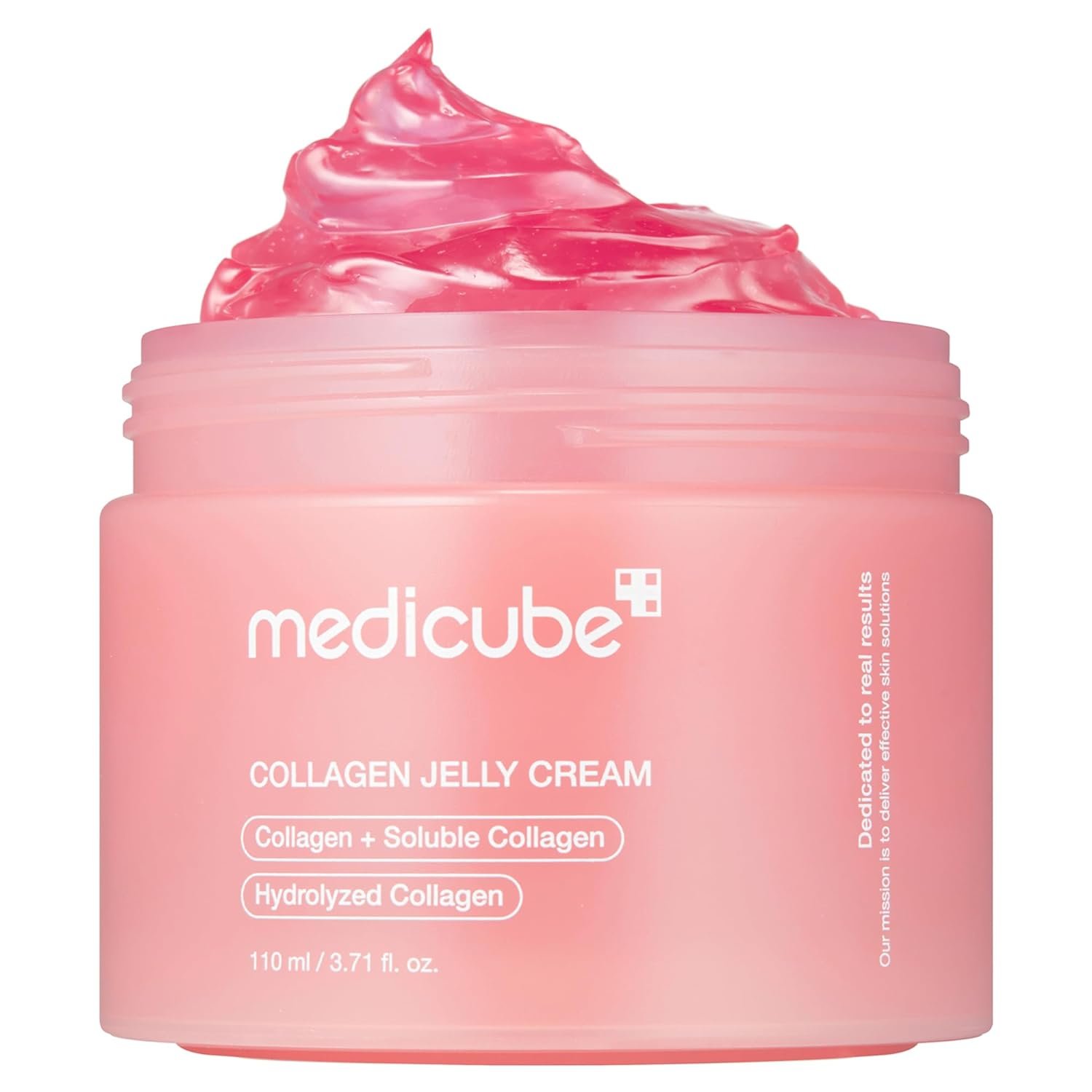
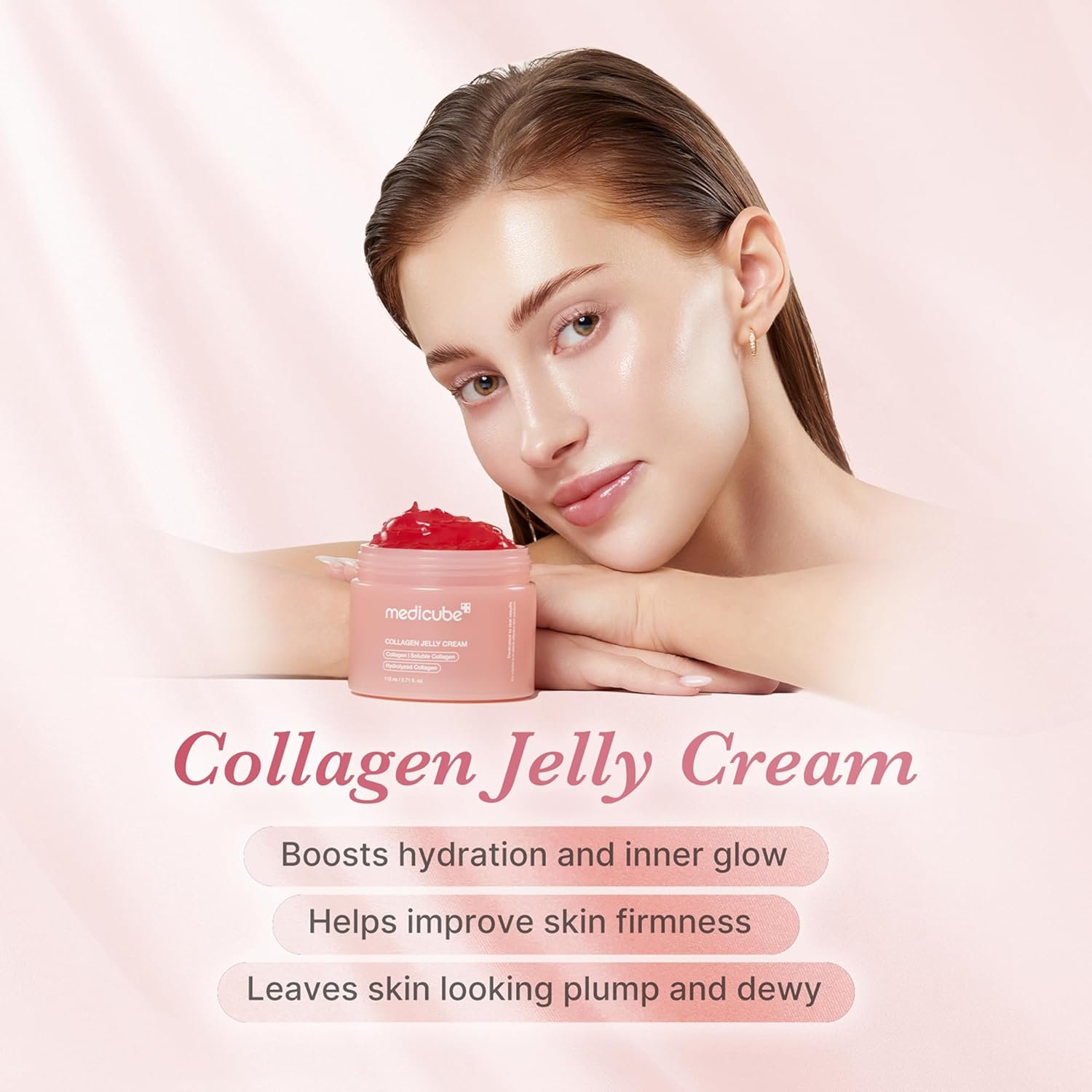
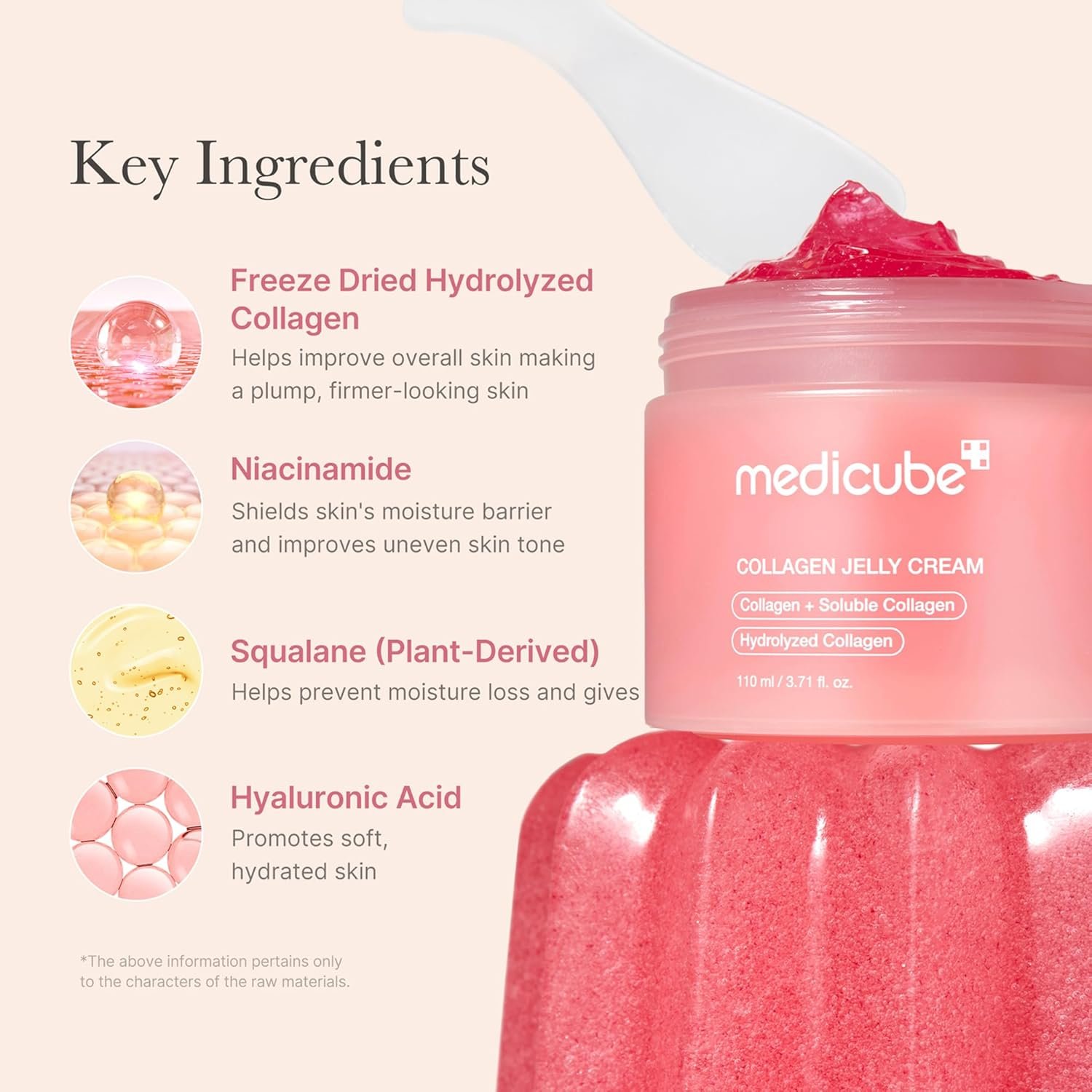
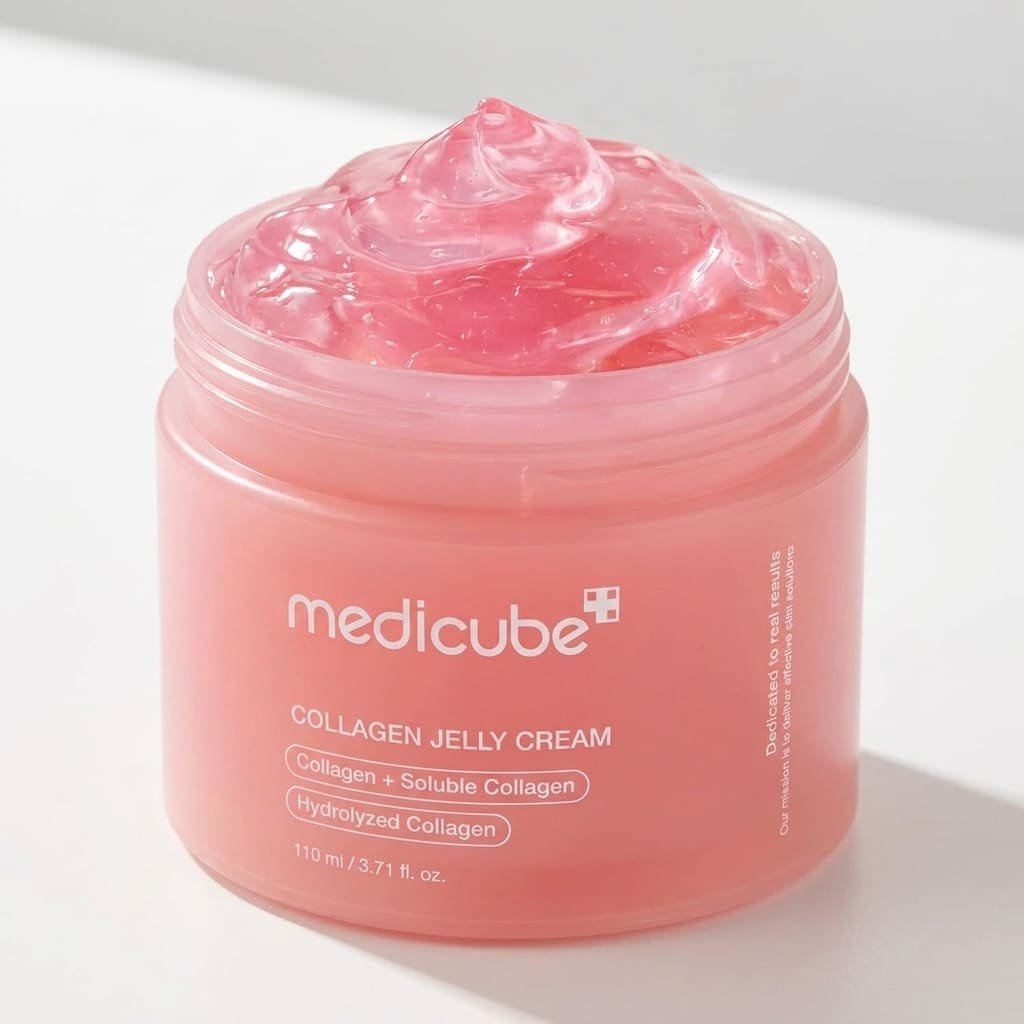
This is the Medicube Collagen Jelly Cream, a 3.71 fl oz (110ml) Korean skincare collagen jelly cream moisturizer built around niacinamide and freeze-dried hydrolyzed collagen. It’s marketed under the “glass skin” trend, promising a transparent, firm, glowing complexion, and this collagen jelly cream is currently the #1 best-selling face moisturizer in its Amazon category.
Key Specs for This Collagen Jelly Cream at a Glance
- Size: 3.71 fl oz (110ml)
- Key Ingredients: Niacinamide, Freeze-Dried Hydrolyzed Collagen, Trehalose
- pH: 5.69–7.69
- Formula: Silicone-free, no artificial color
Fact-Checking the Marketing
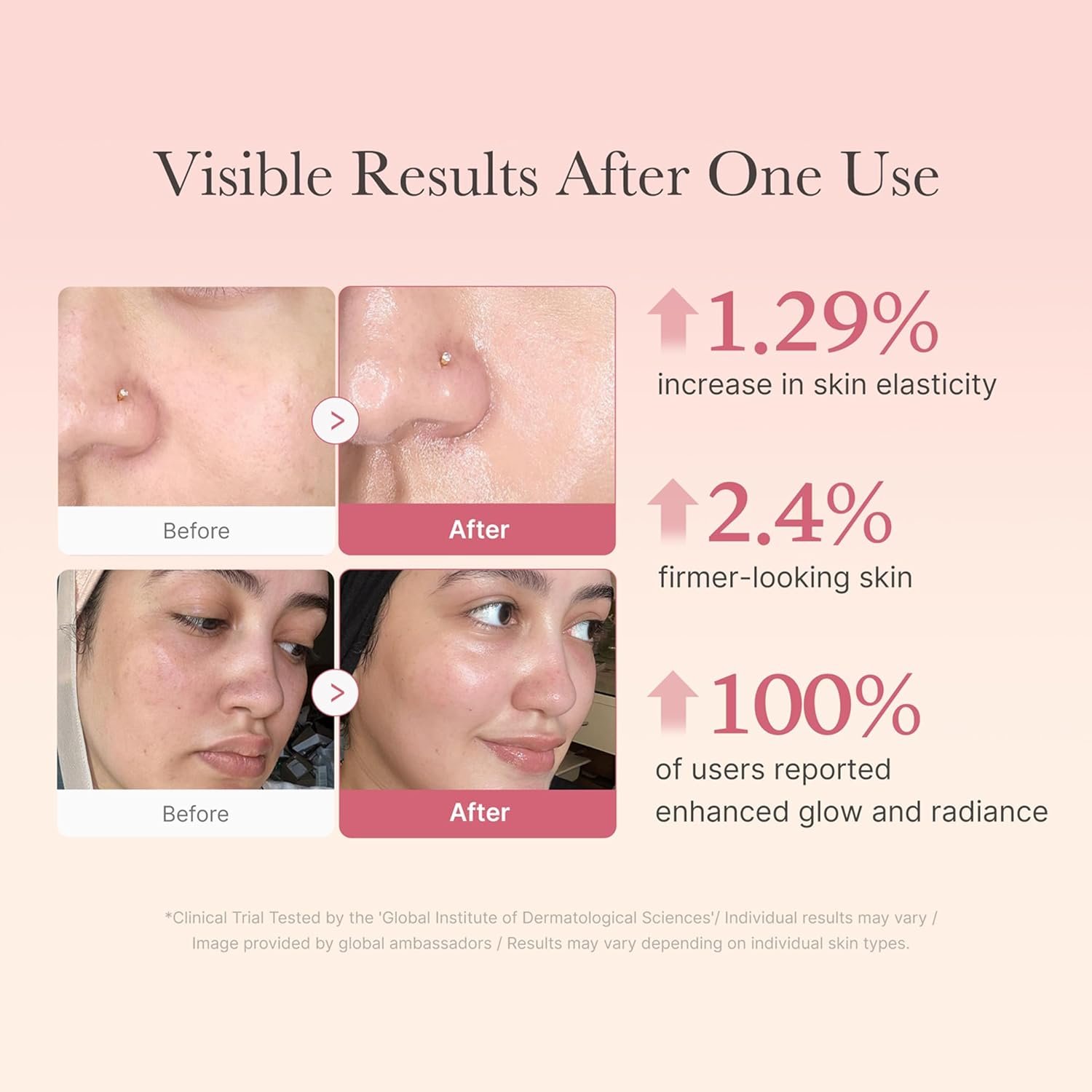
Claim: “Skin Elasticity Improved 1.793%, Sagging Improved 2.488% After 24hr” — Grade: Needs Context
This specific statistic appears across this collagen jelly cream’s marketing as proof of dermatologist-tested results for the collagen jelly cream. The precision itself is worth noticing — decimal-point percentages like 1.793% and 2.488% suggest exact measurement, but the underlying study details (sample size, control group, independent verification) aren’t disclosed anywhere in the publicly available marketing material.
This is a common pattern in cosmetic marketing generally: an internally commissioned or brand-sponsored test produces a specific-sounding number that reads as scientific, without the transparency needed to actually evaluate what it means. A genuine 24-hour improvement in surface hydration and plumpness is plausible for a well-formulated moisturizer — that’s a real, achievable short-term effect — but the specific decimal percentages shouldn’t be treated as independently verified clinical evidence without more disclosed methodology. The gap between “dermatologist tested” and “peer-reviewed and independently replicated” is a distinction worth keeping in mind for this collagen jelly cream and for cosmetic marketing generally.
Claim: “Collagen” as the Headline Ingredient — Grade: Overstated
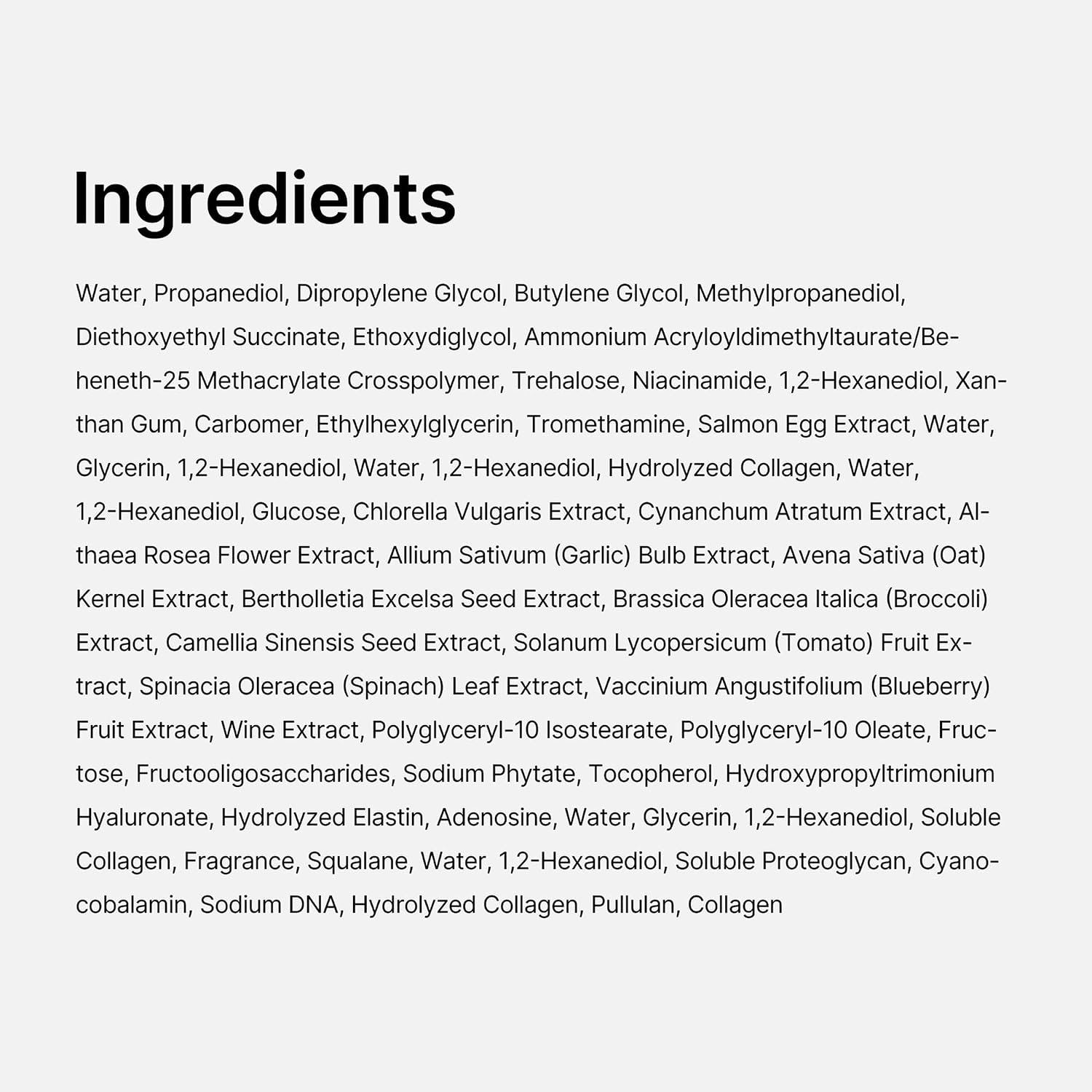
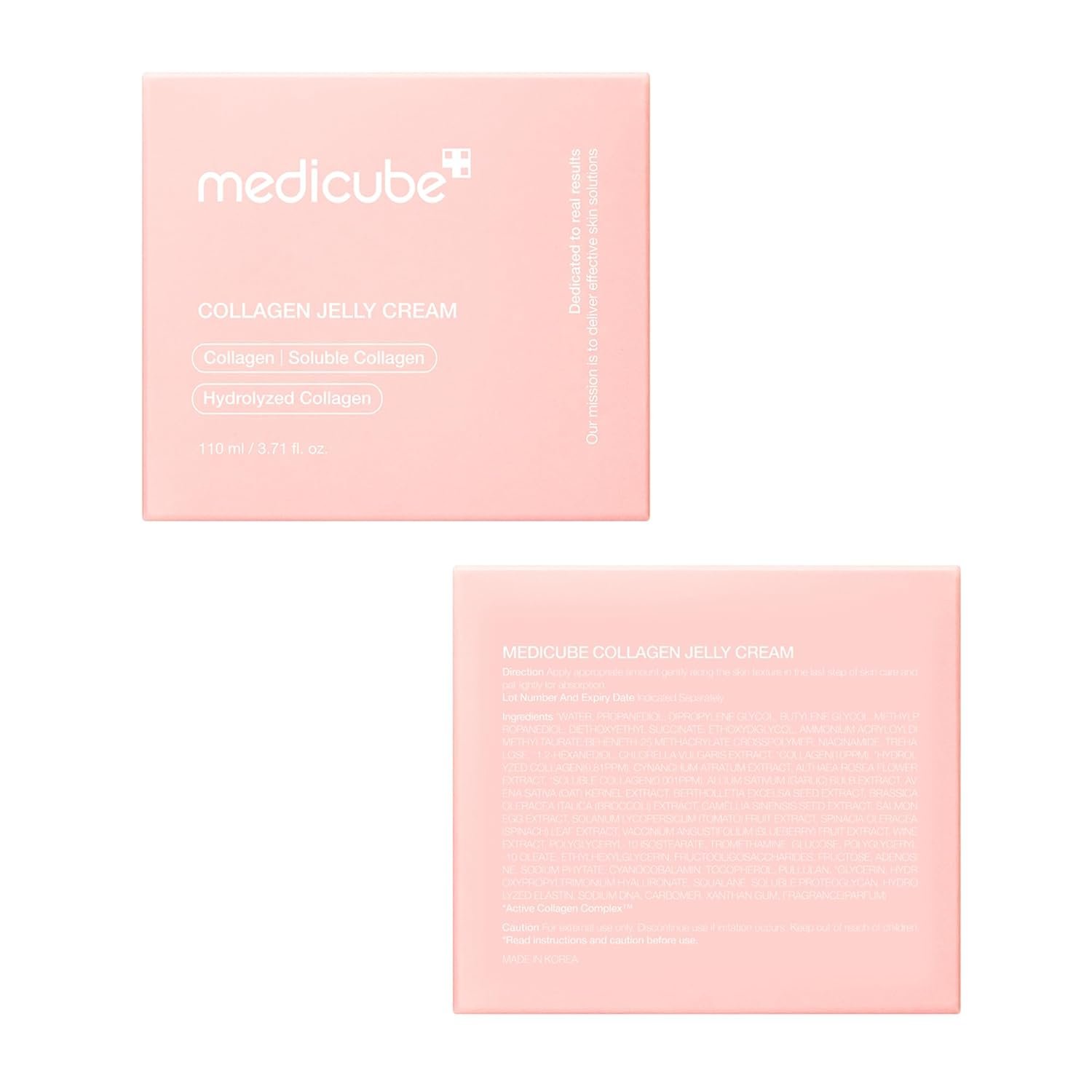
This is the most important fact-check in this collagen jelly cream review, since “Collagen” appears in the collagen jelly cream’s product name itself. Looking at the actual ingredient list, the collagen-related ingredients are present in genuinely trace amounts: Collagen at 10ppm, Hydrolyzed Collagen at 9.81ppm, and Soluble Collagen at just 0.001ppm — parts per million, not meaningful percentages of the formula. For comparison, a 1% concentration would be 10,000ppm, meaning even the highest of these three collagen ingredients sits at roughly one-thousandth of that.
This matters because of a separate, well-established issue with topical collagen generally. According to Cleveland Clinic, the dermatological consensus is that topical collagen molecules are too large to penetrate the skin’s outer layer and reach the dermis, where your body’s own structural collagen actually lives. Even a product with a meaningfully higher collagen concentration than this one faces that same penetration barrier — and at 9.81ppm, the collagen in this cream is present in such a small amount that it’s unlikely to be doing much of anything beyond surface-level hydration, regardless of the penetration question.
None of this makes the cream itself useless — it just means the “Collagen” branding on this jelly cream is doing more marketing work than the actual collagen ingredient is doing dermatological work, a distinction worth understanding before assuming the name reflects the formula’s primary active ingredient.
Claim: “Niacinamide Enhances Skin Barrier Function and Hydration” — Grade: Well Supported
This claim holds up considerably better than the collagen framing. According to Cleveland Clinic, niacinamide genuinely helps strengthen the skin’s lipid barrier, lock in moisture, and calm redness and irritation — benefits backed by a real, established body of dermatological use, not a single brand-commissioned statistic.
There’s also a genuinely interesting detail buried in that same research: Cleveland Clinic notes niacinamide itself may help boost your skin’s own collagen production by improving elasticity, which raises a fair question for this specific collagen jelly cream — the niacinamide in the formula may be doing more for your skin’s actual collagen levels than the trace collagen ingredient added directly to the product. That’s a genuinely useful reframe: the most collagen-relevant ingredient in this cream might not be the one with “collagen” in its name.
What This Collagen Jelly Cream Actually Does Well
Setting the marketing claims aside, several things about this collagen jelly cream formula are genuinely reasonable. Trehalose is a well-regarded humectant that helps the skin retain moisture, and the silicone-free, artificial-color-free formulation is a legitimate plus for anyone trying to avoid those ingredients specifically. The lightweight jelly texture is also a real, tangible quality difference from a heavy, greasy cream — a genuine reason people gravitate toward this format, independent of any specific clinical claim.
The pH range of 5.69–7.69 sits reasonably close to skin’s natural slightly acidic range, which is a sensible formulation choice rather than a marketing flourish, and it suggests genuine formulation care went into this product beyond the headline ingredients.
The Texture and Sensory Experience
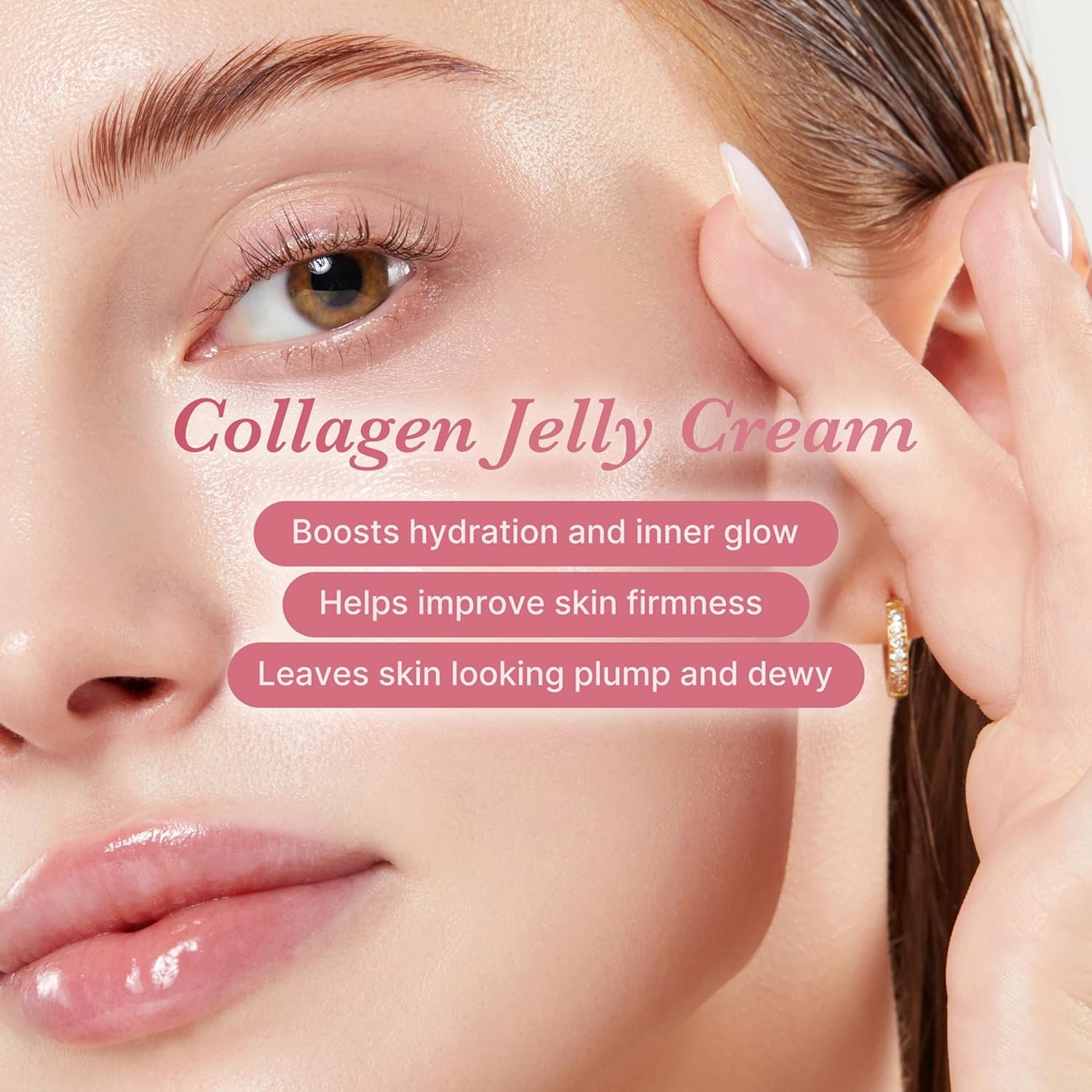
Beyond the ingredient analysis, the actual feel of this collagen jelly cream is a real part of why this collagen jelly cream has become popular, independent of any clinical claim. The transparent, bouncy jelly consistency is a distinct texture category from a traditional whipped cream or lotion, and it’s genuinely part of the “glass skin” aesthetic the marketing leans on — a real, visible, tactile quality rather than a purely invented trend term.
This collagen jelly cream’s texture also affects how the product layers with other skincare steps. A jelly consistency generally sits well under sunscreen and makeup without pilling, which is a practical, everyday consideration separate from whether the collagen content is doing anything measurable.
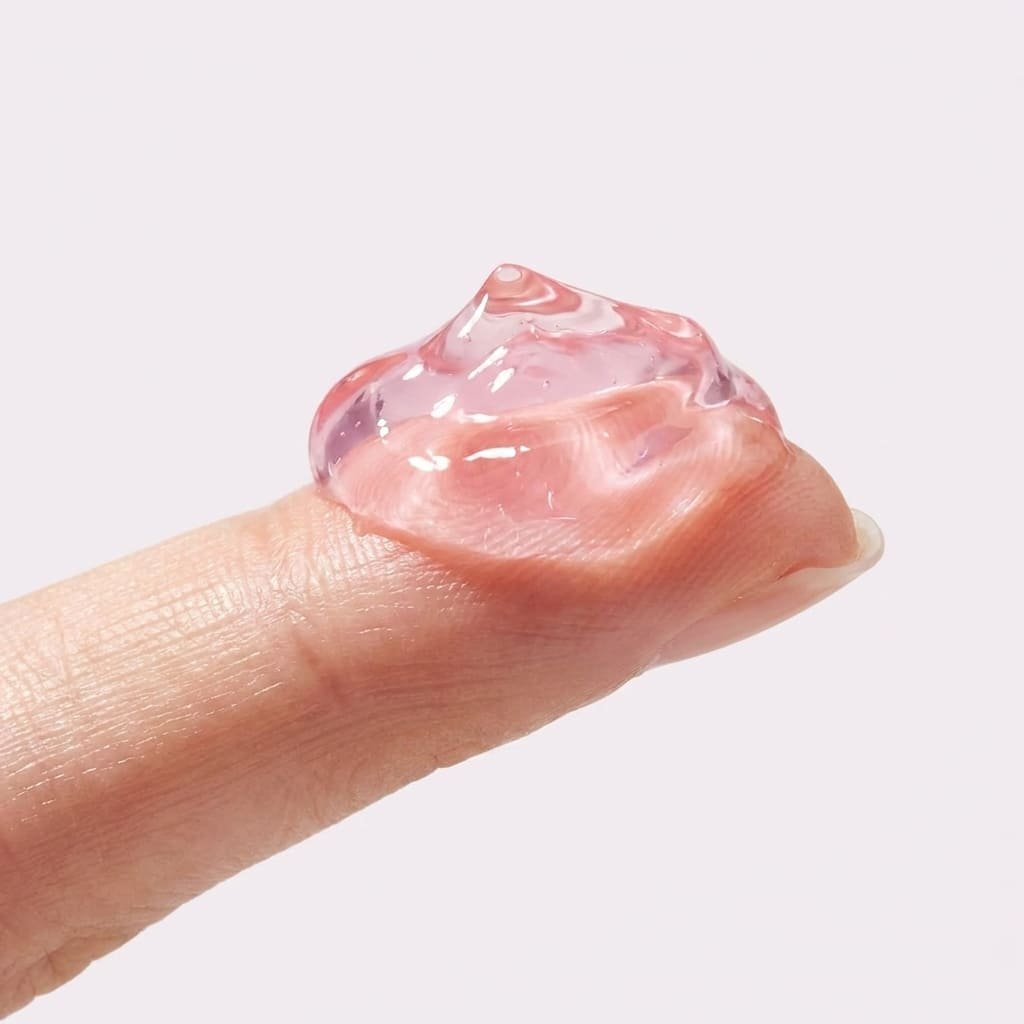
For anyone specifically drawn to this collagen jelly cream because of the texture and application experience, that part of the collagen jelly cream’s appeal holds up regardless of the ingredient fact-check above.
What to Look for in a Collagen-Marketed Skincare Product
If you’re comparing this collagen jelly cream against other options claiming similar benefits, a few things are worth checking:
- Actual ingredient concentration, not just ingredient presence — a collagen-branded product with collagen listed near the bottom of the ingredient list, especially in ppm, is contributing far less than the name implies.
- Niacinamide concentration — most effective formulas use 2–5%, with higher concentrations sometimes causing irritation rather than added benefit.
- Realistic expectations for topical collagen generally — no topical product delivers dermal-level collagen rebuilding, regardless of brand or price point.
- Humectant and barrier-support ingredients — trehalose, hyaluronic acid, and ceramides do more measurable, direct hydration work than trace collagen typically does.
- Marketing precision versus disclosed methodology — a specific-sounding statistic without sample size or independent verification is worth treating skeptically.
- What the ingredient list actually reveals versus what the product name implies — reading past the front-of-package branding into the actual formulation is the single most useful habit for evaluating any collagen jelly cream or similar product.
Who Should Buy This Collagen Jelly Cream?
This collagen jelly cream is a good fit for anyone who wants a lightweight, niacinamide-based moisturizer with a pleasant jelly texture, and who isn’t specifically buying it expecting dermal collagen rebuilding. The niacinamide content alone is a reasonable, evidence-supported reason to consider this collagen jelly cream, independent of the collagen marketing entirely.
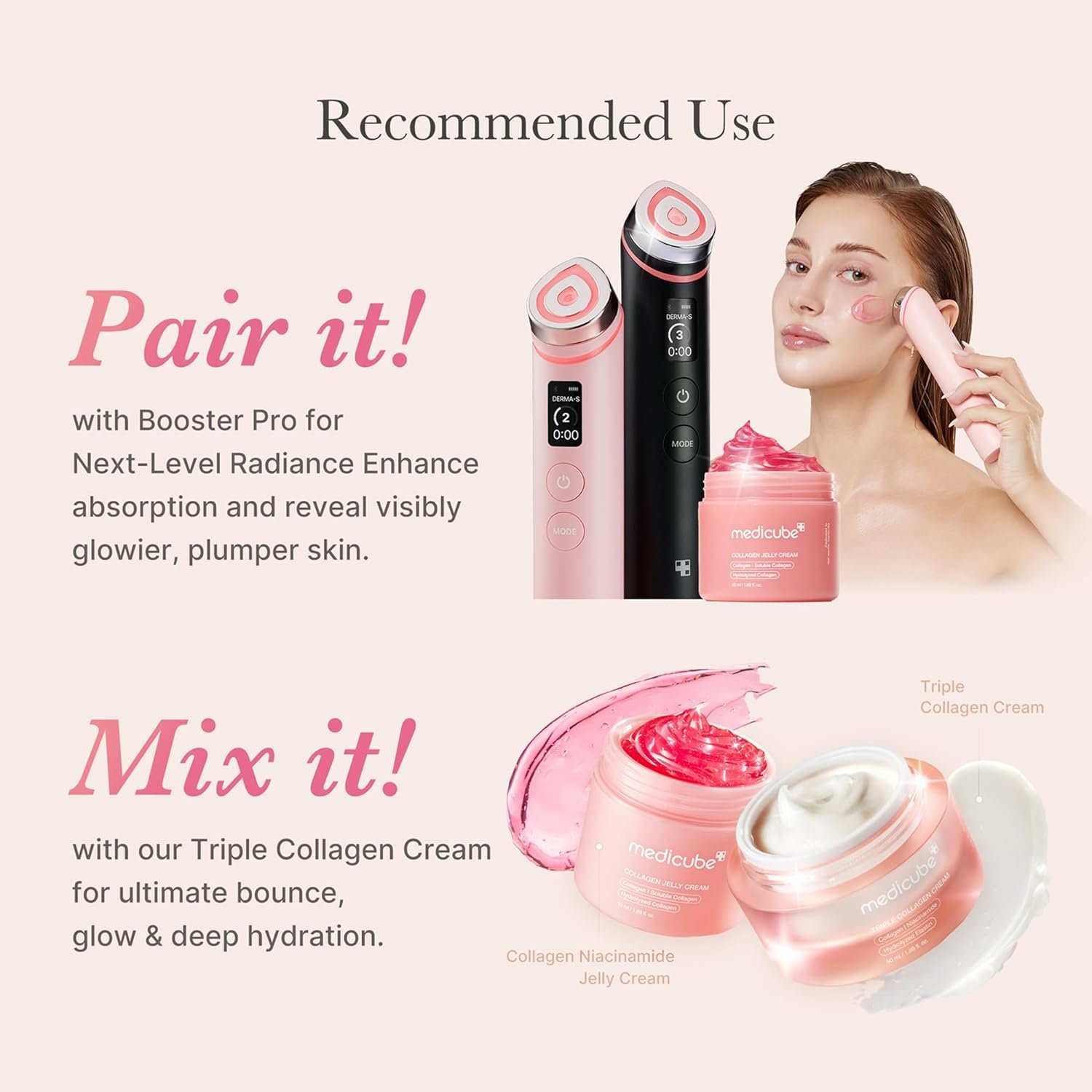
It’s probably not the right choice for anyone buying primarily because of the “Collagen” name expecting structural anti-aging results, since the actual collagen content is too small to meaningfully deliver that. If you want to dig deeper into the broader topical collagen question, our collagen mask review covers the same science-check in more detail, and our Personal Care reviews cover other options worth comparing.
How We Evaluated This Product
This review of the collagen jelly cream is based on the manufacturer’s published ingredient list and marketing claims, cross-referenced against Cleveland Clinic’s dermatological guidance on both niacinamide and topical collagen.
Why Trace-Amount Collagen Still Gets Marketed This Way
It’s worth understanding briefly why this collagen jelly cream, and others like it, can legally and commonly be built around such a small amount of its namesake ingredient. Ingredient lists are generally required to list components in descending order by concentration, but there’s no requirement that a product’s marketing name reflect the concentration of that ingredient specifically. A collagen jelly cream formula can legitimately include collagen — even at 9.81ppm — and market itself around that ingredient, since the claim isn’t technically false, just potentially misleading about impact.
This pattern isn’t unique to this collagen jelly cream at all. It shows up across the broader K-beauty and Western skincare markets alike, wherever a headline ingredient tests well with consumers regardless of its actual formulation weight. Reading the full ingredient list, not just the product name, is really the only reliable way to know what you’re actually buying.
Frequently Asked Questions
Is there really collagen in this jelly cream? Yes, technically, but the collagen-related ingredients are present in trace amounts (parts per million), not as a primary active ingredient the name might suggest.
Does topical collagen actually rebuild skin structure? No — the dermatological consensus is that topical collagen molecules are too large to penetrate to the dermis, where the body’s own structural collagen is produced.
Is the “24-hour” clinical claim on this collagen jelly cream trustworthy? The specific decimal percentages lack disclosed methodology, so while some short-term hydration improvement from a well-formulated moisturizer is plausible, the precise numbers shouldn’t be treated as independently verified.
What’s actually doing the work in this collagen jelly cream? Niacinamide and trehalose are the most evidence-supported ingredients in this formula for hydration and barrier support, more so than the trace collagen content.
Is niacinamide safe for sensitive skin? Generally yes — Cleveland Clinic notes it’s considered gentle, though patch testing is worth doing since mild irritation or redness is possible in some people.
Should I avoid collagen-branded skincare entirely because of this? Not necessarily — a product can still be a reasonable moisturizer even if its collagen content isn’t doing much; the issue is treating the “Collagen” branding as the reason to buy it rather than the actual formulation.
Does this collagen jelly cream work well under makeup? The lightweight jelly texture is generally well-suited to layering under makeup, since it absorbs relatively quickly without leaving a heavy residue, though individual results depend on skin type.
Final Verdict on This Collagen Jelly Cream
This collagen jelly cream is a reasonably formulated, lightweight moisturizer built on a genuinely evidence-supported ingredient — niacinamide — wrapped in marketing that leans heavily on a trace-amount collagen ingredient and an unverifiable-sounding clinical statistic. The “24-hour glow” framing and precise percentages deserve healthy skepticism, and the “Collagen” name promises more structural benefit than 9.81ppm of hydrolyzed collagen can realistically deliver.
Buy this collagen jelly cream for the niacinamide, the trehalose, and the pleasant lightweight texture — that’s where the genuine value sits. Buy it specifically for the collagen, and you’re paying more attention to the name on the label than to what’s actually in the formula.
This is really the broader lesson worth taking away from this collagen jelly cream and any collagen-branded skincare product, not just this one: check the ingredient list’s actual concentrations before assuming a product name reflects its dominant active ingredient.
This article reflects publicly available product information and Cleveland Clinic dermatological guidance and is not medical advice. Consult a dermatologist for personalized skincare recommendations, especially if you have sensitive or reactive skin.