
Backed by a 1,685-person NIH-funded trial on self-monitoring, this smart food scale review looks at both the real evidence and the real limitations of barcode-based nutrition tracking.
This post contains affiliate links. If you purchase through a link on this page, we may earn a commission at no extra cost to you.
Most kitchen gadget reviews start with the features. This one starts with the research, because the single most well-documented predictor of weight-loss success isn’t a specific diet, a specific exercise routine, or a specific supplement — it’s whether someone actually tracks what they eat. A smart food scale is built entirely around making that one evidence-backed behavior easier, so it’s worth understanding the research before getting into the specs.
That order matters more than it might seem. Plenty of kitchen gadgets promise to make healthy eating easier without any real evidence behind the core premise. A smart food scale is a rare case where the underlying behavior — weighing and logging food — already has a substantial research base behind it, independent of any specific smart food scale product or brand.
Table of Contents
What Is This Smart Food Scale?
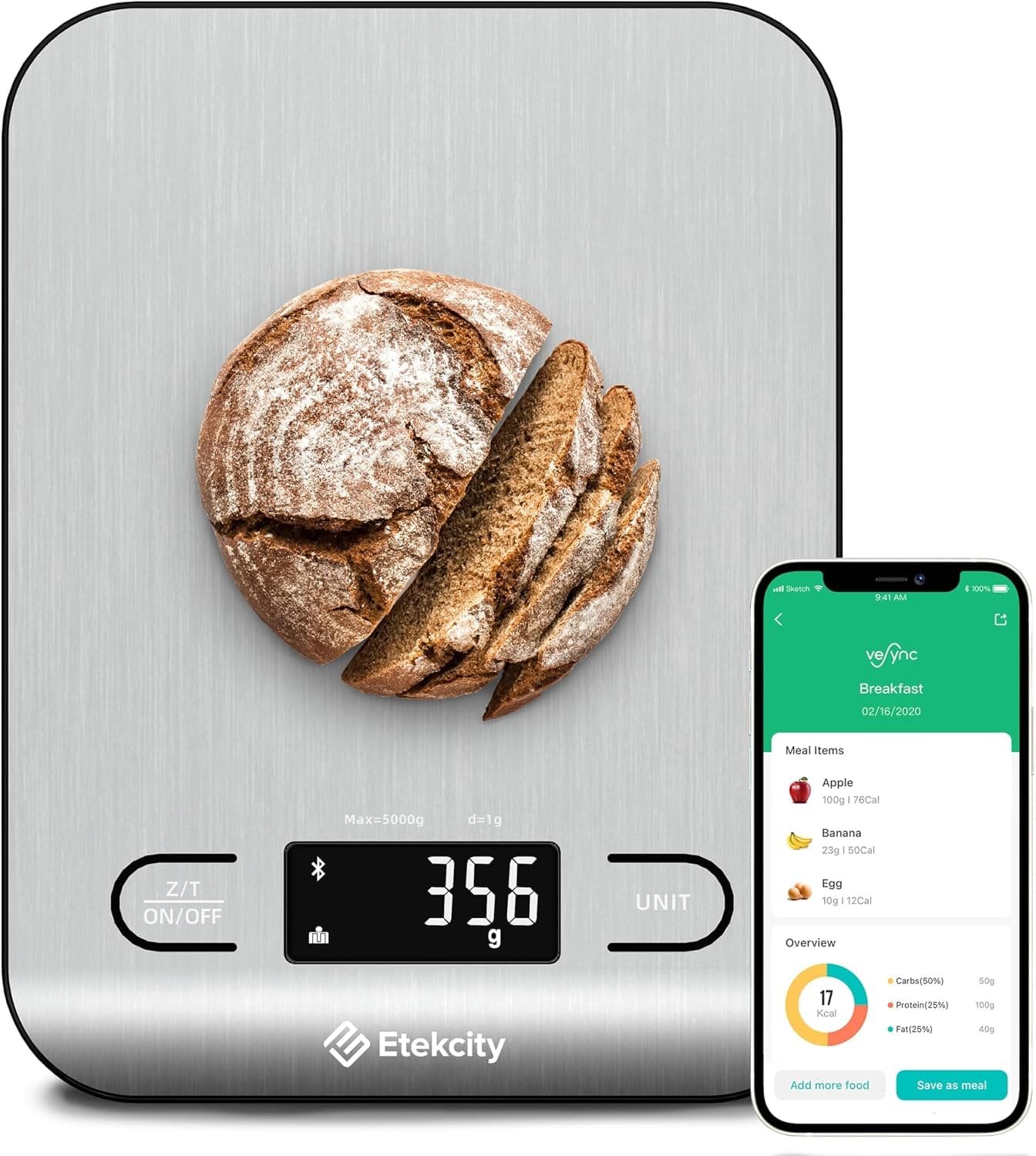
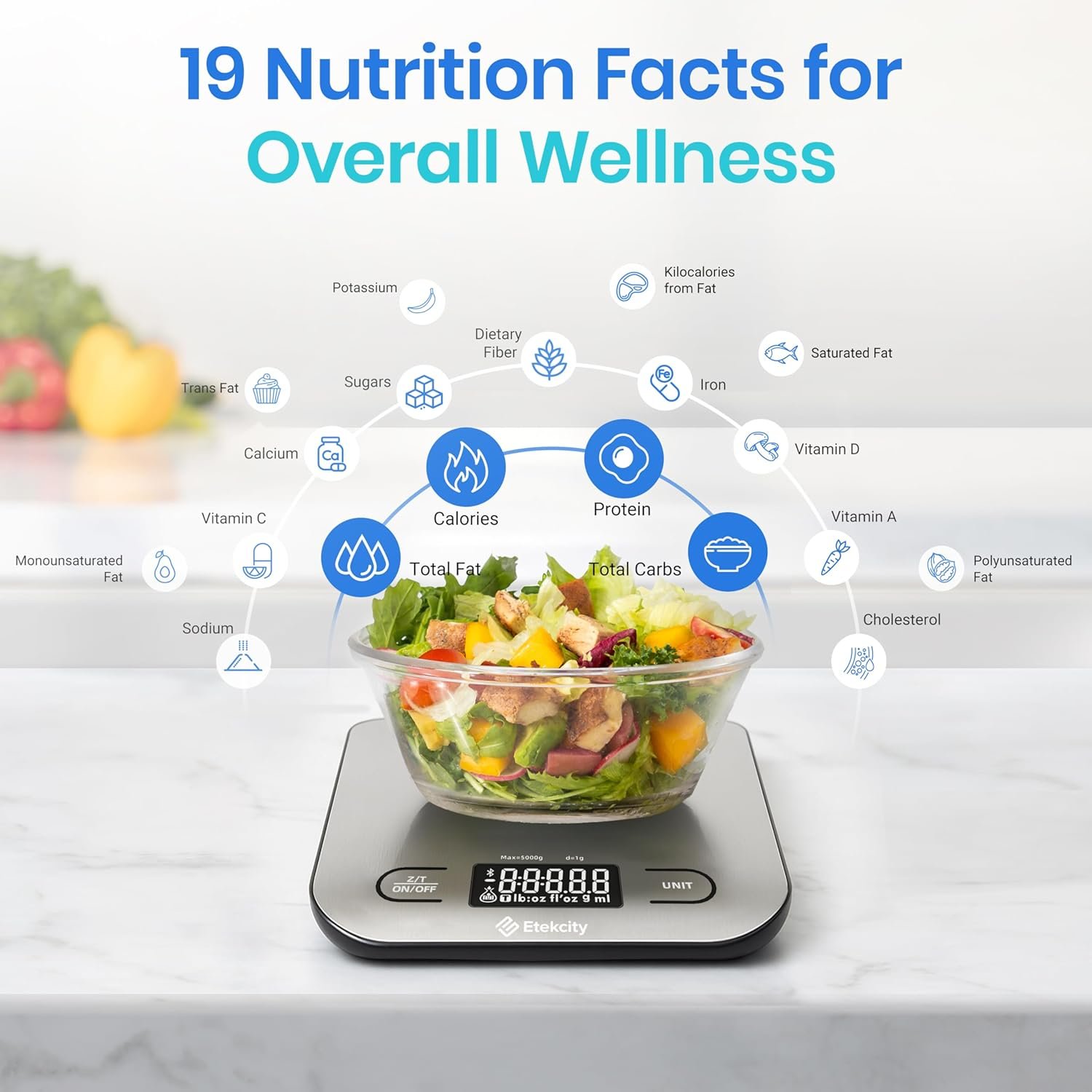
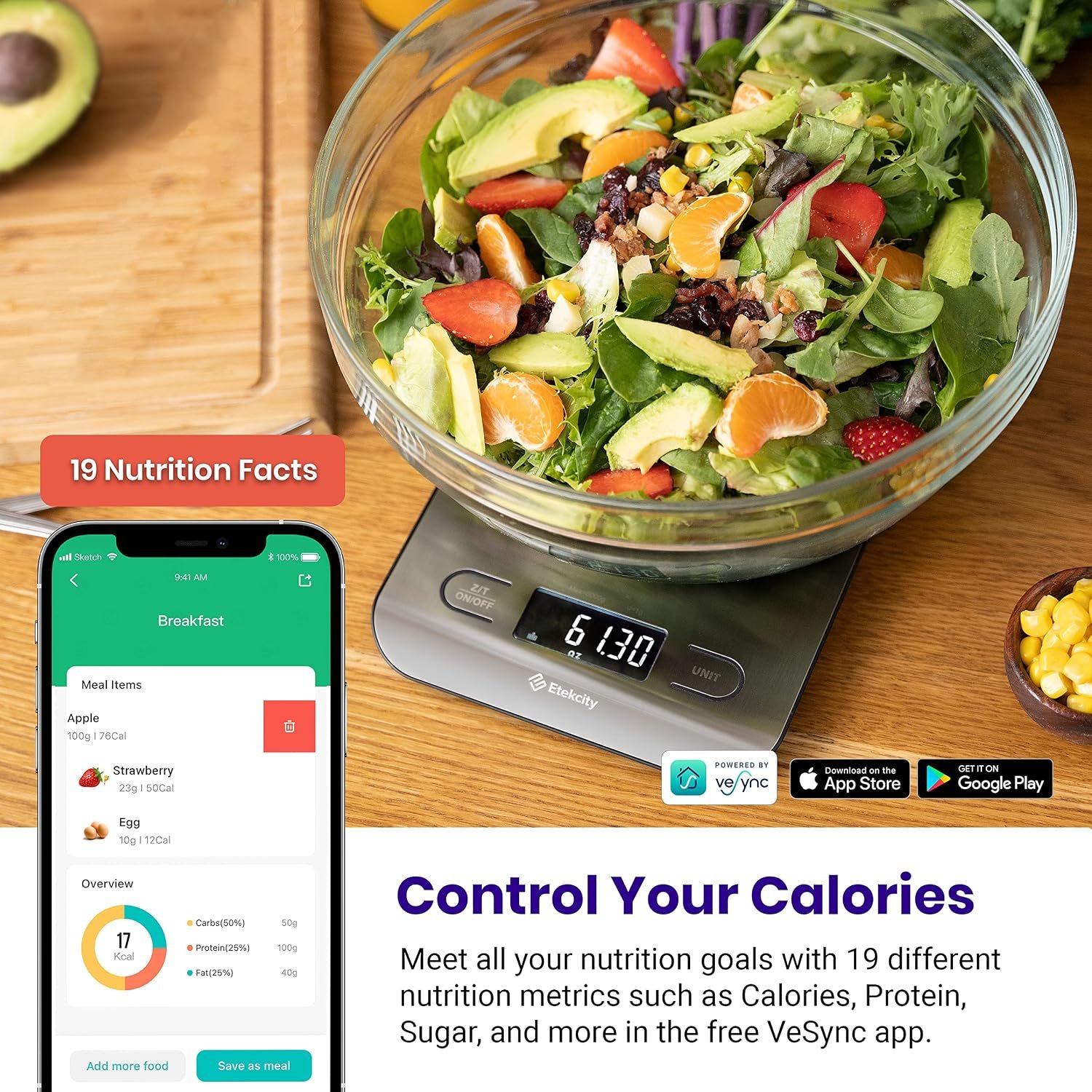
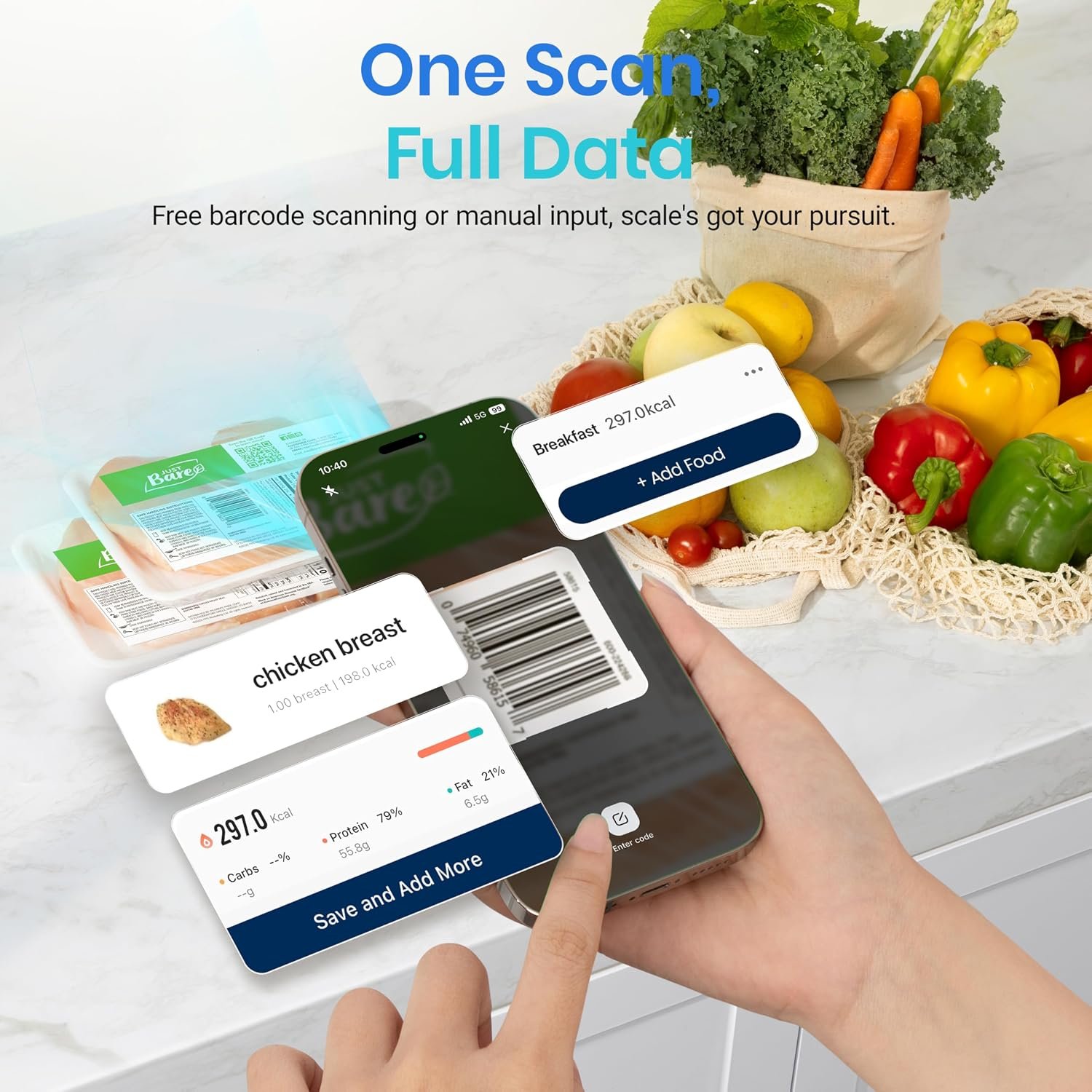
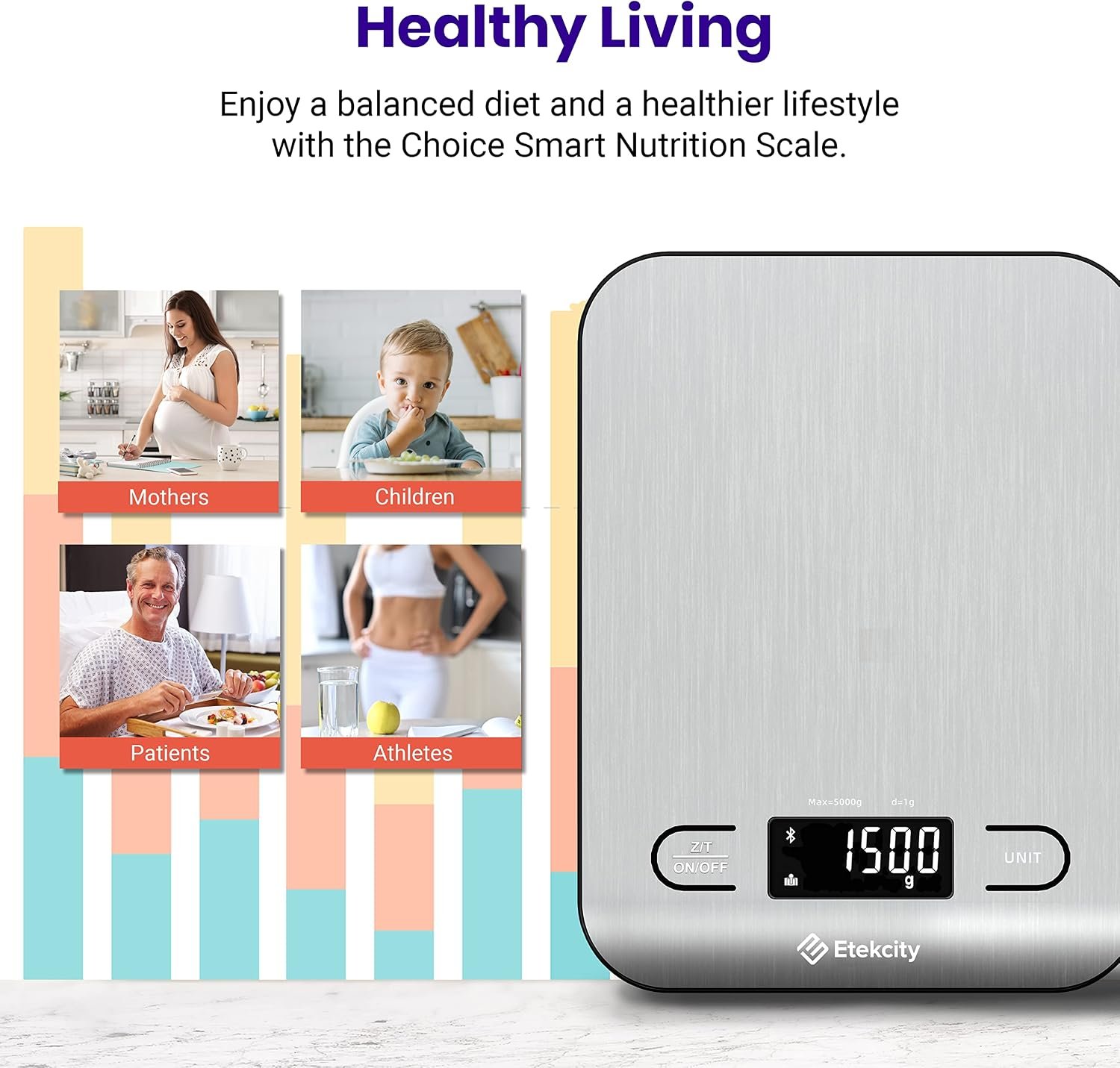
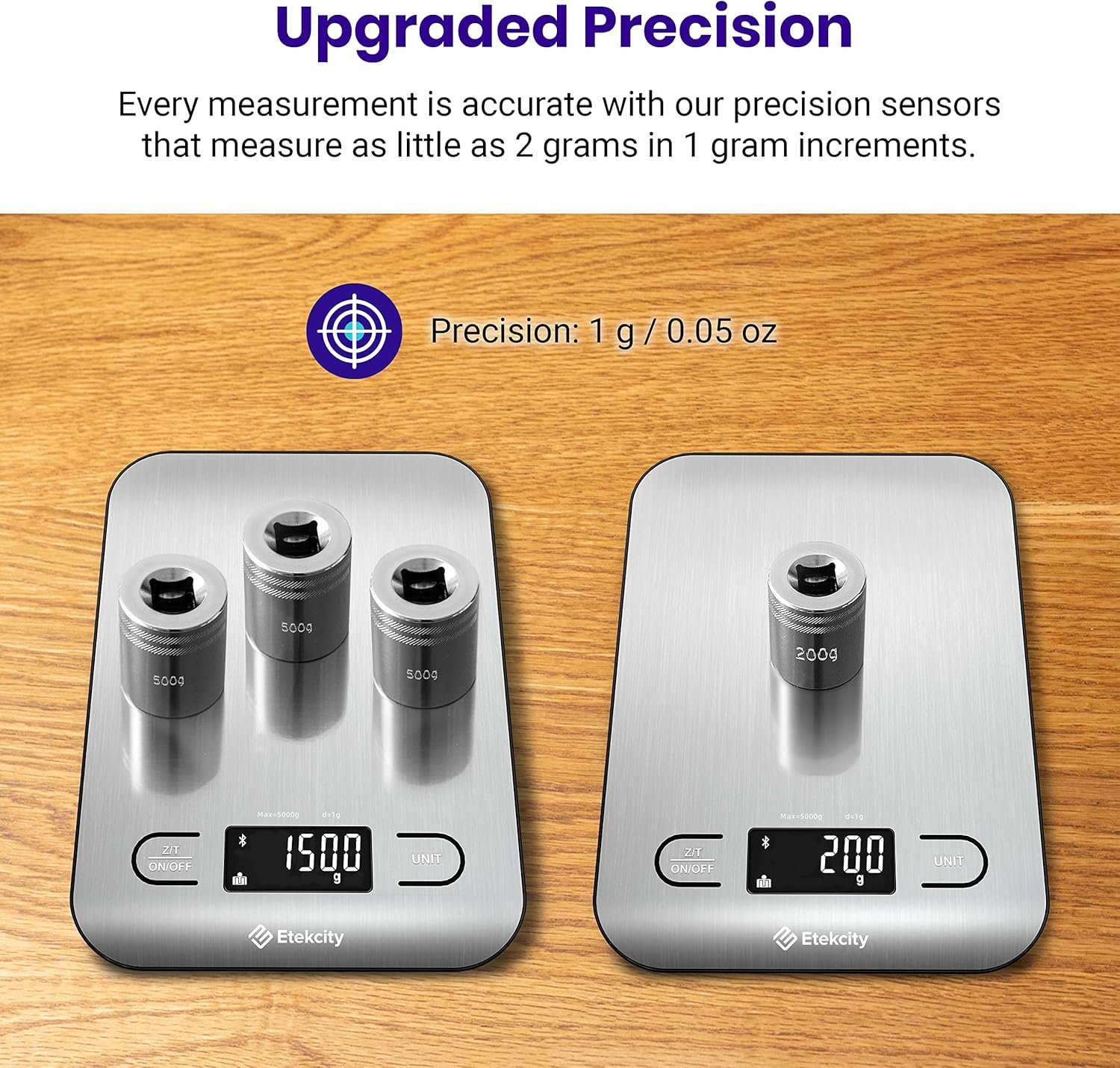
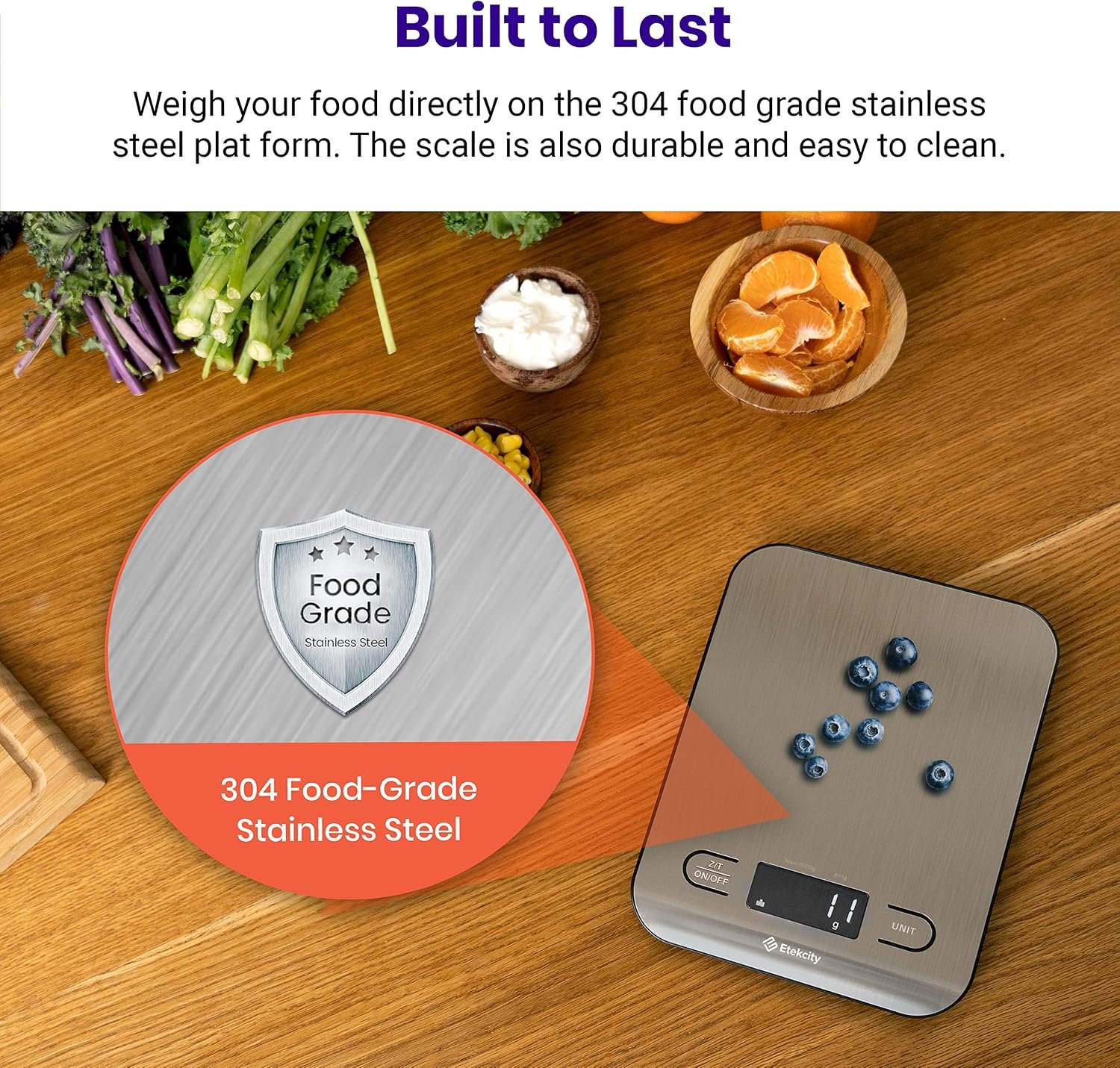
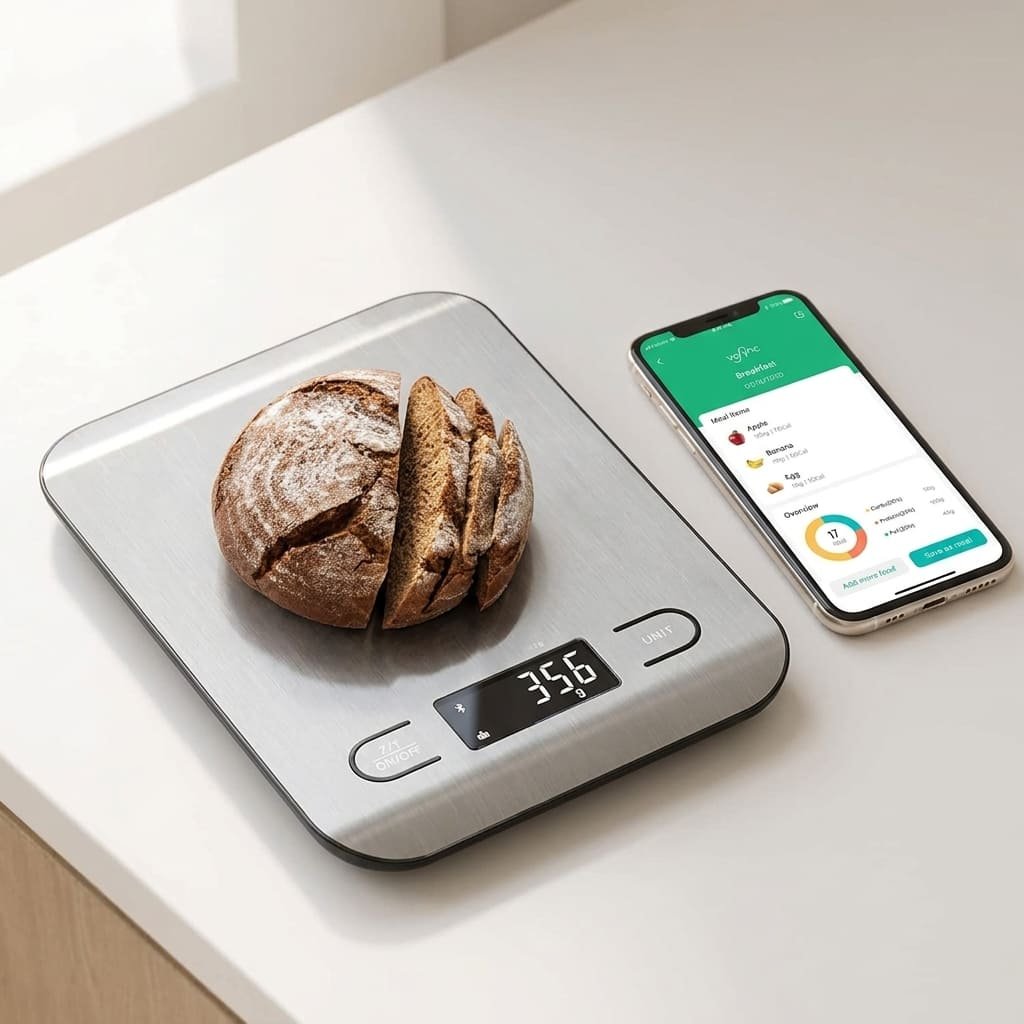
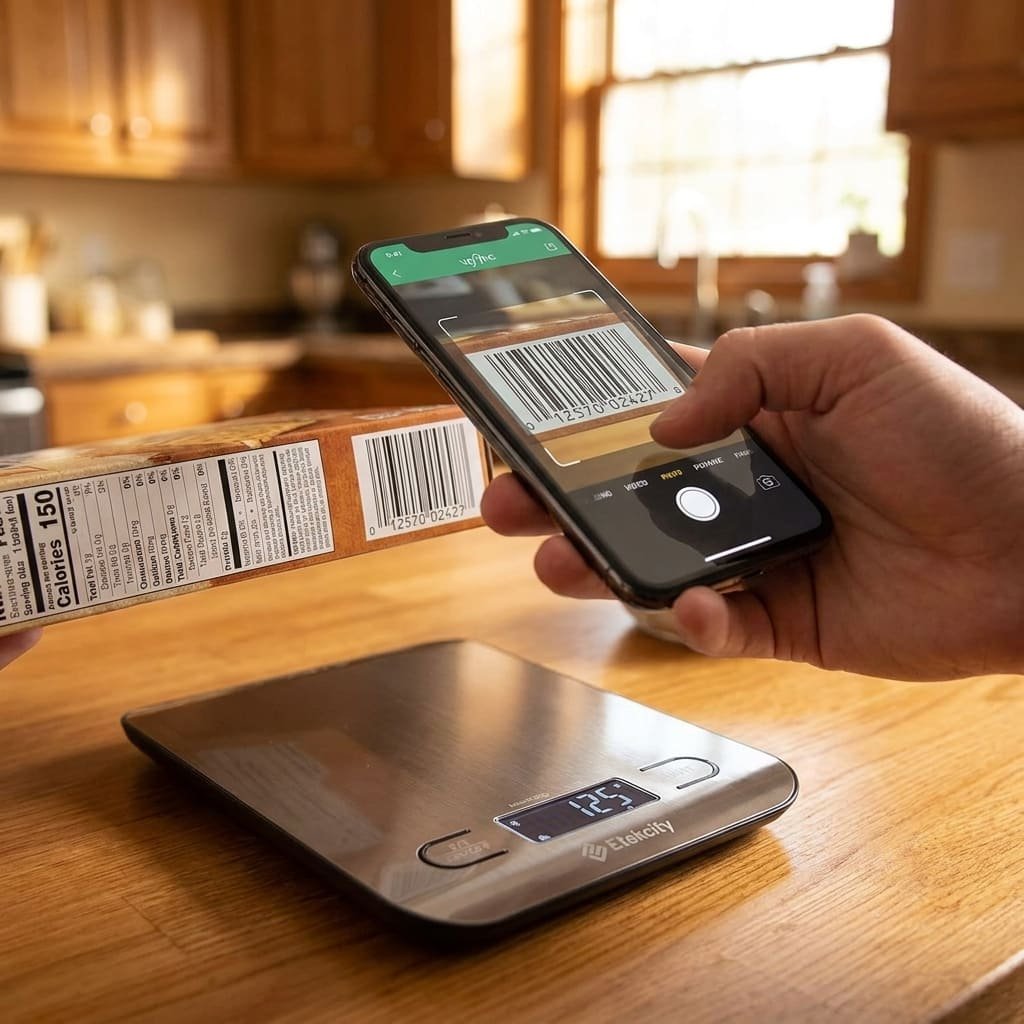
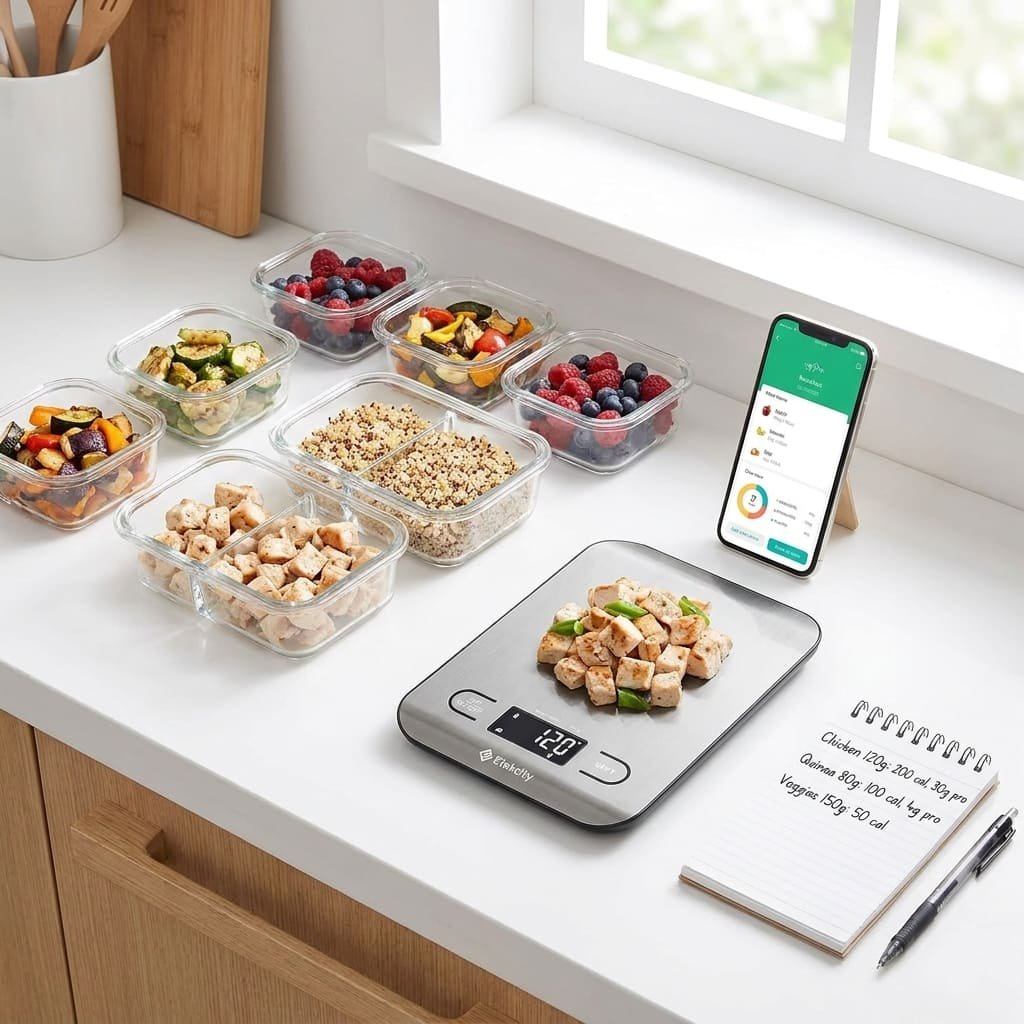
This is the Etekcity Smart Nutrition Scale, a 304 stainless steel kitchen scale that connects to the free VeSync app to log weight, calories, and 19 total nutrition metrics per food item. Rather than requiring manual entry for every ingredient, this smart food scale supports barcode scanning to pull nutrition data automatically from a large food database, then logs the result directly against daily goals set in the app.
Unlike a basic kitchen scale that only tells you a number in grams or ounces, this smart scale is built specifically around the tracking step for anyone using a smart food scale to change how they eat — the part of the process that the actual research says matters most.
Key Specs at a Glance
- Material: 304 stainless steel weighing platform
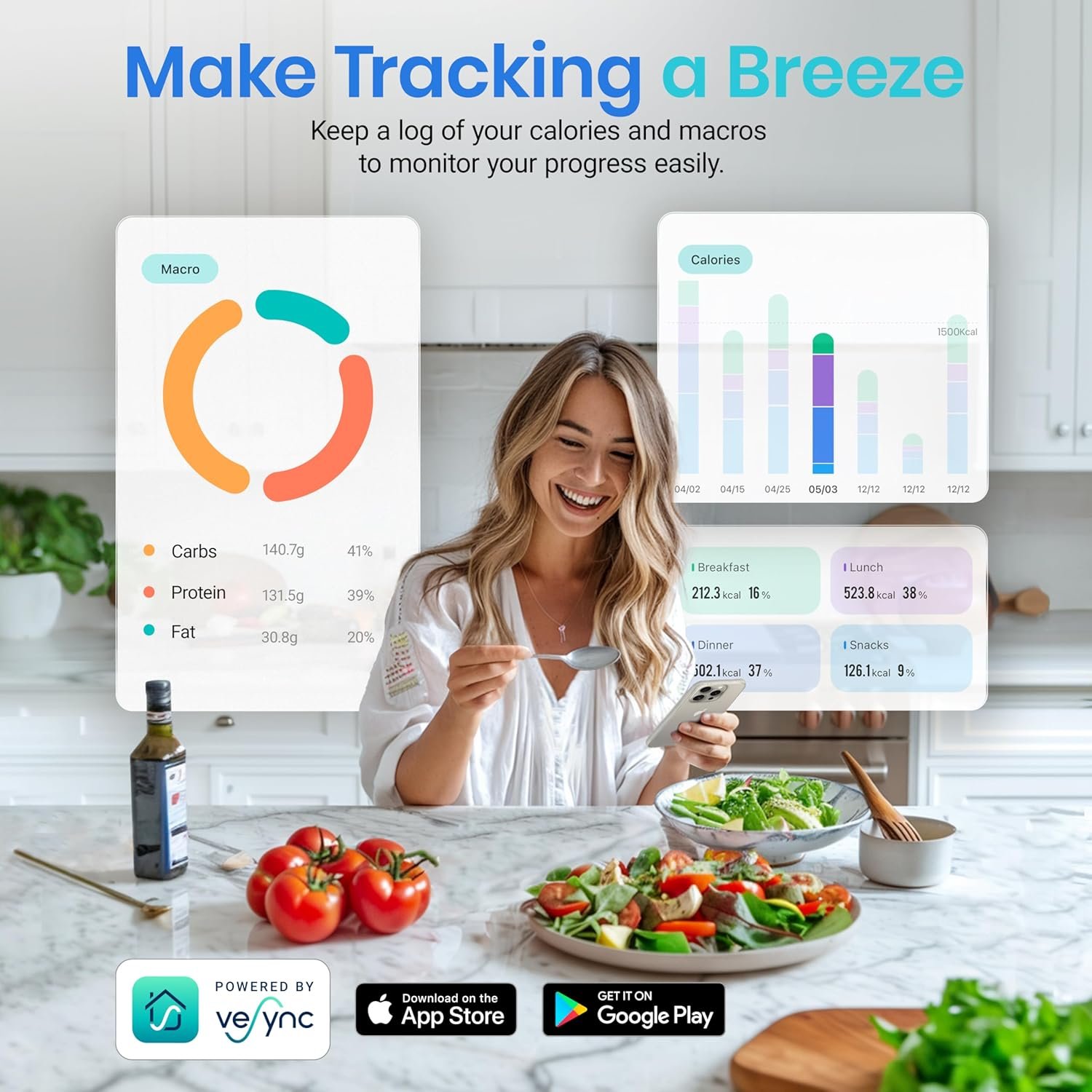
- App integration: Free VeSync app with barcode scanning and 19 tracked nutrition metrics
- Measurement units: Customizable — oz, lb:oz, fl oz, g, mL
- Customer rating: 4.6 out of 5 from over 169,000 ratings (78% five-star)
The Research Behind Why Weighing Food Actually Works
The strongest evidence for this comes from the Weight-Loss Maintenance trial, a large NIH-funded study published in the American Journal of Preventive Medicine that followed 1,685 overweight and obese adults through a 6-month behavioral weight-loss program. Participants kept an average of 3.7 food records per week, and in the study’s regression analysis, the number of diet records kept per week was one of the strongest predictors of how much weight someone actually lost — a statistically significant effect even after adjusting for physical activity, race, and gender.
Lead researcher Dr. Jack Hollis summarized the finding directly in the study’s own press release: those who kept daily food records lost roughly twice as much weight as those who kept none. The mechanism isn’t mysterious — it’s not that writing something down burns calories, it’s that the act of recording creates a moment of awareness that changes the decision being made in real time.
This isn’t an isolated finding, either. A separate systematic review published in the Journal of the American Dietetic Association examined dietary self-monitoring, exercise self-monitoring, and self-weighing across 22 studies and found self-monitoring to be a consistent, central component of successful behavioral weight-loss interventions. The pattern shows up repeatedly across independent research groups, not just in one trial, which is exactly the kind of converging evidence that makes a smart scale a reasonable tool rather than a speculative one.
This matters for a smart food scale specifically because weighing and logging food is a more precise version of the exact behavior this trial measured. A smart food scale doesn’t replace the behavior science — it removes friction from a behavior that was already shown to work, using a tool a person is more likely to actually stick with than a written notebook.
What This Smart Food Scale Adds Beyond a Basic Scale
The core value of a smart food scale over a standard kitchen scale is the barcode-and-database layer. Instead of weighing an item, then separately looking up its nutrition values, then manually typing them into a tracking app, this smart food scale collapses all three steps into one — scan, weigh, log. For anyone whose tracking habit fails specifically because manual entry feels tedious, a smart food scale removing that friction is the entire point.
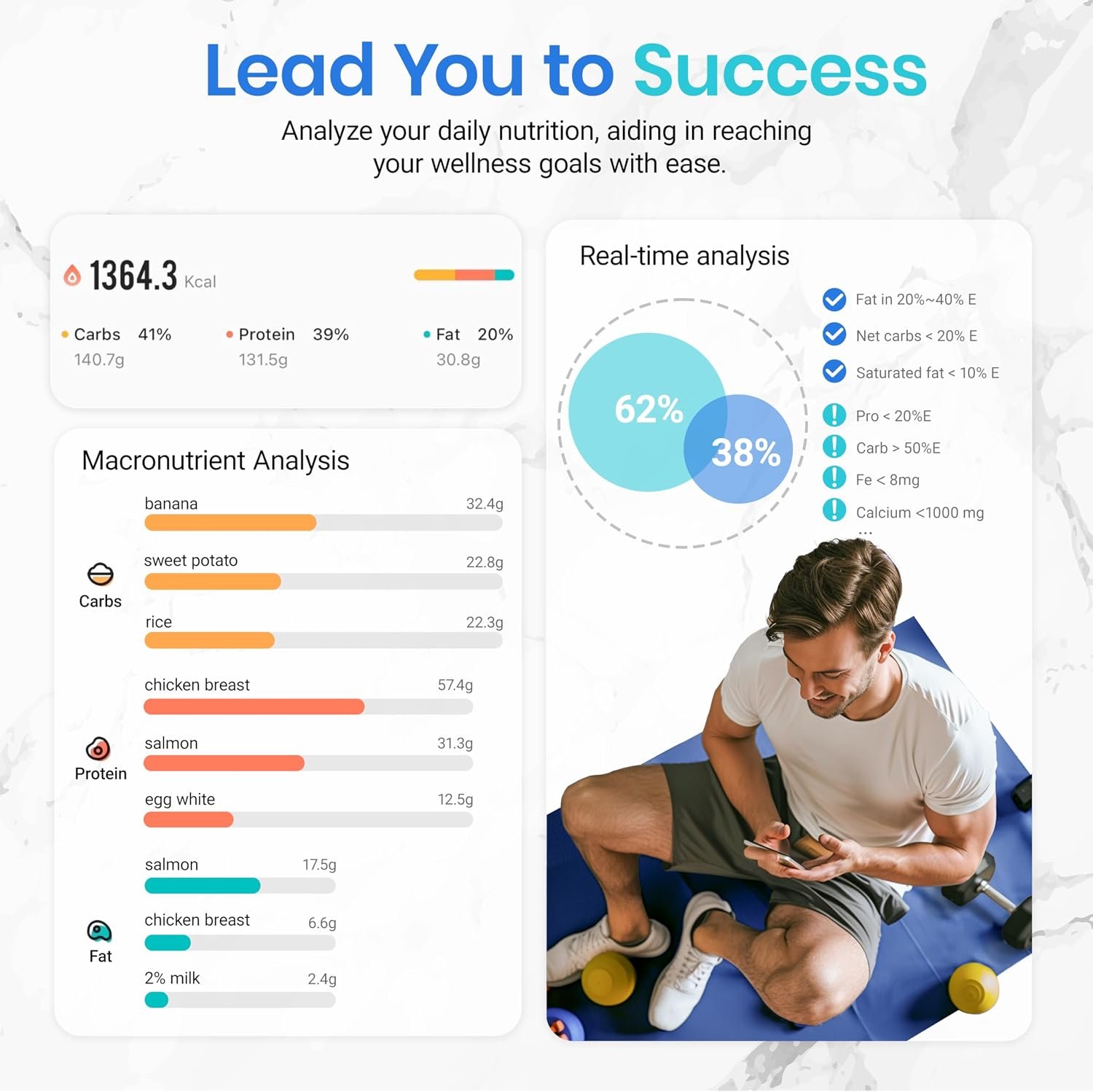
The 19 tracked metrics go well beyond calories, covering things like sugar and sodium content that a basic scale obviously can’t provide. For someone managing a specific dietary pattern — lower sodium, higher protein, reduced sugar — that level of detail from a single smart food scale scan is a meaningful upgrade over eyeballing portions or estimating from memory.
Customizable measurement units are a smaller but genuinely practical feature of this smart food scale. Recipes and nutrition labels don’t consistently use the same unit system, and being able to switch between grams, ounces, and fluid ounces on the fly on this smart food scale avoids the mental math that otherwise adds another small point of friction to a habit that’s already fighting against convenience.
Being Honest About the Database Accuracy Question
This is worth addressing directly, in keeping with an evidence-first approach rather than just repeating the marketing copy: no barcode-scanning nutrition database is perfectly accurate, and that includes the database behind any smart food scale on the market. A comparison study of several major food-tracking tools found real inconsistencies in the nutrition values different tools returned for the same food items, and some tools were missing data entirely for certain nutrients. This isn’t a defect specific to this smart food scale — it’s a known limitation of the entire category of barcode-based nutrition databases, since the underlying data is sourced from manufacturer labels and crowd-contributed entries rather than independently lab-tested for every product.
The same comparison research also checked a sample of common food items against an independent food composition database and found meaningful variation there too — meaning even the “correct” answer isn’t always fully settled across sources. This kind of variability is worth knowing about upfront rather than discovering it later and losing trust in the tool entirely, since it’s a limitation of the category rather than a sign that any particular smart food scale is unusually unreliable.
Practically, that means a smart food scale is genuinely useful for tracking trends and building the self-monitoring habit itself — which is what the actual research says predicts weight-loss success — but it shouldn’t be treated as a lab-grade nutrition analysis tool for any single meal. The weight measurement itself is precise; the nutrition data layered on top of it inherits the accuracy limits of whatever database it’s pulling from.
How to Actually Use Self-Monitoring Effectively
The Weight-Loss Maintenance trial data points to something specific and actionable: frequency mattered more than perfection. Participants weren’t expected to log with flawless precision — they were expected to log consistently, and that consistency is what showed up as a predictor in the data.
That’s a useful frame for anyone starting out with a smart food scale. Logging every meal imperfectly for a month with a smart food scale will likely do more for the underlying habit than logging a handful of meals with perfect precision and then abandoning the habit after a week. The scale’s job is to lower the friction of that consistency, not to guarantee precision on day one.
There’s also a practical case for pairing a smart food scale with something already automatic in a daily routine, rather than treating it as an entirely separate task to remember. Weighing breakfast right after making coffee, or logging dinner ingredients on a smart food scale while a pan is already heating up, attaches the habit to something that’s already happening — which tends to hold up better over weeks and months than a habit that depends on remembering to do it from scratch every single time.
Beyond Weight Loss: Other Reasons People Use a Smart Food Scale
Weight loss is the most-studied use case for dietary self-monitoring, but it’s not the only reason someone might reach for a smart food scale. Precise portion measurement matters for anyone managing a medical condition that requires tracking specific nutrients — sodium for blood pressure management, carbohydrates for blood sugar management, or protein targets for someone recovering from surgery or illness. In these cases, the barcode-and-database workflow of a smart food scale isn’t about calorie counting at all; it’s about consistency in tracking a single nutrient that actually matters for a specific health situation.
Athletes and people following structured training programs represent another common use case for a smart food scale, where hitting specific macronutrient targets — protein in particular — matters more than simple calorie totals. A smart food scale that logs protein alongside weight removes the guesswork of estimating portion sizes by eye, which tends to be inaccurate in both directions depending on the food. This is a case where a smart food scale earns its keep even for someone who has no interest in losing weight at all.
Who Should Buy This Smart Food Scale
This is a strong fit for anyone who has tried tracking food before and abandoned it specifically because manual logging felt tedious, since this smart food scale’s barcode-scan workflow directly targets that friction point. It’s also a reasonable upgrade for anyone managing a specific nutrient target — sodium, sugar, or protein — where a basic scale’s single gram reading isn’t enough information to act on. If you’re also tracking supplement intake alongside food, our magnesium glycinate review and Nutricost creatine review cover two other Healthy Kitchen & Nutrition picks worth weighing precisely rather than eyeballing a scoop.
It’s probably not necessary for someone who already tracks consistently using a different method that works for them, since the research suggests consistency matters more than the specific smart food scale or tool used to achieve it. A notebook that gets used every day beats a smart food scale that gets used twice and then sits in a drawer. If building a consistent tracking habit is the actual obstacle, our habit stacking guide covers a research-backed way to attach a new habit like food logging to something already automatic in your routine, rather than relying on memory alone.
How We Researched This Smart Food Scale
This review of this smart food scale is based on the manufacturer’s published specifications and app functionality, cross-referenced against multiple independent retailer listings for consistency, along with peer-reviewed and NIH-published research on dietary self-monitoring and weight loss. The specific accuracy claims about the underlying nutrition database reflect published comparison research on food-tracking tools generally, not independent testing of this exact smart food scale’s database by our team.
Frequently Asked Questions
Does a smart food scale actually help with weight loss, or is that just marketing? The self-monitoring behavior a smart food scale is built around is genuinely one of the most well-supported predictors of weight-loss success in the clinical research, independent of any specific smart food scale product. The scale itself is a tool for making that behavior easier, not a mechanism with its own independent effect.
How accurate is the nutrition data from barcode scanning on a smart food scale? Weight measurements from the scale itself are precise, but the nutrition data layered on top comes from a food database, and comparison research has found real inconsistencies across different tracking tools’ databases. Treat the nutrition numbers from any smart food scale as a useful trend indicator rather than a lab-precise figure for any single food item.
Do I need to track every single meal with a smart food scale for this to work? The research suggests consistency matters more than completeness. Frequent tracking, even if imperfect, was a stronger predictor of weight-loss success than occasional, highly precise tracking.
Does this smart food scale require a subscription? No. The VeSync app is free to use for logging and barcode scanning.
What’s the actual advantage over a basic kitchen scale? A basic scale only provides weight. This smart food scale adds automatic nutrition lookup via barcode scanning and logs results against daily goals, removing the manual data-entry step that causes many people to abandon food tracking — the core reason a smart food scale tends to outperform a basic one for anyone serious about consistency.
Final Verdict on This Smart Food Scale
The most convincing case for this smart food scale isn’t in the spec sheet — it’s in the research on self-monitoring itself, which has consistently shown that the simple act of tracking food correlates with real weight-loss outcomes, independent of diet type. This smart food scale doesn’t add anything to that underlying mechanism; it just makes the mechanism easier to sustain by removing the friction that causes most tracking habits to fail within the first few weeks.
Buy this smart food scale if manual food logging has been the actual barrier standing between you and consistent self-monitoring. Skip this smart food scale if you already have a tracking method that works, since the evidence points to consistency — not the specific tool — as the real variable that matters.
This article reflects published clinical research and manufacturer specifications, and is not a substitute for individualized nutrition or medical advice. Consult a healthcare provider or registered dietitian for guidance specific to your health situation.