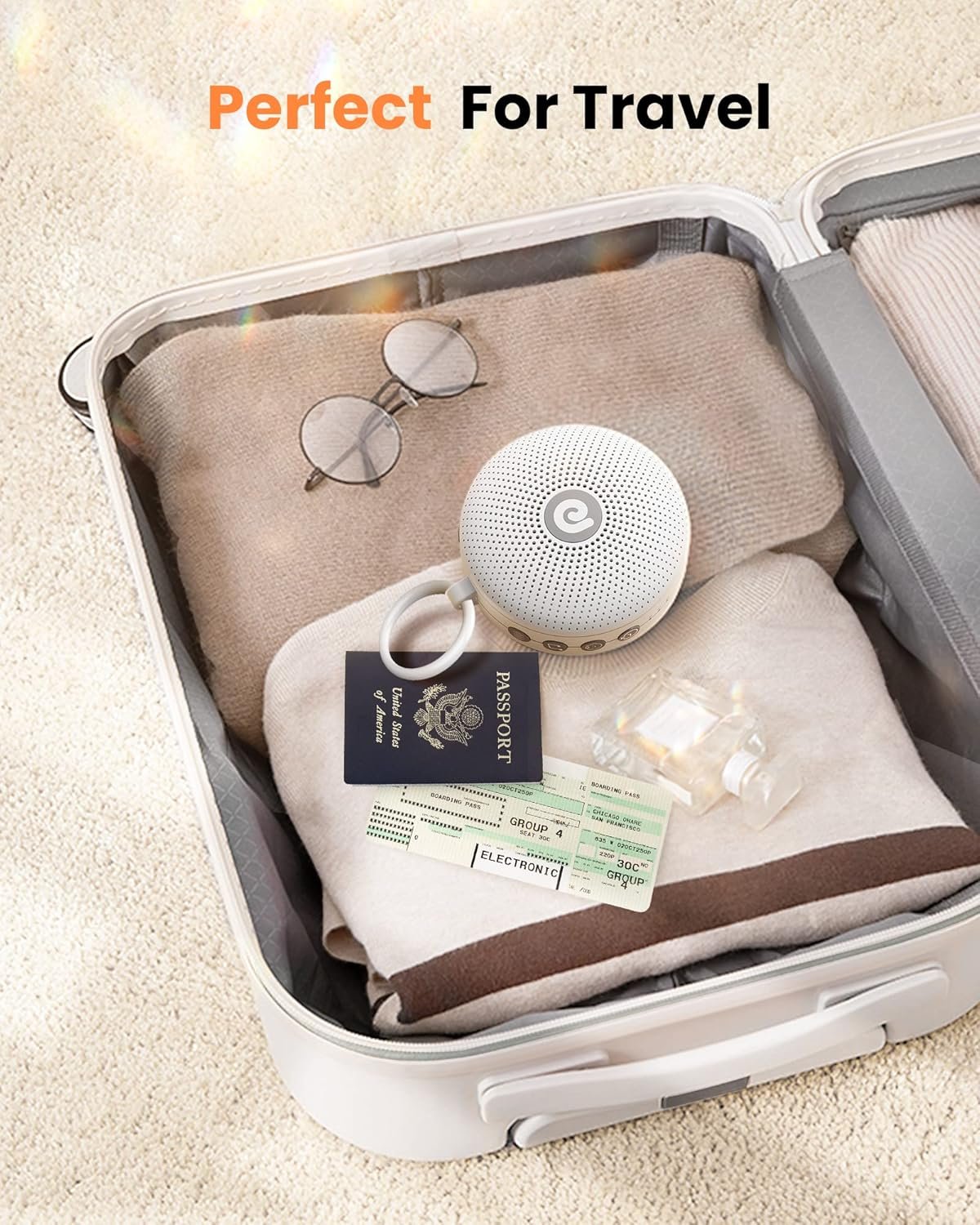

A portable white noise machine with a 1800mAh battery and 21 sounds — this review checks the manufacturer's own safety guidance against real pediatric research.
This post contains affiliate links. If you purchase through a link on this page, we may earn a commission at no extra cost to you.
Most white noise machine reviews focus on sound quality and battery life. This portable white noise machine review starts somewhere more important: what actual pediatric research says about safe volume levels, since a portable white noise machine is a device people run for hours, often right next to a sleeping baby or a light sleeper’s pillow, and that context deserves more scrutiny than most listings give a portable white noise machine.
Table of Contents
The Research on Sound Machine Safety
The most cited study on this topic comes from a 2014 paper in Pediatrics, the official journal of the American Academy of Pediatrics, titled “Infant Sleep Machines and Hazardous Sound Pressure Levels.” Researchers tested 14 different infant sleep machines at their maximum volume setting, measuring output at three distances: 30 centimeters (simulating placement on a crib rail), 100 centimeters (a nearby table), and 200 centimeters (across the room).
Every single device tested exceeded 50 A-weighted decibels at 30 centimeters — the recommended noise limit for hospital nurseries. Three of the fourteen machines exceeded 85 A-weighted decibels, which is the occupational safety threshold for adults over an 8-hour exposure period. The researchers noted that infant ear canals may actually be more sensitive to sound pressure than adult models account for, meaning their safety estimates could understate the real risk rather than overstate it.
This matters more than a single statistic might suggest, because the researchers were explicit that their models used adult-calibrated correction factors as the best available approximation for a 6-month-old’s ear canal — not an infant-specific measurement standard, since no such standard existed at the time. That means the actual risk to an infant could plausibly be higher than what the study’s own numbers show, which is a genuinely conservative-in-the-wrong-direction limitation worth understanding rather than glossing over.
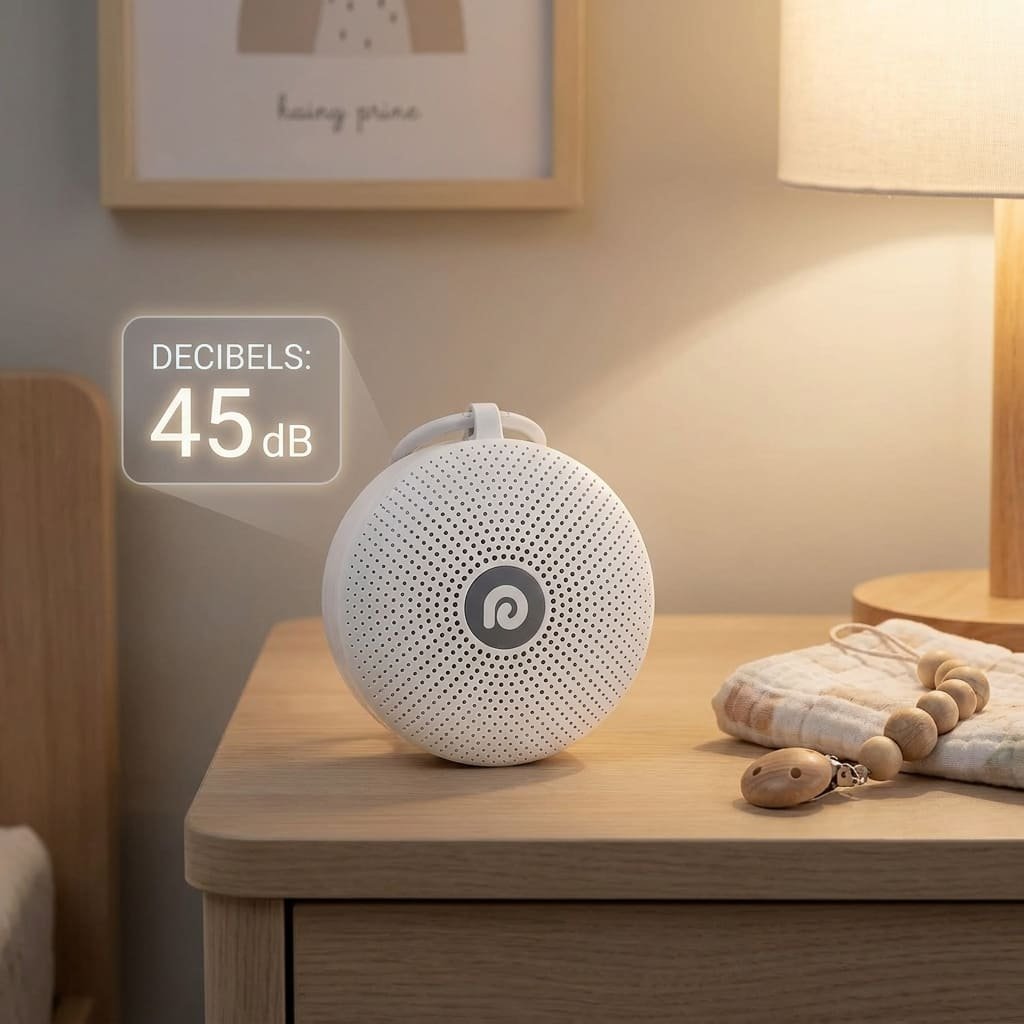
A follow-up study published in 2021 in the International Journal of Pediatric Otorhinolaryngology tested a different set of devices and found a more reassuring pattern at typical use distances: none of the machines exceeded 85 dBA when placed 30 centimeters or farther away, even at maximum volume. The risk was concentrated specifically at very close range — about 10 centimeters, closer than most people would realistically place a portable white noise machine relative to a sleeping person.
What This Portable White Noise Machine Actually Recommends
This is where it’s worth checking a specific portable white noise machine’s own guidance against the actual research rather than assuming every device is equally risky. This portable white noise machine — the Dreamegg Lite D11 Max — includes an explicit safety instruction in its own documentation: keep volume at or below 77 decibels to protect hearing.
That figure is worth putting in context. It’s above the 50 dBA nursery recommendation cited in the 2014 study, but below the 85 dBA occupational hazard threshold used in both the 2014 and 2021 research. In practice, that means the manufacturer’s own stated cap for this white noise machine sits in a middle zone — more conservative than a device with no volume guidance at all, but not automatically compliant with the stricter nursery-specific recommendation if used at that maximum level in close proximity to an infant.
It’s genuinely rare for a product listing to include any decibel guidance at all, which makes this portable white noise machine’s inclusion of a specific number worth noting as a positive, even if the number itself sits above the most conservative benchmark. Many competing portable white noise machine products in this category provide no volume guidance whatsoever, leaving the actual safe-use decision entirely to the buyer without any manufacturer input.
What Is This Portable White Noise Machine?
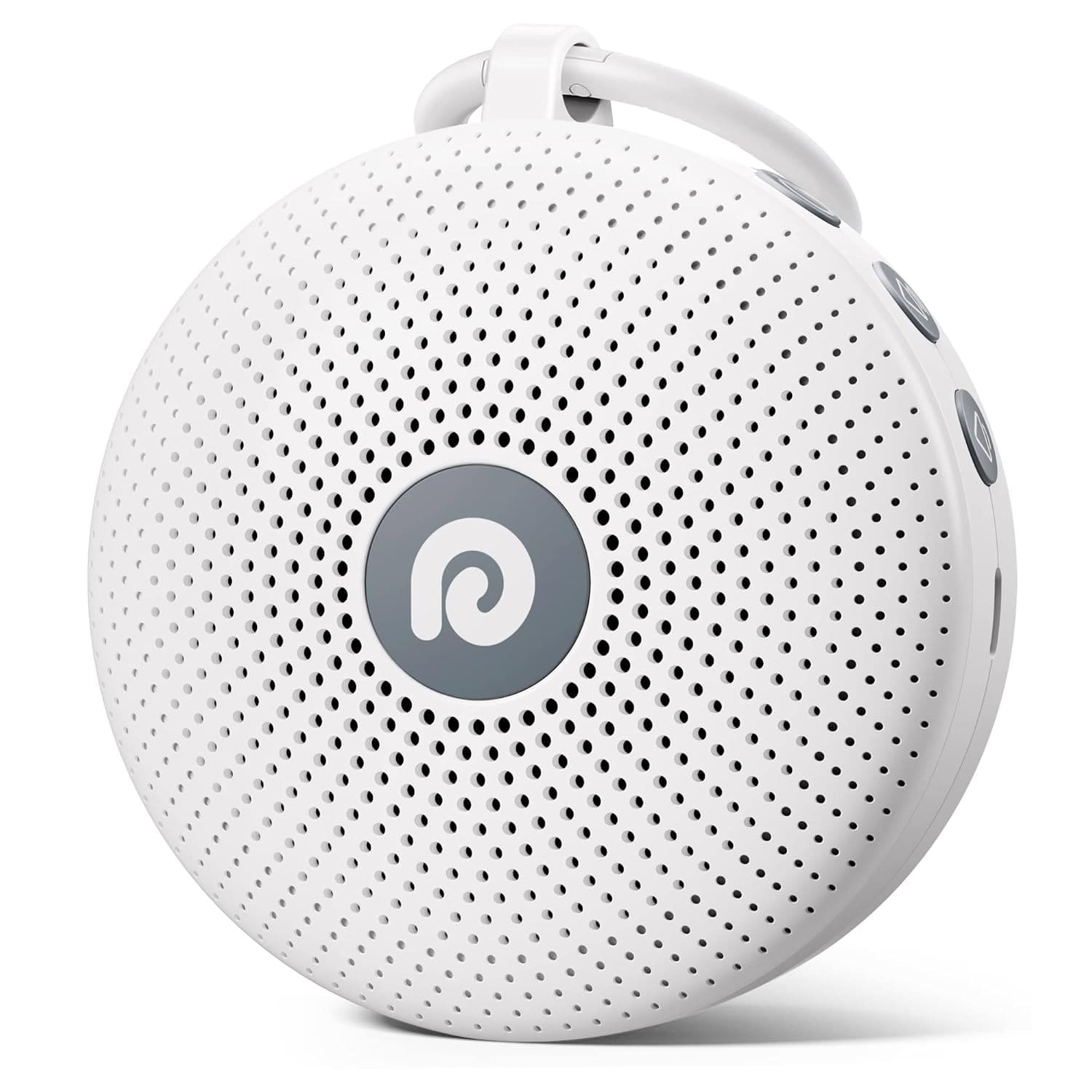
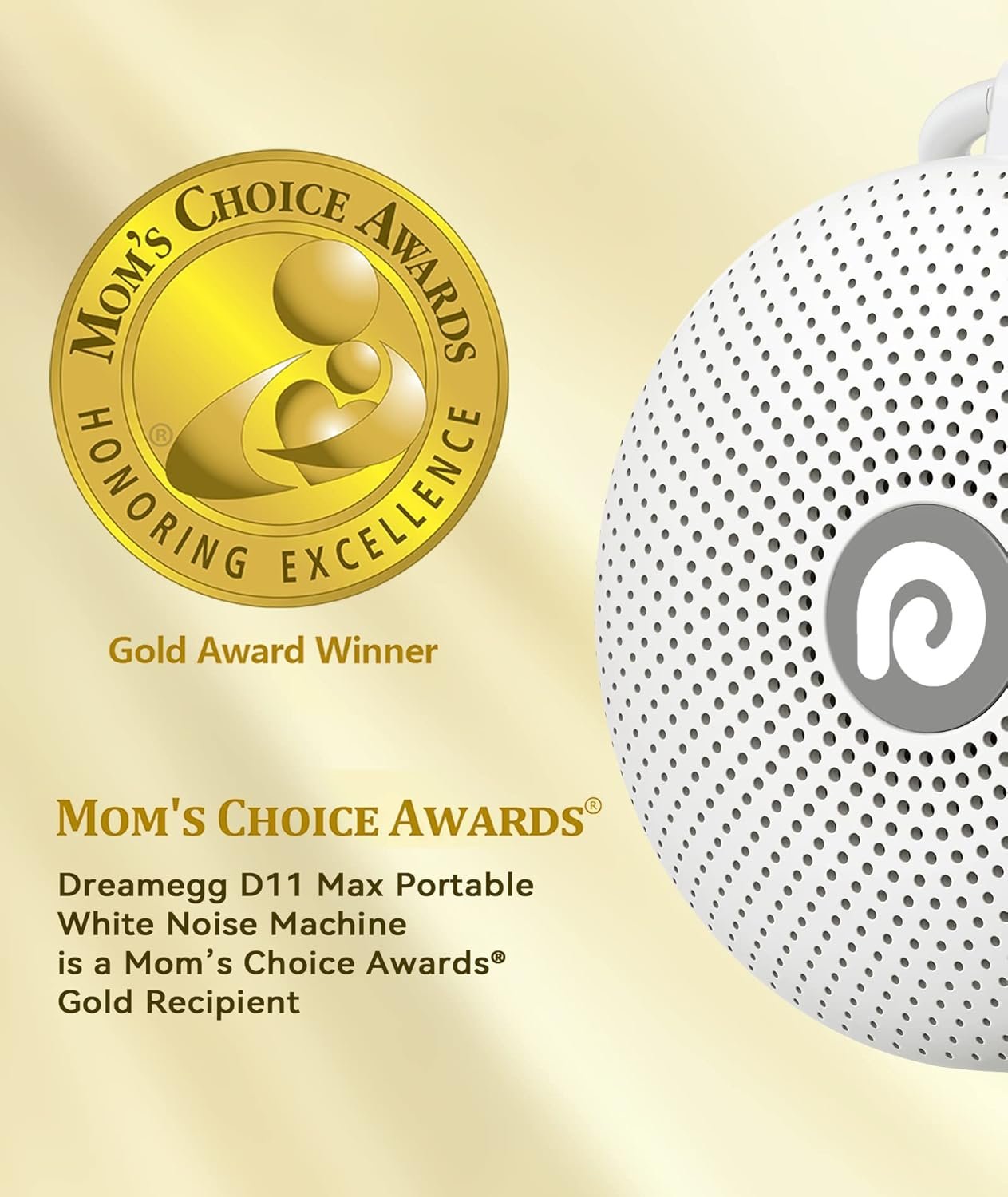
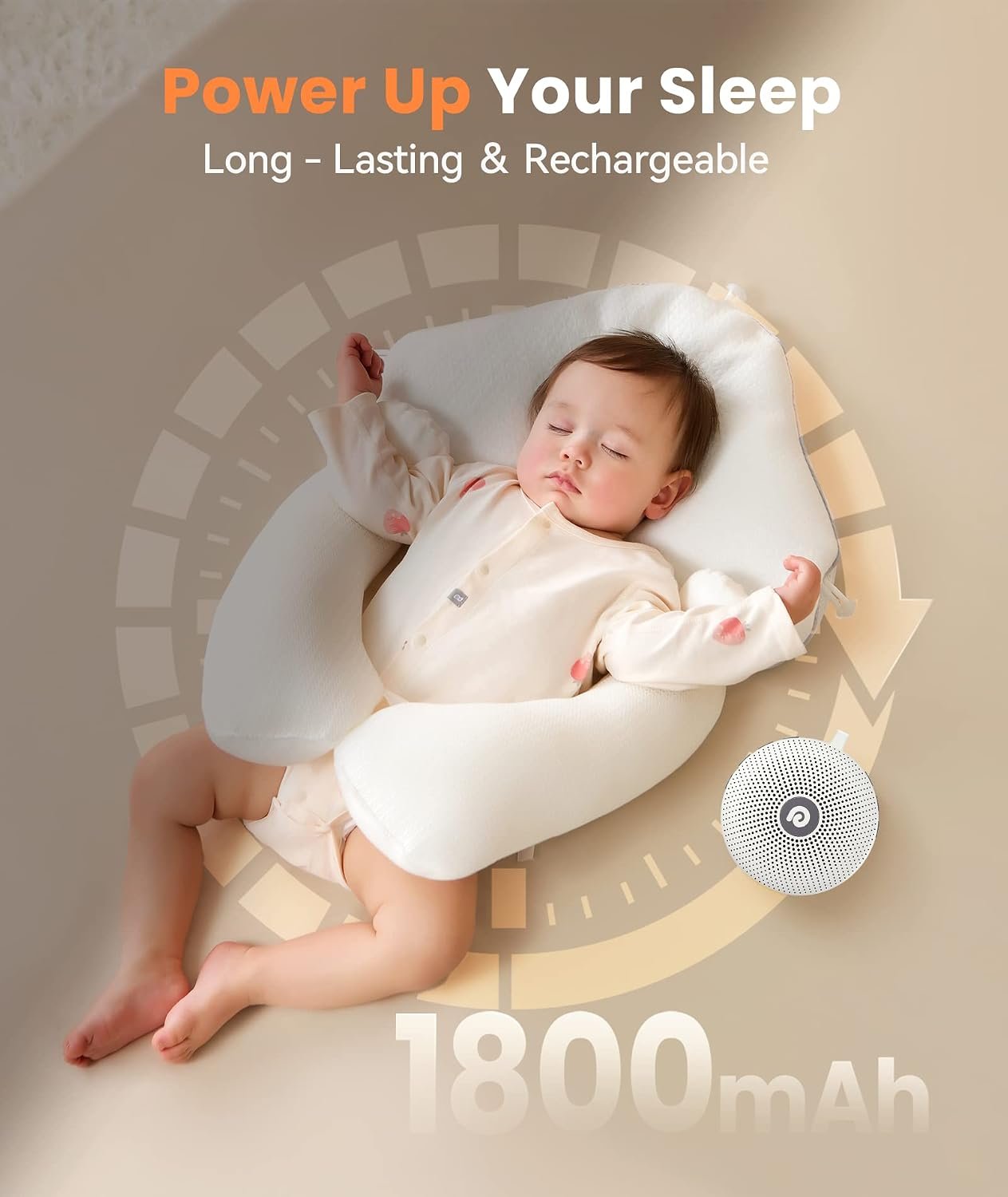
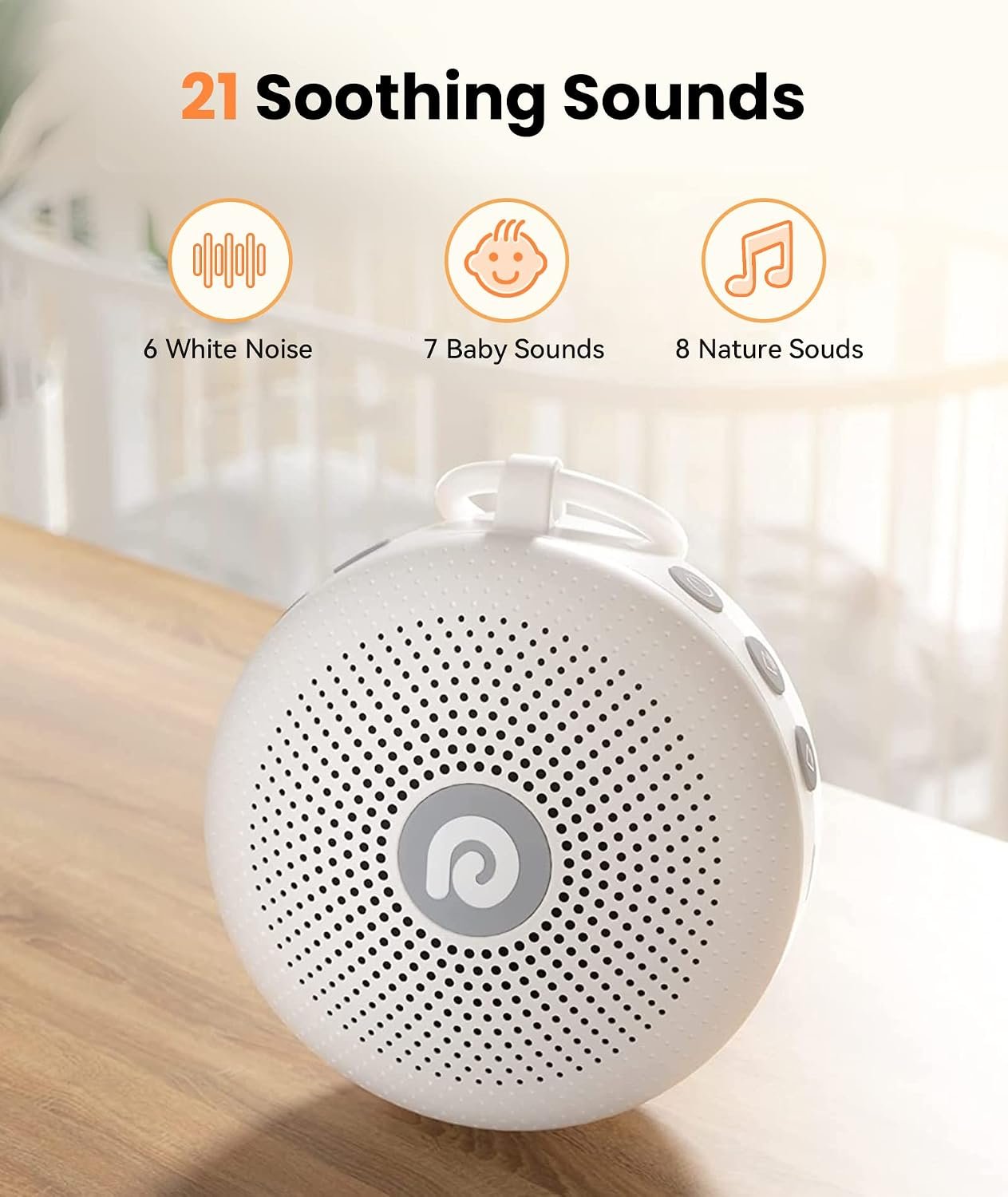
This is the Dreamegg Lite D11 Max, a rechargeable white noise machine with 21 built-in sounds, including classic white noise, lullabies, and nature sounds. It’s built around a notably large 1800mAh battery — Dreamegg markets this portable white noise machine specifically as an upgrade over the 500mAh batteries common in competing devices, which translates to multiple nights of use per charge rather than a single night.
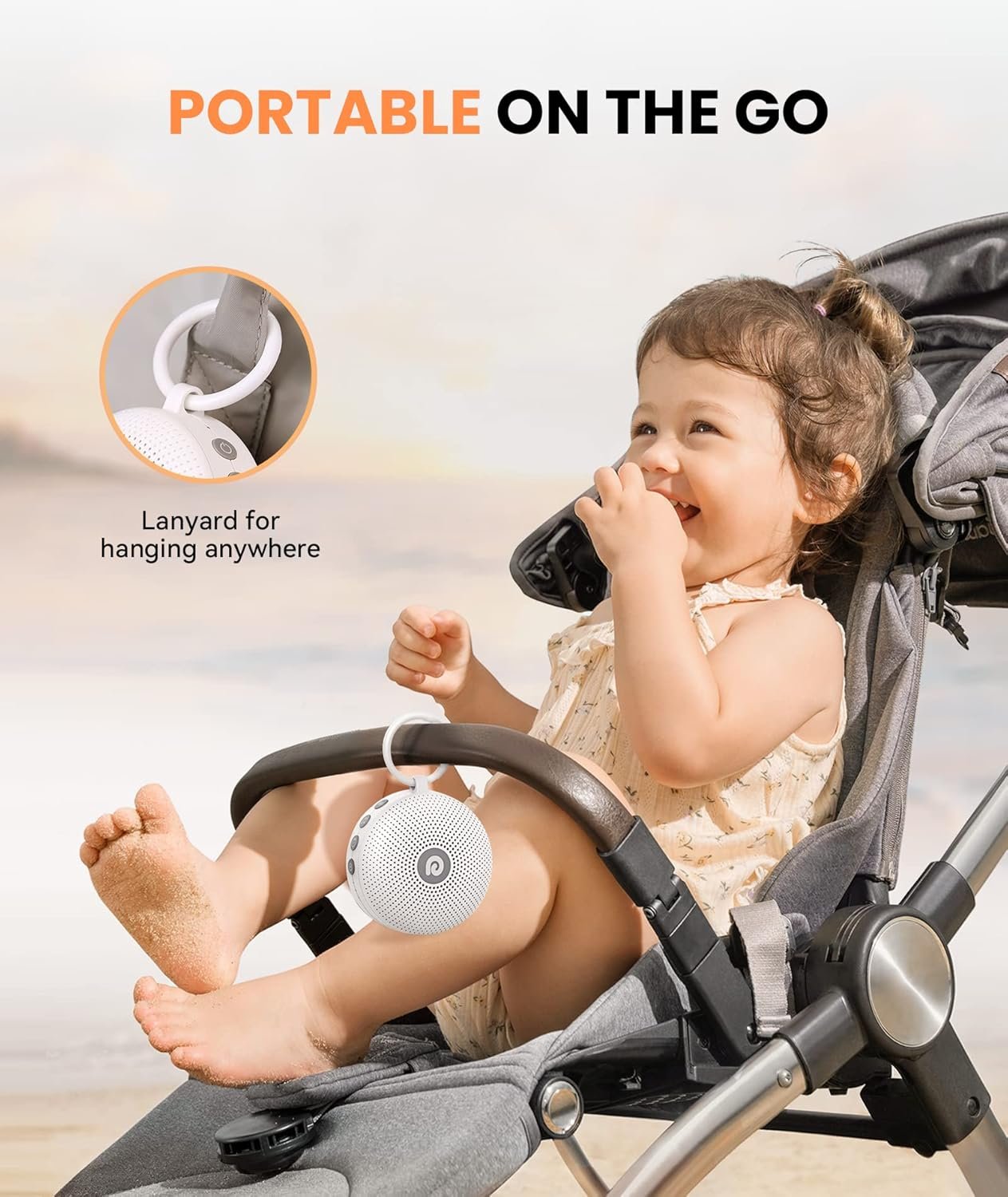
The device includes a child-lock feature, a memory function that recalls the last sound and volume setting used, and a timer with 30, 60, and 90-minute options in addition to continuous play. This portable white noise machine is compact — roughly 4 x 3.7 x 1.8 inches — and includes a lanyard and loop for attaching to a stroller, car seat, or suitcase, positioning it as much for travel as for a fixed nightstand.
Key Specs for This Portable White Noise Machine at a Glance
This portable white noise machine includes the following core specifications:
- Sound library: 21 built-in sounds (white noise, lullabies, nature sounds)
- Battery: 1800mAh rechargeable, well above the 500mAh typical of competitors
- Timer: 30, 60, 90 minutes, or continuous play
- Safety features: Child lock, manufacturer-stated 77 decibel volume cap
How to Use This Portable White Noise Machine Safely, According to the Research
The practical guidance from the pediatric research is fairly consistent across both studies: distance matters more than almost anything else. The 2021 follow-up study specifically found that placing a device 30 centimeters or farther from a sleeping infant kept output below the hazard threshold even at maximum volume, while the original 2014 study found risk concentrated at much closer range. For this white noise machine specifically, that means placing it across the room or on a nearby dresser — not directly inside a crib or immediately next to a pillow — is a meaningful, low-effort safety step.
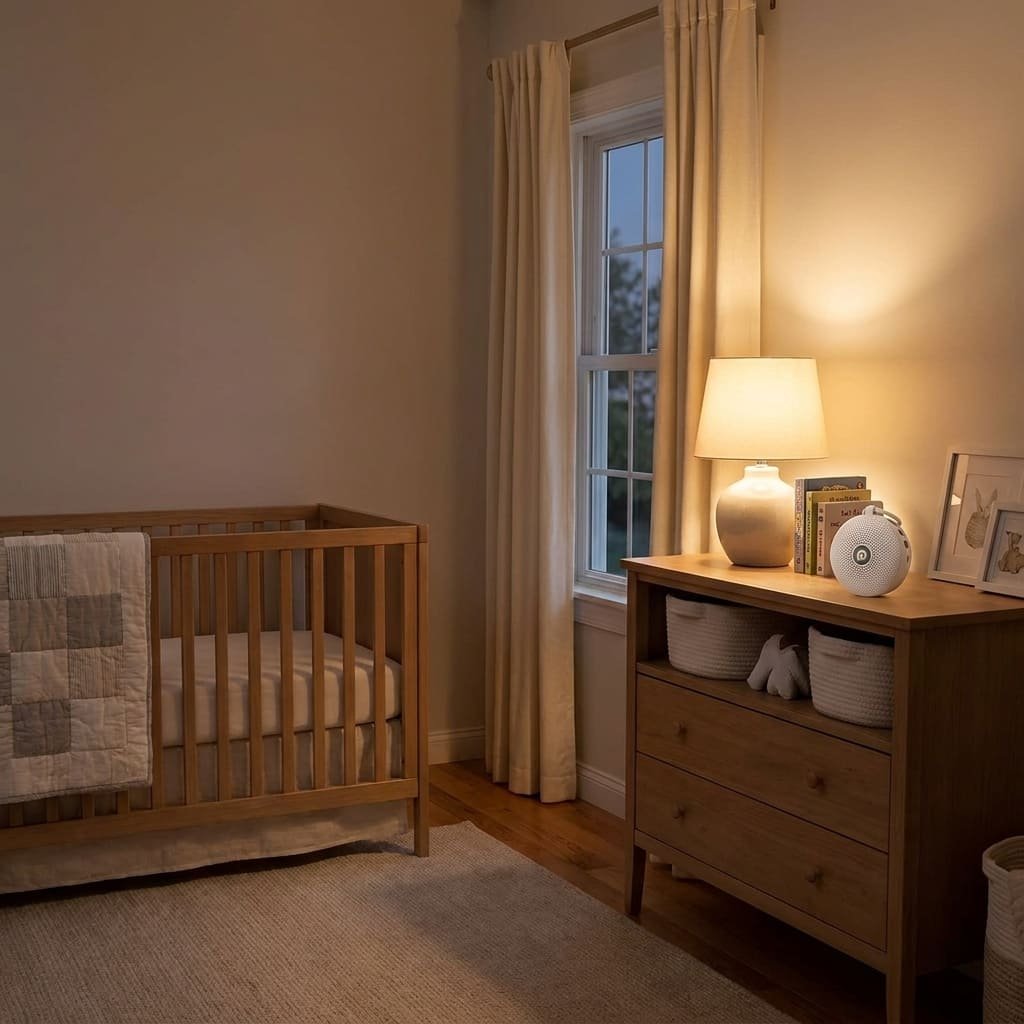
Volume matters independently of distance. Even with this white noise machine’s manufacturer-stated 77 decibel cap, running it at the loudest setting available isn’t the same as running it at a moderate volume. The lowest volume that still effectively masks disruptive background noise is generally the better choice, both for infants and for adults using it for their own sleep.
Combining both principles gives a simple, actionable rule of thumb for this portable white noise machine: place it farther away than feels strictly necessary, and set the volume lower than feels strictly necessary, then adjust upward only if the masking effect genuinely isn’t working. That’s the opposite of the instinct many people have with a portable white noise machine, which is to place it as close as possible and turn it up until the target noise is fully drowned out — an approach the research suggests carries meaningfully more risk than it needs to.
For Adults Using a Portable White Noise Machine: A Different Risk Calculus
It’s worth being clear that the infant-specific research above doesn’t directly apply the same way to adults using this portable white noise machine for their own sleep. Adult ears are less sensitive to the same sound pressure levels than an infant’s developing auditory system, and the occupational safety standard of 85 dBA over 8 hours specifically describes the adult exposure threshold used as the benchmark in the pediatric research itself.
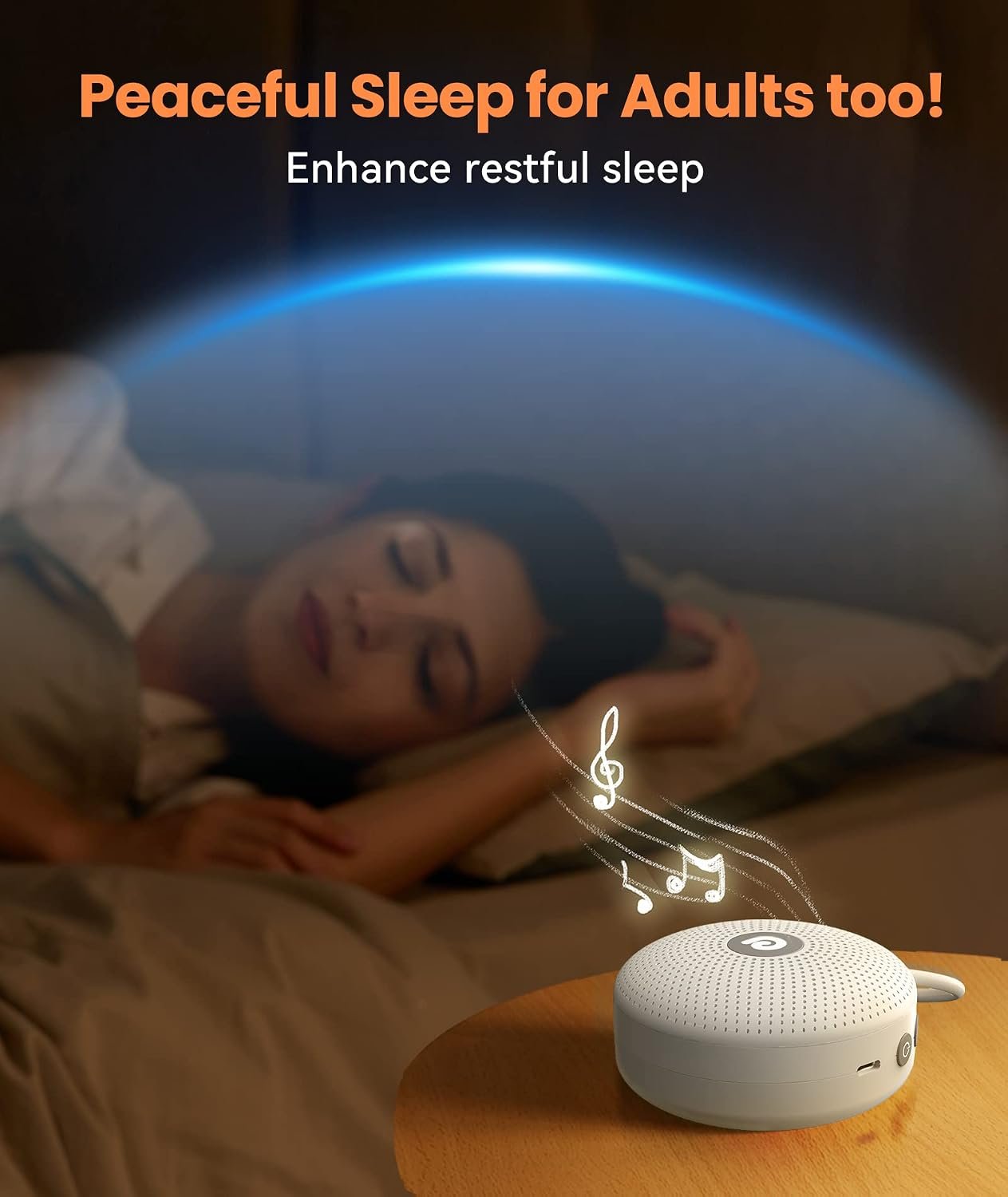
Separate sleep research has found white noise from a portable white noise machine can genuinely help adults sleep in high-noise environments, particularly in dense urban settings where ambient noise is a persistent sleep disruptor. That’s a different use case with a different risk profile than an infant sleeping in close proximity to a sound source for an entire night, and it’s worth evaluating your own use case for this portable white noise machine accordingly rather than applying infant-specific caution uniformly to every use scenario.
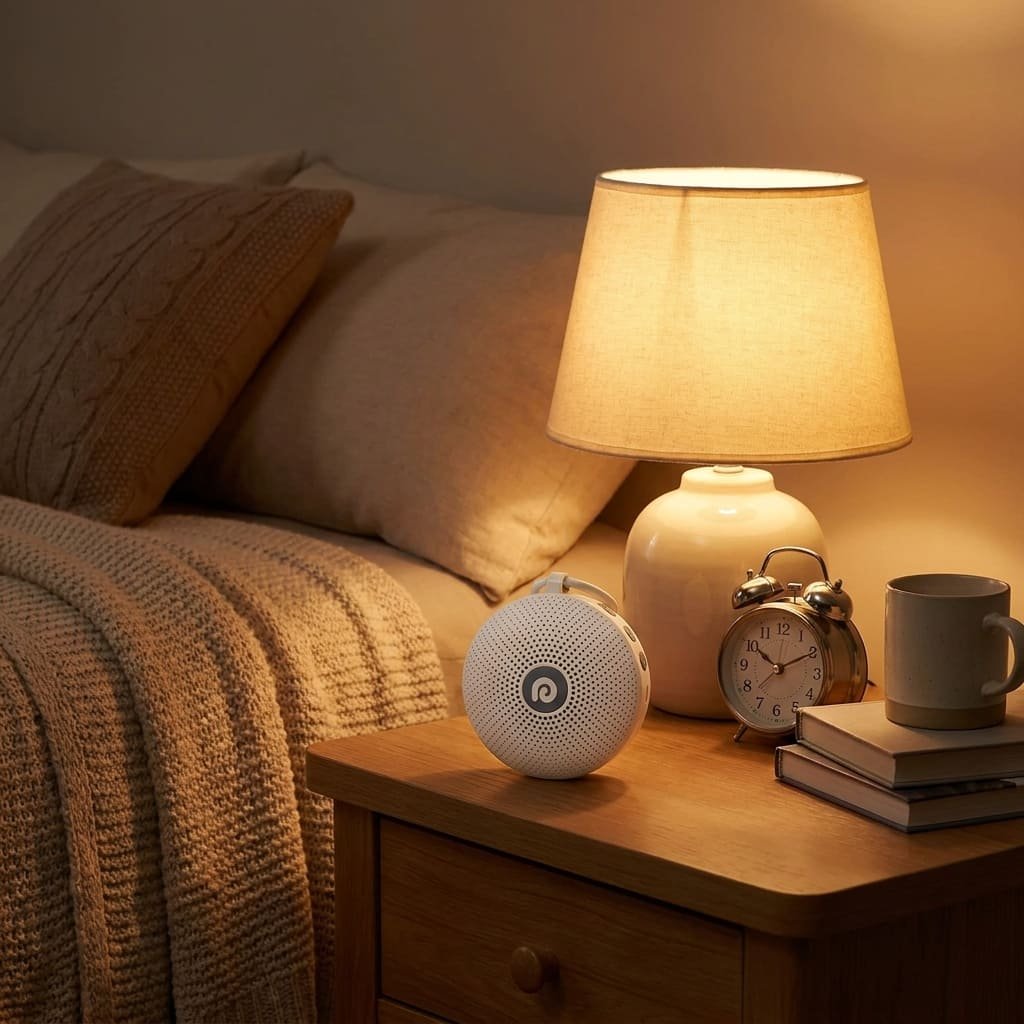
This distinction matters practically, not just academically. A single adult keeping this portable white noise machine on a nightstand a few feet from their own pillow, at a moderate volume, faces a meaningfully different risk profile than an infant with the same portable white noise machine inside a crib at maximum volume — even though both scenarios technically involve the same category of product.
Who Should Buy This Portable White Noise Machine Specifically
This is a strong fit for anyone who wants genuine multi-night battery life without needing to recharge constantly, given the 1800mAh battery in this portable white noise machine meaningfully outperforms the 500mAh standard common in this category. It’s also reasonable for frequent travelers, given the compact size and stroller/car-seat attachment options included with this portable white noise machine.
For parents specifically, this portable white noise machine’s manufacturer-stated volume cap and the research above suggest a workable path to safer use: keep it at a moderate volume, place it at least an arm’s length or farther from the crib, and avoid running it at maximum volume in close proximity. If you’re building out a broader sleep routine, our smart alarm clock review covers a complementary wake-up-side device, and our habit stacking guide covers how to attach a new sleep-routine habit, like consistently placing this portable white noise machine at a safe distance, to something already automatic at bedtime.
How We Researched This Portable White Noise Machine
This review of this portable white noise machine is based on the manufacturer’s published specifications, cross-referenced against multiple independent retailer listings for consistency, along with the peer-reviewed pediatric research on infant sleep machine safety described above. The specific decibel output of this exact portable white noise machine at various distances hasn’t been independently measured by our team; the safety context here reflects general research on the product category and the manufacturer’s own stated volume guidance, not device-specific acoustic testing.
Frequently Asked Questions
Is this portable white noise machine safe to use for a baby? Used at a moderate volume and placed a reasonable distance from the crib — research suggests 30 centimeters or farther — this portable white noise machine falls within safety ranges established in follow-up research, though the original 2014 study found risk at closer range and higher volumes.
How loud is too loud for a portable white noise machine near an infant? The American Academy of Pediatrics’ nursery guidance recommends staying at or below 50 decibels for infant sleep environments, which is more conservative than the 77 decibel cap stated in this portable white noise machine’s own documentation.
Does the research apply the same way to adults using a portable white noise machine? No. Adult ears are less sensitive to comparable sound pressure levels, and the occupational safety standard used in the pediatric research (85 dBA over 8 hours) is specifically an adult exposure benchmark, not an infant one.
Why does this portable white noise machine have a larger battery than competitors? Dreamegg specifically markets the 1800mAh battery in this portable white noise machine as an upgrade over the 500mAh standard common in this product category, extending usable time between charges from roughly one night to several.
Does distance from the device actually matter for safety? Yes, according to both the 2014 and 2021 studies. Sound pressure drops significantly with distance, and placing a portable white noise machine farther from a sleeping person — particularly an infant — meaningfully reduces exposure even at the same volume setting.
Final Verdict on This Portable White Noise Machine
The research on this category is more nuanced than either “completely safe” or “clearly hazardous” — it depends heavily on volume setting, distance, and whether the intended user is an infant or an adult. This portable white noise machine’s manufacturer-stated 77 decibel cap and the large battery are genuine practical advantages, but they don’t substitute for following the distance and volume guidance the actual pediatric research supports.
Buy this portable white noise machine if you want a long-battery-life, travel-friendly option and are willing to use it thoughtfully — moderate volume, reasonable distance from a sleeping infant. Skip this portable white noise machine, or any device in this category, if you’re not prepared to apply that basic distance-and-volume discipline, since the risk research identifies is real but manageable rather than an argument against the entire product category.
This article reflects published pediatric research on infant sleep machine safety and manufacturer specifications, and is not personalized medical advice. Consult a pediatrician about hearing safety specific to your child’s situation.