


Modern office environments and remote work setups have created an unprecedented era of physical inactivity across contemporary society. Millions of professionals remain seated for eight to twelve hours daily, triggering subtle metabolic disruptions that accumulate over time. Incorporating exercise snacks for sedentary workers offers a practical, evidence-based strategy to break up prolonged sitting without disrupting workplace productivity. These brief micro-bursts of movement stimulate muscle contraction, improve postprandial glucose regulation, and reduce long-term cardiovascular risks.
Traditional exercise guidelines often emphasize continuous thirty-minute workout blocks, which many busy desk workers struggle to schedule consistently. However, emerging physiological research indicates that total daily movement frequency plays a crucial role in maintaining vascular health and metabolic homeostasis. Implementing exercise snacks for sedentary workers allows individuals to distribute activity throughout the workday, effectively interrupting extended periods of physical stasis. By engaging major muscle groups for just two to five minutes every hour, workers can combat sitting fatigue while maintaining high cognitive focus.
Adopting structured micro-movement breaks requires understanding both human physiology and practical workstation mechanics. To evaluate how brief activity bouts influence systemic health, we examined guidelines published by the Centers for Disease Control and Prevention regarding physical activity recommendations. Their public health data confirms that accumulating short movement sessions yields substantial cardiovascular and metabolic benefits comparable to structured continuous exercise. Establishing consistent exercise snacks for sedentary workers creates a sustainable foundation for lifelong mobility and energy balance.
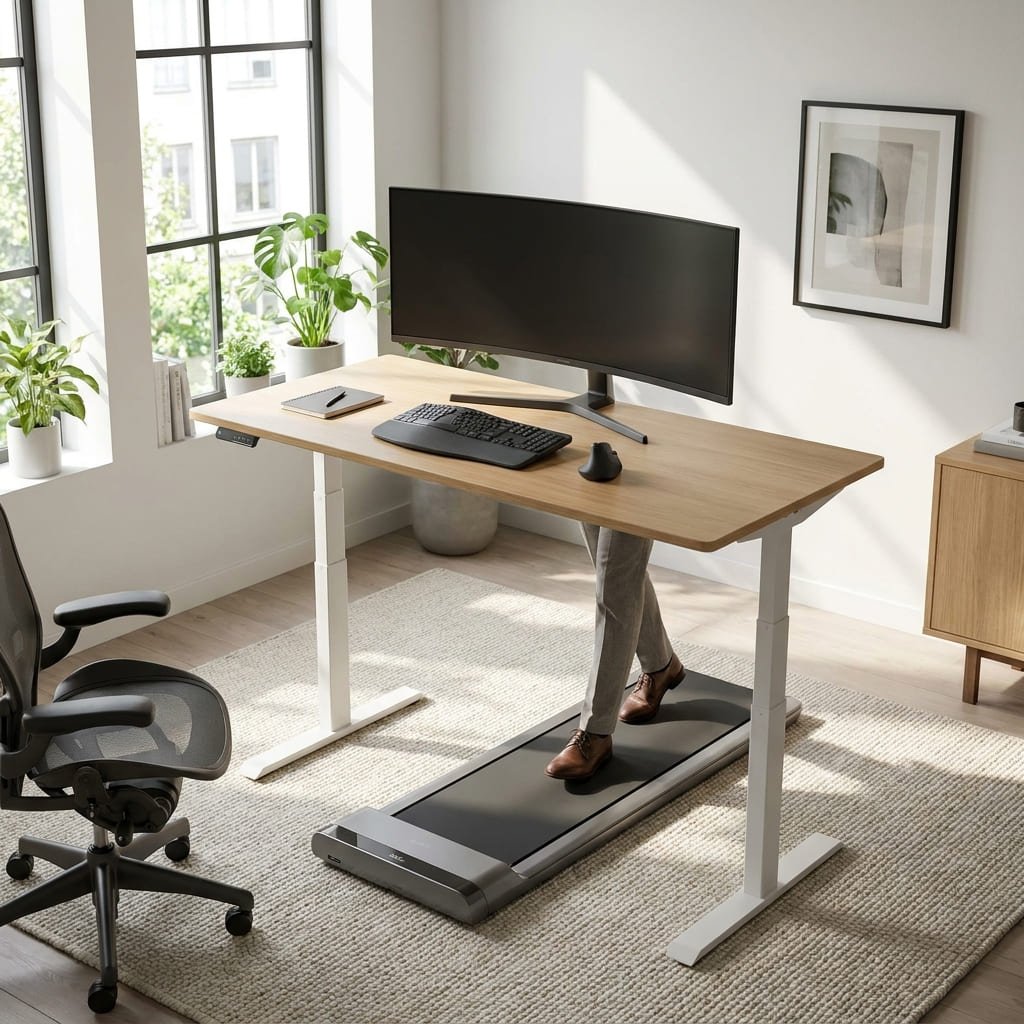
The Physiology of Micro-Movement: Breaking Up Prolonged Desk Inactivity
Prolonged uninterrupted sitting suppresses key metabolic enzymes responsible for clearing triglycerides and glucose from the bloodstream. When lower body postural muscles remain inactive for hours, lipoprotein lipase activity plummets, impairing systemic lipid metabolism. Integrating exercise snacks for sedentary workers restores muscle contraction signals, prompting GLUT4 glucose transporters to migrate to cell membranes independently of insulin. This acute cellular mechanism helps stabilize blood sugar spikes following meals and prevents afternoon energy slumps.
Vascular health also suffers when office workers maintain static seated positions for extended periods. Gravitational pooling of venous blood in the lower limbs reduces vascular shear stress, leading to transient endothelial dysfunction in femoral arteries. Research compiled by the National Institutes of Health highlights how micro-movement breaks preserve arterial dilation capacity and lower peripheral blood pressure. Utilizing exercise snacks for sedentary workers ensures that lower leg muscles pump blood back toward the heart, maintaining healthy circulatory dynamics throughout long computer sessions.
Beyond metabolic and vascular improvements, frequent activity breaks mitigate chronic musculoskeletal strain caused by poor seated posture. Sitting for prolonged intervals alters spinal alignment, shortens hip flexors, and weakens gluteal muscle activation patterns. By performing targeted exercise snacks for sedentary workers during desk transitions, individuals relieve spinal disc pressure and re-engage dormant core stabilizers. To explore deeper physiological research on micro-movement benefits, review our companion analysis on Exercise Snacks & Mortality Risk.
Active Workstation & Micro-Movement Efficiency Matrix
Selecting the appropriate micro-movement modality depends on workplace layout, physical capacity, and task demands. The following matrix compares four popular micro-workout strategies across key physiological and practical criteria:
| Movement Intervention Modality | Average MET Expenditure | Cognitive Task Disruption Level | Target Muscle Group Recruitment | Joint Impact Rating |
|---|---|---|---|---|
| Walking Pads (Under-Desk) | 2.5 – 3.5 METs | Low (during light typing) | Glutes, Calves, Quadriceps | Low (Smooth Impact) |
| Under-Desk Ellipticals | 2.0 – 3.0 METs | Very Low (Fully Seated) | Quadriceps, Hamstrings | Very Low (Zero Impact) |
| Light Neoprene Dumbbells | 3.5 – 4.5 METs | Moderate (Requires Pause) | Biceps, Deltoids, Upper Back | Low (Controlled Resistance) |
| Bodyweight Calisthenics | 4.0 – 5.5 METs | Moderate (Requires Pause) | Full Body Compound Groups | Low – Moderate (Bodyweight Load) |
Sarcopenia & Resistance Training: Preserving Muscle Mass Across Decades
Age-related muscle loss, known clinically as sarcopenia, begins earlier in life than most adults realize, accelerating significantly after age forty. Inactivity drastically speeds up muscle tissue atrophy, particularly in type II fast-twitch muscle fibers required for power and balance. Incorporating resistance-based exercise snacks for sedentary workers provides the necessary mechanical tension to stimulate muscle protein synthesis during work hours. Simple resistance exercises, such as air squats or desk push-ups, help preserve functional strength and metabolic capacity over time.
Maintaining lean muscle mass serves as a vital metabolic sink for disposing of dietary carbohydrates and regulating basal metabolic rate. When desk workers neglect muscle preservation, systemic insulin resistance increases, elevating long-term chronic disease risk. To understand how age influences physical decline, inspect our detailed breakdown on Muscle Loss by Decade. Incorporating exercise snacks for sedentary workers that feature light weight resistance or bodyweight loading helps counteract age-related tissue degradation.
Light dumbbells offer an accessible, highly effective tool for performing rapid resistance sets near office desks without requiring gym apparel. Performing high-repetition shoulder presses, bicep curls, or bent-over rows stimulates localized blood flow and maintains upper body structural balance. To learn more about light weight training protocols, read our guide on Light Dumbbells: What 7 Pounds Can Build. Combining strength-focused exercise snacks for sedentary workers with proper nutrition ensures maximum muscular adaptation and functional longevity.
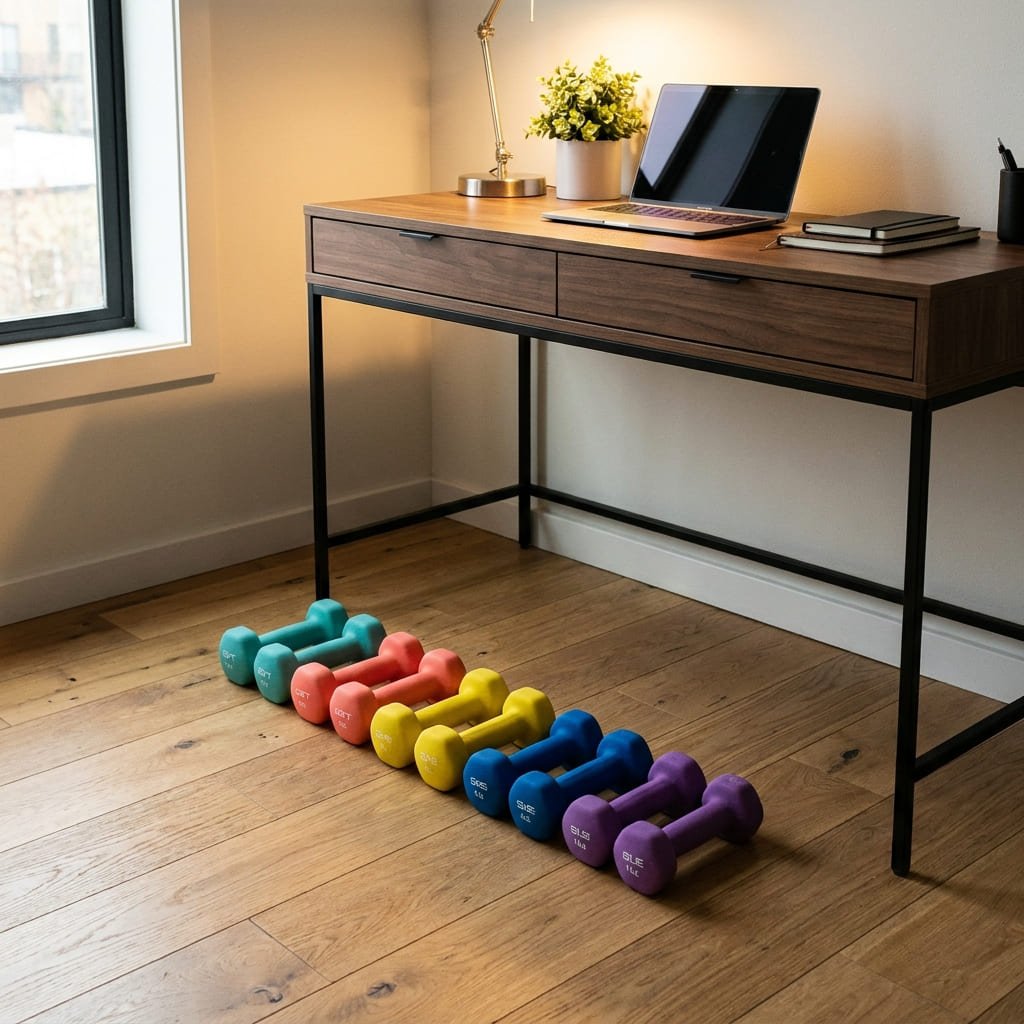
Behavioral Habit Stacking for Active Desk Work
The primary obstacle to maintaining active work habits is not physical limitation, but rather cognitive forgetfulness during immersive tasks. Habit stacking offers a proven psychological technique to embed movement breaks seamlessly into daily work routines. By attaching exercise snacks for sedentary workers to existing automatic habits—such as finishing a phone call or closing a Zoom window—workers eliminate decision fatigue. Over time, these environmental cues establish robust neural pathways that make movement feel completely natural.
Structuring behavioral triggers around natural workday transitions prevents long stretches of uninterrupted sitting without fracturing professional focus. For example, scheduling two minutes of bodyweight squats immediately after brewing morning coffee establishes an effortless movement anchor. To explore comprehensive behavioral habit models, consult our educational guide on Habit Stacking: Four Pillars. Applying systematic habit architecture ensures that exercise snacks for sedentary workers remain consistent across busy work weeks.
To seamlessly incorporate micro-movements without interrupting focused work blocks, desk workers can pair three-minute calisthenic intervals directly with routine transition moments throughout the day. Engaging major lower-body muscle groups like quadriceps and glutes through bodyweight squats or standing calf raises immediately following virtual meetings stimulates GLUT4 glucose transporter translocation, effectively clearing circulating blood sugar before it causes metabolic fatigue. This targeted habit-stacking technique ensures consistent cardiovascular engagement while safeguarding daily productivity standards.
Overcoming common psychological barriers requires framing micro-movements as energizing mental resets rather than exhausting physical chores. Taking brief movement breaks clears mental fog, increases cerebral blood flow, and enhances executive decision-making capabilities. In addition, addressing common misconceptions about sedentary living helps workers prioritize daily movement; explore our research on Sedentary Lifestyle Myths to understand why gym workouts cannot fully undo eight hours of static sitting. Consistently applying exercise snacks for sedentary workers optimizes both mental clarity and physical vitality.
Integrating Active Workstation Gear Safely
Equipping an office with specialized active gear requires careful attention to ergonomic alignment, floor stability, and mechanical clearance. Compact pedaling devices allow professionals to maintain continuous low-intensity movement while drafting emails or reviewing documents. To review seated pedal ergonomics and mechanical noise levels, examine our detailed Under-Desk Elliptical Review. Integrating these devices provides a frictionless method to increase daily exercise snacks for sedentary workers during routine computer tasks.
For professionals seeking vertical movement, under-desk treadmills offer an exceptional platform for low-speed walking during phone calls or webinars. Proper belt alignment, motor cooling, and motor deck lubrication are essential for long-term mechanical reliability and smooth operation. Consult our comprehensive Walking Pad Review to analyze belt dimensions and motor horsepower standards. Utilizing active walking equipment expands options for exercise snacks for sedentary workers, elevating total daily calorie expenditure naturally.
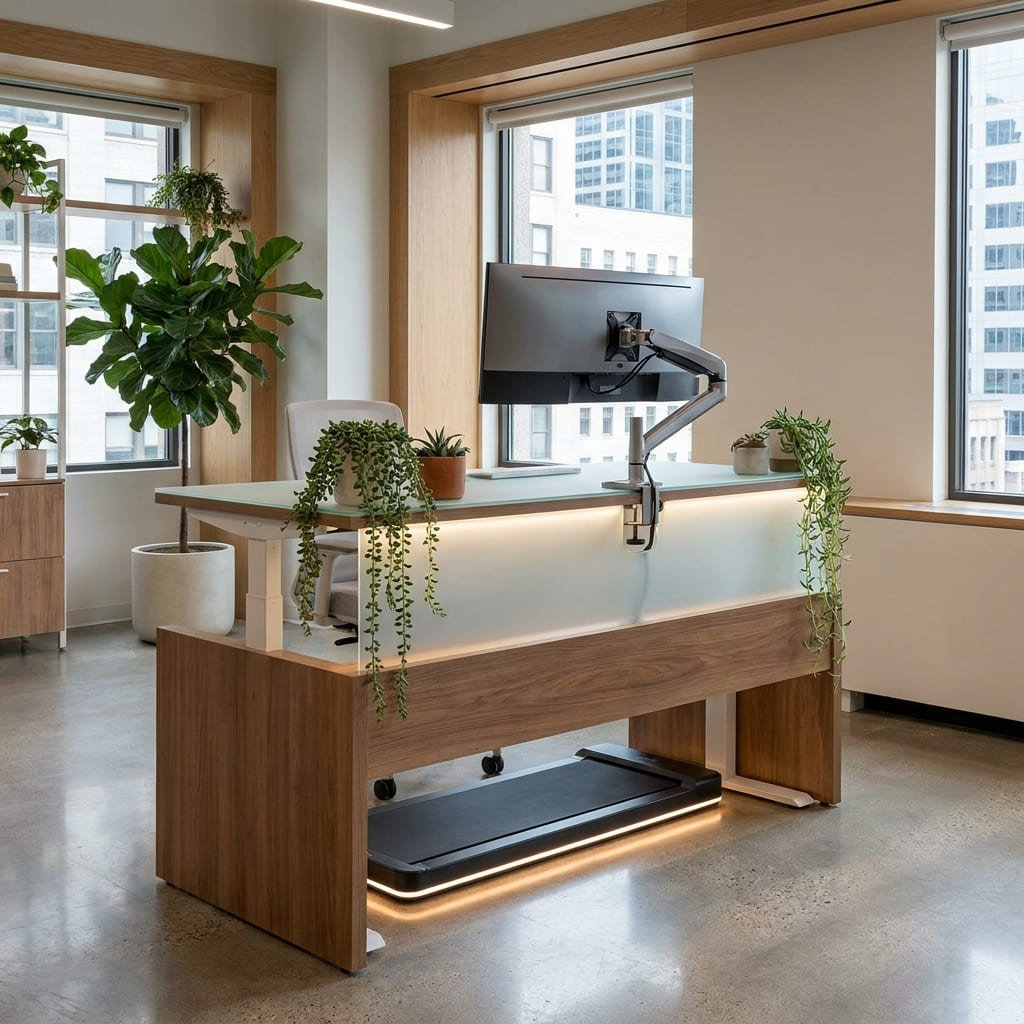
Upper body strength tools and dietary supplements further enhance the physical benefits of regular active workstation routines. Storing compact weight sets near your desk encourages spontaneous resistance sets between video meetings; inspect our hands-on Neoprene Dumbbells Review for grip safety and space-saving rack storage. Additionally, supporting muscle recovery with clinical supplementation improves tissue repair; check our Creatine Monohydrate Review to evaluate cellular hydration and energy performance when executing daily exercise snacks for sedentary workers.
The 5-Point Active Longevity Checklist for Desk Workers
- Set Hourly Movement Anchors: Program silent timer chimes or computer pop-ups every fifty minutes to signal a two-minute active movement break.
- Implement Habit Stacking: Link physical movement directly to established work triggers, such as completing phone calls or sending routine emails.
- Alternate Movement Modalities: Rotate between aerobic pedaling, standing walking sessions, light dumbbell sets, and bodyweight calisthenics to prevent overuse fatigue.
- Maintain Ergonomic Boundaries: Ensure walking pads and under-desk ellipticals maintain proper knee clearance beneath desk surfaces to prevent joint strain.
- Combine Movement with Nutrition: Pair daily micro-workouts with adequate hydration and quality protein intake to support continuous muscle protein synthesis.